
Key takeaways
- American will equip all 876 narrowbody aircraft with seatback screens in economy, starting in 2028 and completing by early 2030s.
- Premium seating capacity will expand from roughly 25% to 40% of narrowbody seats, with new first-class rows on A319s, A320s, and 737 MAX 10s.
- Free systemwide Wi-Fi launched in January, with Starlink ultra-fast connectivity rolling out to 500 aircraft beginning next year.
- The move represents American's response to competitive pressure from United's 2021 premium pivot and industry-wide shift toward premium amenities.
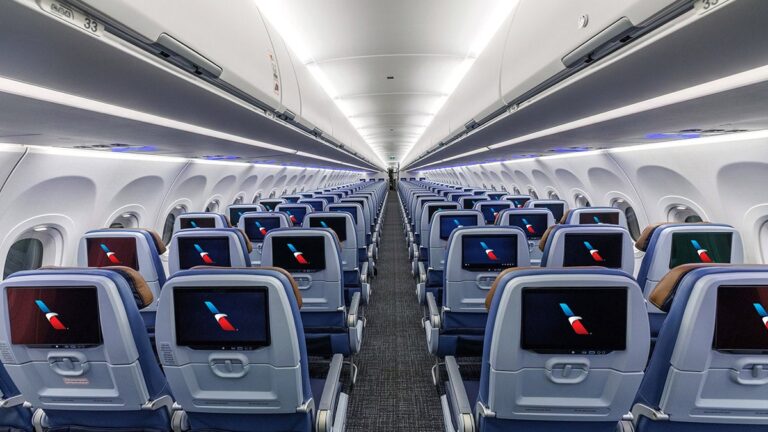
American Airlines has finally reversed one of its most contentious onboard decisions: beginning in 2028, all economy passengers on the carrier’s narrowbody aircraft will have access to seatback entertainment screens. The rollout represents a dramatic shift in strategy for a carrier that, just a few years ago, insisted that the investment in screens wasn’t worth the cost because most passengers brought their own devices.
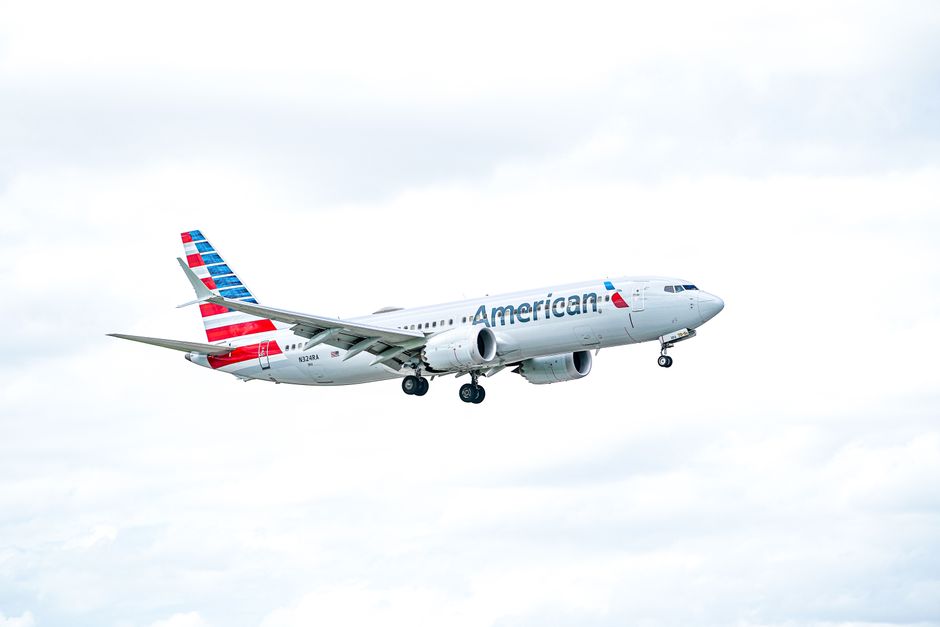
The phased implementation will outfit American’s entire fleet of 876 mainline single-aisle aircraft with economy seatback screens by the early 2030s. The carrier’s 140 widebody jets and newer Airbus A321XLRs already feature screens across all cabins, while regional American Eagle aircraft will remain screenless. Heather Garboden, American’s chief customer officer, called the broader investment “one of the most significant investments in the onboard experience in our history.”
The screens will be among the largest available
When the new displays debut in 2028, American promises they will rank among the largest seatback screens on any narrowbody aircraft. Each seat will include USB-C charging ports and Bluetooth connectivity, features increasingly expected by premium travelers. The displays represent a convergence of technology and competitive necessity — a recognition that today’s travelers expect consistent entertainment access regardless of cabin class.
Premium seating nearly doubling in proportion
First-class expansion across the fleet
The seatback screen rollout is paired with a broader push to expand premium seating. American plans for premium seats — combining first class and Main Cabin Extra extra-legroom economy — to represent roughly 40% of all seats on single-aisle planes. Today, that proportion stands at around 25%, meaning the carrier will nearly double the premium cabin footprint on its workhorse narrowbody aircraft.
The specific first-class reconfiguration varies by aircraft type. American is adding a dedicated first-class row to its Airbus A319s and A320s, bringing their first-class counts to 12 and 16 seats respectively. The carrier’s upcoming Boeing 737 MAX 10s, which begin arriving in 2029, will feature 24 first-class seats — four more than the comparable Airbus A321neo currently offers.
Unclear expansion of extra-legroom seats
American did not specify how many additional Main Cabin Extra seats will be added to narrowbodies during the reconfiguration process. Today, these aircraft carry between 18 and 36 extra-legroom seats depending on aircraft type and configuration. The unspecified expansion suggests American is still evaluating the exact trade-off between premium seating, economy capacity, and revenue optimization.
Why American is playing catch-up
The legacy of US Airways: cost-consciousness over amenities
American’s lack of seatback screens in economy cabins traces back to the 2014 merger with US Airways. The legacy carrier had never invested in narrowbody screens, and Doug Parker, then American’s CEO and previously leader of US Airways, repeatedly defended the decision by citing the cost-to-benefit calculation: most travelers brought their own devices, so the investment seemed unjustifiable.
The competitive landscape shifts in 2021
The strategy was defensible in 2014. At that time, only Delta Air Lines and JetBlue Airways offered seatback screens in economy on US narrowbody aircraft. United Airlines had DirectTV screens on some planes but was not installing them on new deliveries. The industry consensus seemed aligned: screens were luxury, not necessity.
That consensus fractured in 2021 when United announced United Next, its comprehensive onboard upgrade program that included seatback screens in all cabins across its mainline fleet. The announcement signaled a fundamental shift in how U.S. carriers viewed the premium experience. Coupled with the industry-wide rush toward premium amenities — Allegiant Air and Southwest Airlines both launched premium offerings in recent years — American’s screenless economy cabins began to feel like a liability rather than a cost-saving measure.
Premium positioning requires parity on amenities
As Nathaniel Pieper, American’s chief commercial officer, acknowledged in a March interview: “Whether it’s onboard food, seats, lounges, Wi-Fi … those are the kinds of investments that make sense and really, kind of, put a halo around where American is trying to go.” In other words, American’s standing as a premium global airline was being eroded not by what it offered, but by what it conspicuously lacked.
Starlink and Wi-Fi: The connected cabin
The seatback screens are one component of a larger connectivity overhaul. American rolled out free inflight Wi-Fi system-wide in January, eliminating the need for elite members or paid subscriptions. Beginning next year, the carrier will deploy Starlink ultra-fast connectivity on 500 aircraft, dramatically increasing bandwidth for streaming and work-related connectivity.
The combination of free Wi-Fi, Starlink, and seatback screens in economy represents a fundamental rethinking of the narrowbody experience. Passengers will have both onboard and personal-device entertainment options, plus the connectivity to stream, work, or communicate during flight.
Lounge and ground experience upgrades
The investment extends beyond the cabin. American is renovating and expanding Admirals Clubs across its network, adding grab-and-go dining options and upgraded amenities. The focus on premium ground experience mirrors the onboard premium push — the carrier is attempting to construct a premium ecosystem that runs from airport arrival through landing.
What this means for frequent flyers and award travelers
For American elite members and frequent flyers, the announcements signal a strategic pivot toward premium-seat density and overall amenity parity with United and Delta. The near-doubling of premium seating proportion means more opportunities to access first class through status upgrades or elite benefits, though it also implies tighter economy configurations and potentially higher economy pricing.
Award travelers should note the timeline: major changes roll out in 2028, with full fleet implementation continuing into the early 2030s. Current American flyers on older narrowbodies will continue to experience screenless economy cabins for the next two years. For those considering which U.S. carrier to accrue miles with, the announcements narrow the competitive gap that has widened since United’s 2021 premium pivot. American is signaling that the era of economy-cabin austerity is ending, though the execution will take the better part of a decade.
Frequently Asked Questions
When will American Airlines add seatback screens to economy?
American will begin rolling out seatback screens in economy in 2028, with plans to outfit its entire fleet of 876 mainline single-aisle aircraft by the early 2030s.
Will all American aircraft receive seatback screens in economy?
No, regional American Eagle aircraft will not receive screens. Widebody and A321XLR aircraft already have screens in all cabins.
What additional features will the new economy seatback screens include?
The new screens will feature USB-C charging ports and Bluetooth connectivity and will be among the largest seatback screens available on narrowbody aircraft.
