
Key takeaways
- United launches daily service from SFO to Cincinnati (Oct. 25) and Saturday-only flights to West Palm Beach (Nov. 7), capitalizing on FAA-eased capacity limits at San Francisco.
- San Francisco's hourly flight cap increased from 36 to 40 flights on Aug. 12, with further increases to 42 expected by month-end, though still below pre-April limits of 54 flights per hour.
- United indefinitely postpones 10 new Chicago O'Hare routes due to FAA flight caps extended through October 2027, but plans 14% seat growth at ORD through larger aircraft deployment.
- The regulatory constraints reshape award availability, offering new San Francisco redemptions but eliminating promised Chicago routes that served destinations United does not serve from other hubs.
United Airlines is capitalizing on expanded capacity at San Francisco International Airport, adding two new routes starting this fall while simultaneously shelving plans for major growth at its Chicago hub. The announcements underscore how regulatory constraints continue to reshape network strategy across the US major carriers, with significant implications for award availability and frequent flier opportunity at different gateways.
New San Francisco Service Takes Flight
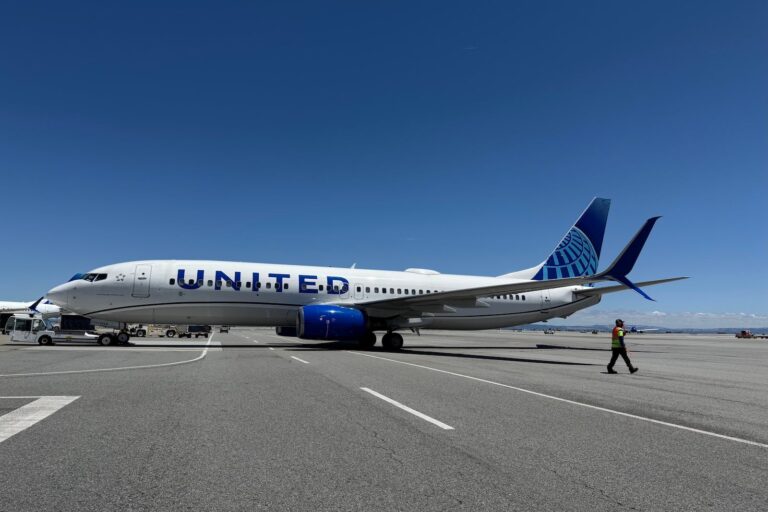
United will introduce two new routes from SFO beginning in the final months of 2024. The carrier launches daily service to Cincinnati/Northern Kentucky International Airport (CVG) on October 25, operating the route with a Boeing 737-800. Three weeks later, on November 7, United begins Saturday-only service to President Donald J. Trump International Airport (DJT) in West Palm Beach, Florida, also using a 737-800 aircraft.
DJT opened as West Palm Beach’s primary commercial airport and was previously known as Palm Beach International Airport under code PBI. Both routes represent United’s response to the carrier’s operational flexibility improving at SFO following months of FAA-mandated flight restrictions.
Cincinnati Route Targets Midwest Connectivity
The daily Cincinnati service addresses connectivity between two major metropolitan areas. Cincinnati serves as a hub for multiple industries and connects travelers through United’s broader network, while the daily frequency enables both leisure and business passengers to access the route reliably for award bookings or revenue seats.
West Palm Beach Saturday Flights
The Saturday-only frequency to West Palm Beach reflects seasonal leisure travel patterns to South Florida. Unlike the daily Cincinnati flights, the once-weekly schedule suggests United is testing demand rather than committing to year-round daily service. For award travelers, the limited frequency means booking flexibility becomes critical.
San Francisco Capacity Constraints Begin Easing
The timing of these new routes follows a series of FAA actions that have gradually restored capacity at SFO. In April 2024, the Federal Aviation Administration implemented strict hourly flight caps at the airport, reducing operations to 36 flights per hour. The agency cited ongoing runway construction and safety concerns as justification for the constraint.
Those restrictions have now begun to loosen. On August 12, 2024, the FAA raised the cap to 40 flights per hour. The agency is expected to increase the limit again to 42 flights per hour by the end of August. Even at the projected 42 flights per hour, SFO will remain significantly below the 54 flights per hour that were permitted before the caps took effect, according to reporting from The San Francisco Chronicle.
Recovery Trajectory Extends Into Fall
The phased approach to restoring capacity suggests the FAA is proceeding carefully. Runway construction projects likely continue through the fall, meaning further increases may be gradual. For airlines including United, each incremental raise opens room for modest new service without displacing existing flights.
Runway Work Underlying the Constraints
The underlying construction work at SFO has created a multi-month squeeze that affected all carriers. United’s ability to announce new routes now reflects confidence that the worst of the restrictions are behind the airport, though full pre-April capacity remains several months away at minimum.
United Leadership Flagged San Francisco Improvements
In June 2024, United Chief Operating Officer Toby Enqvist signaled that the carrier expected improvements in landing rates at San Francisco in the near term. His comments proved prescient, as the FAA’s August capacity increases arrived just months later. The alignment between management expectations and actual regulatory action suggests United had prior visibility into FAA timing for easing the caps.
For frequent fliers, the comment reflected the airline’s strategic focus on San Francisco as a growth market despite temporary constraints.
Chicago Expansion Put on Ice Indefinitely
The growth at San Francisco stands in sharp contrast to United’s stalled ambitions at Chicago O’Hare International Airport. Earlier in 2024, United announced approximately 10 new routes from ORD. Those plans have now been indefinitely postponed following regulatory decisions that extend constraints through 2027.
The FAA implemented flight caps at Chicago O’Hare in April 2024, citing a competitive turf war between United and American Airlines over gate access under the airport’s annual gate redistribution program. In July 2024, the agency extended those caps through October 2027, effectively pushing any possibility of resuming the new routes into the latter part of the decade.
Extended Caps Force Long-Term Postponement
A United spokesperson stated: “Following the extension of FAA’s Chicago O’Hare’s flight schedule cap through October 2027, we are delaying the start of ten new routes announced earlier this year and removing them from our schedule. We remain committed to providing important connectivity to these cities and hope to start service from Chicago once the FAA order expires.”
The three-year extension of the caps makes near-term resumption impossible. United cannot add new flights at Chicago without removing existing service elsewhere at the airport, a trade-off that makes little business sense when the carrier can grow in less constrained markets.
Gate Competition Limits All Carriers
The competitive dynamics between United and American Airlines prompted the FAA intervention. Both carriers compete intensely for gate positions at one of the world’s busiest airports, and the redistribution mechanism that determines gate allocation favored carriers adding flights. The FAA’s caps neutralized that advantage, forcing both carriers to compete within a fixed flight limit.
Seat Growth Without Additional Flights
Despite the flight cap restrictions at Chicago, United plans to grow available seats at O’Hare by approximately 14 percent in 2024 compared to 2023 levels. The carrier is achieving this expansion through aircraft substitution: deploying larger planes on existing routes to increase capacity without increasing flight counts.
Examples include swapping Airbus A320 and Boeing 737 Max 8 aircraft (which carry 150–166 seats) for larger A321neo and 737 Max 9 variants (which accommodate 179–200 seats). The strategy maximizes yield within regulatory constraints but provides no additional route options for award travelers seeking new destinations from Chicago.
What This Means for Award Availability
The route additions at San Francisco create new award redemption paths, though the limited frequency to West Palm Beach may complicate booking on specific travel dates. Award inventory typically opens closer to departure, and Saturday-only service restricts flexibility for travelers needing weekday travel.
The Cincinnati route, with daily frequency, should provide more consistent award availability and represents a permanent addition to United’s network. Frequent fliers should expect award release patterns similar to other 737-800 routes in United’s domestic portfolio.
At Chicago, the indefinite postponement of 10 routes eliminates redemption opportunities that United had previously promised. Interestingly, United does not operate any of the 10 postponed destinations from other United hubs, meaning these routes offered genuine new connectivity rather than redundant service.
For elite frequent fliers, the San Francisco growth and Chicago constraints illustrate how FAA regulatory decisions influence award availability and route networks independently of airline planning. Both trends will likely persist into 2025 and beyond as the FAA maintains caps through October 2027 at Chicago and continues monitoring San Francisco’s runway work.
Frequently Asked Questions
When do United's new San Francisco routes launch?
United begins daily service to Cincinnati on October 25, 2024, and Saturday-only service to West Palm Beach (DJT) on November 7, 2024. Both routes operate with Boeing 737-800 aircraft.
Why is United postponing 10 Chicago routes?
The FAA extended flight caps at Chicago O'Hare through October 2027 to manage competition between United and American Airlines for gate access. United cannot add the 10 previously announced routes without exceeding the flight limit.
What is the current flight capacity at San Francisco International?
San Francisco is currently operating at 40 flights per hour as of August 12, 2024, with an expected increase to 42 flights per hour by end of August. This remains below the 54 flights per hour allowed before April's restrictions.
