
Key takeaways
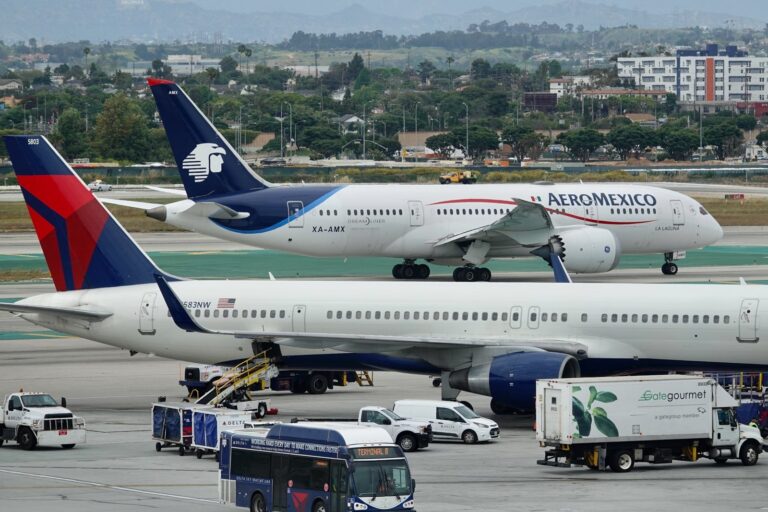
- An appeals court upheld the Delta-Aeromexico joint venture, rejecting the DOT's attempt to terminate it based on a narrow Mexico City market analysis.
- The partnership controls nearly 20 percent of U.S.-Mexico seats and has added routes to Phoenix, Raleigh-Durham, and Tampa since launching a decade ago.
- SkyMiles and Aeromexico Rewards members maintain reciprocal loyalty benefits, earning and redeeming points across both carriers' networks without disruption.
A federal appeals court has ruled decisively in favor of the Delta Air Lines-Aeromexico partnership, preserving the immunized joint venture that the Department of Transportation had initiated termination proceedings against beginning in 2024. The decision from the U.S. Court of Appeals for the Eleventh Circuit, issued Thursday, provides critical relief for the two carriers seeking to maintain their coordinated operations across U.S.-Mexico routes and represents a significant victory for the partnership’s commercial model.
How the Court’s Decision Unfolded
The court’s reasoning hinged on a technical but consequential distinction in regulatory analysis. The DOT had grounded its termination effort on conditions specific to the Mexico City market, whereas the original 2016 approval of the joint venture rested on a broader assessment spanning the entire U.S.-Mexico market. By rejecting the DOT’s narrower market definition, the court preserved the partnership’s legal standing and immunized status, preventing the forced dissolution that regulators had sought.
In a statement, Aeromexico highlighted the implications: “The joint venture and its antitrust immunity remain in effect, allowing Aeromexico and Delta to continue providing enhanced connectivity, a broader network, more convenient service options and increased competition for customers traveling between Mexico and the United States.” Delta’s statement emphasized the continuity this provides to customers, employees, and communities benefiting from the long-running partnership, underscoring the business relationship’s importance to both carriers.
What a Joint Venture Enables
Operational Structure
For those unfamiliar with airline joint ventures, the arrangement functions differently from a typical codeshare or partnership. Rather than operating as independent competitors selling seats on each other’s flights, the carriers function essentially as a single operator in the covered market, allowing them to integrate their operations far more deeply than a simple interline agreement.
Coordinated Operations
This operational integration typically spans three core areas: coordinated flight schedules to minimize connection times and overlaps, joint pricing and revenue management across the network, and combined sales and marketing under shared commercial terms. The depth of integration in joint ventures allows carriers to offer more flights and expand routes in a market beyond what either airline could justify independently, particularly on thinner city-pair routes that neither carrier would serve alone.
Market Position and Network Expansion
Route Growth Since Launch
The U.S.-Mexico route network represents the largest international market for U.S. carriers measured by available seats, according to aviation analytics from Cirium. Since the joint venture launched roughly a decade ago, Delta and Aeromexico have introduced numerous new routes from Mexico City’s Benito Juárez International Airport to markets that previously lacked direct service, including Phoenix Sky Harbor (PHX), Raleigh-Durham (RDU), and Tampa (TPA). These additions would not have been economically viable for either carrier to pursue independently.
Competitive Position
The combined carrier now commands the second-largest seat share on U.S.-Mexico routes, behind only American Airlines. American Airlines leads with just over 20 percent of total seats during August, the year-end measurement month. Delta and Aeromexico’s joint venture operates nearly 20 percent of seats combined, while Mexican low-cost carrier Volaris holds the third position at 19 percent. This near-parity in market share between American and the Delta-Aeromexico combination underscores the effectiveness of the partnership in consolidating competitive position. The potential loss of these new routes had been considered at risk had the DOT successfully terminated the partnership, with concerns that service reductions on secondary and tertiary markets would likely follow.
Loyalty Program Benefits Preserved
Frequent flyers with either Delta SkyMiles or Aeromexico Rewards will see no disruption to the reciprocal program benefits they have come to rely on. The two loyalty programs have offered mutual recognition throughout the joint venture’s existence, allowing members of each program to earn and redeem points across both carriers’ networks with integrated booking and award availability. Thursday’s court decision ensures these cross-airline benefits continue unchanged, protecting the accumulated miles value for SkyMiles and Rewards members who have built point balances specifically to leverage the partnership’s broad geographic reach.
A Previous Test: The FAA Safety Downgrade
The Delta-Aeromexico partnership had faced an earlier regulatory threat between 2021 and 2023. When the Federal Aviation Administration downgraded Mexico’s safety rating from Category 1 to Category 2—a classification of a country’s aviation regulatory regime rather than individual airline safety—the partnership was forced into suspension. The downgrade required the airlines to halt their coordinated operations and codeshare arrangements during that period, effectively dissolving the commercial relationship temporarily.
The situation reversed when Mexico’s safety rating returned to Category 1 status in 2023, allowing Delta and Aeromexico to resume their joint venture. That earlier suspension demonstrated how external regulatory factors could threaten the partnership’s existence, making Thursday’s court decision a relief for both carriers and their customers seeking reliable, year-round service across the U.S.-Mexico network.
What the Ruling Means for Travelers
The court’s decision provides certainty for travelers planning trips between the U.S. and Mexico. The continued joint venture means access to a wider range of connection options, more frequent service on key routes, and the ability to earn and use miles flexibly across both carriers’ operations. The reciprocal loyalty benefits remain available, allowing SkyMiles members to book Aeromexico flights with their miles and vice versa, maintaining the full value of the partnership for frequent travelers on this critical international route network.
Frequently Asked Questions
Why did the court rule in the airlines' favor?
The court rejected the DOT's termination effort because the agency focused narrowly on the Mexico City market rather than the broad U.S.-Mexico market that was used to approve the partnership in 2016.
What new routes resulted from this partnership?
Delta and Aeromexico added dozens of routes from Mexico City to U.S. cities including Phoenix Sky Harbor (PHX), Raleigh-Durham (RDU), and Tampa (TPA) since the joint venture launched a decade ago.
Are loyalty program members affected?
No. The ruling preserves reciprocal benefits between Delta SkyMiles and Aeromexico Rewards, allowing members to earn and redeem points across both carriers' networks unchanged.
