
Key takeaways
- The four new routes strengthen Newark Liberty International Airport’s position as United’s primary East Coast hub, a designation that carries enormous strategic weight in the airline’s network architecture.
- United’s expansion into these four markets reflects a broader carrier strategy of capturing regional routes abandoned by competitors facing financial distress.
- The addition of these four routes transforms smaller regional airports into meaningful players within United’s broader East Coast network, providing their surrounding communities with direct access to a major airline hub.
- United’s expansion into these four markets represents a continuation of the carrier’s long-standing strategy of leveraging its Newark hub to penetrate regional markets across the eastern United States.
United Airlines will launch four new nonstop routes from Newark Liberty International Airport beginning September 24, 2026, connecting the airline’s primary East Coast hub to Charlottesville, Virginia; Knoxville, Tennessee; Bentonville, Arkansas; and Omaha, Nebraska. The expansion marks a significant reinforcement of United’s regional network strategy and underscores the carrier’s commitment to serving smaller markets that competing airlines have abandoned. Knoxville will receive twice-daily service, while the three other destinations will each receive daily nonstop flights operated by United Express regional partners.
Four Regional Markets Added to Newark’s Growing Network
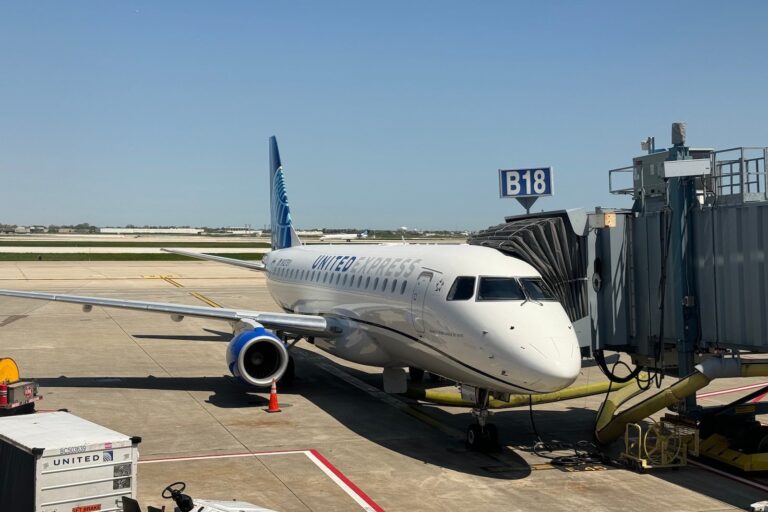
United Express will deploy Bombardier CRJ550 regional jets on the routes to Charlottesville-Albemarle Regional Airport (CHO) and McGhee-Tyson Airport in Knoxville (TYS), while Embraer 175 aircraft will serve Northwest Arkansas National Airport in Bentonville (XNA) and Omaha Eppley Airfield (OMA). This aircraft configuration allows United to efficiently match capacity to expected demand across four distinct regional markets while maintaining full connectivity through Newark’s hub infrastructure. The carrier has already made tickets available for the Knoxville route, with inventory for Bentonville scheduled to open on the Thursday evening following the announcement.
Knoxville emerges as the flagship destination among the four new routes, earning twice-daily nonstop service that reflects strong market demand in the region. Charlottesville, Bentonville, and Omaha will each receive one daily nonstop flight, establishing consistent connectivity for business and leisure travelers in those markets. All four routes are scheduled to launch simultaneously on September 24, allowing United to coordinate marketing efforts and operational planning across the expansion.
Strategic Expansion Reinforces Newark as East Coast Gateway
The four new routes strengthen Newark Liberty International Airport’s position as United’s primary East Coast hub, a designation that carries enormous strategic weight in the airline’s network architecture. From Newark, the carrier plans to serve more than 160 domestic and international destinations this fall and winter, including newly launched international service to Rome, Venice, and Seoul. For travelers in Virginia, Arkansas, Tennessee, and Nebraska, these new direct flights create seamless one-stop connectivity to hundreds of destinations across North America, Europe, Asia, and Latin America through the Newark hub.
Northwest Arkansas National Airport specifically highlighted this broader connectivity value in its response to the new route announcement, noting that while the direct New York area access provides immediate benefits, the true strategic advantage lies in offering a one-stop path through Newark to United’s sprawling global network. This hub-and-spoke strategy allows United to justify service to smaller markets by leveraging the massive connecting traffic flowing through its East Coast operations. The regional expansion demonstrates United’s confidence that demand exists in these markets to support both point-to-point travel and connecting passengers bound for distant destinations.
Market Recovery Amid Industry Consolidation
United’s expansion into these four markets reflects a broader carrier strategy of capturing regional routes abandoned by competitors facing financial distress. The airline has separately announced service to Columbia, South Carolina, and Chattanooga, Tennessee, beginning in winter 2026, explicitly positioning these additions as direct responses to Spirit Airlines pulling service from those airports following Spirit’s bankruptcy. This pattern reveals how United is systematically evaluating gaps in regional connectivity created by competitor failures and moving aggressively to fill those voids before other carriers can establish a foothold.
The return of service to Arkansas, Nebraska, and Tennessee indicates that United previously operated flights to these destinations before suspending them, likely due to capacity constraints or pandemic-related network reductions. The reinstatement of these routes signals that United’s leadership believes sufficient demand has materialized or returned to justify restoring regional connectivity. Charlottesville represents either a new market for United Express or a route receiving enhanced frequency, expanding the carrier’s geographic reach in the Mid-Atlantic region.
Regional Airports Position Themselves as United Gateways
The addition of these four routes transforms smaller regional airports into meaningful players within United’s broader East Coast network, providing their surrounding communities with direct access to a major airline hub. Airport officials and regional economic development organizations have long advocated for hub connectivity, recognizing that direct flights to major airline hubs translate into improved business travel options, expanded leisure destination access, and enhanced economic competitiveness for their regions. United’s commitment to twice-daily Knoxville service and daily service to the three other markets signals confidence that these markets can sustain meaningful traffic volumes.
For passengers in these regions, the new routes eliminate the need for connections through secondary hubs or competing carriers, reducing travel time and improving schedule flexibility. Business travelers can now book same-day round trips to New York and other Northeast destinations, while leisure travelers gain simplified access to international connections through Newark’s international terminal operations. The consistent daily frequencies provide reliable scheduling options that support both planned business trips and flexible leisure travel patterns.
Historical Context: United’s Regional Network Evolution
United’s expansion into these four markets represents a continuation of the carrier’s long-standing strategy of leveraging its Newark hub to penetrate regional markets across the eastern United States. The return of flights to previously served destinations demonstrates the dynamic nature of airline networks, where capacity reallocation, competitive pressures, and demand fluctuations drive route decisions. The simultaneous launch of four regional routes on a single date reflects United’s operational efficiency in coordinating regional expansion across its United Express partner carriers.
The carrier’s plan to serve more than 160 domestic and international destinations from Newark this fall and winter establishes the hub’s role as a cornerstone of United’s network strategy. This scale of connectivity positions Newark among the most important airline hubs in North America, rivaling other major carrier hubs in terms of destination breadth and frequency depth.
What Travelers Should Monitor in the Coming Months
Passengers and travel planners should monitor ticket availability and fare patterns as the September 24 launch date approaches, particularly for the Bentonville and Omaha routes where booking windows open slightly after the Knoxville route launch. The twice-daily Knoxville service may establish different pricing dynamics than the single-daily routes, potentially offering more schedule flexibility but also higher fares during peak travel periods. Regional airports should track load factors and passenger volumes in the early months of operation, as strong performance could justify frequency increases or expanded service to additional United destinations.
United’s willingness to deploy regional jets on these routes demonstrates the carrier’s confidence that these markets will support profitable operations while maintaining hub connectivity standards. The September 24 launch marks a significant milestone in United’s regional network evolution and establishes new travel options for millions of residents across Virginia, Arkansas, Tennessee, and Nebraska seeking convenient access to Newark’s global network.
