
Key takeaways
- Reagan National's $835 million Terminal 1 expansion, opening in 2031, adds nine gates and 10,000 square feet for Southwest's first airline lounge.
- The redesigned passenger flow solves decades-old issues by locating check-in closer to Metro access and bringing the historic terminal inside security.
- Increased capacity and frequency at DCA typically improve award seat availability on Southwest Rapid Rewards redemptions.
- The expansion follows a $1 billion renovation completed five years ago, showing Reagan National's long-term commitment as a Southwest hub.
Southwest Airlines frequent flyers traveling through Reagan National Airport (DCA) have new reasons to watch the airline’s loyalty program evolution. The Metropolitan Washington Airports Authority announced plans for an $835 million Terminal 1 expansion, with a new nine-gate concourse potentially opening in 2031. More intriguingly for the miles-and-status crowd, the project includes 10,000 square feet of dedicated space for an unnamed new airline lounge—and Southwest executives have been publicly teasing plans to invest in a lounge network for the first time.
A Major Upgrade for Washington’s Busiest Airport Hub
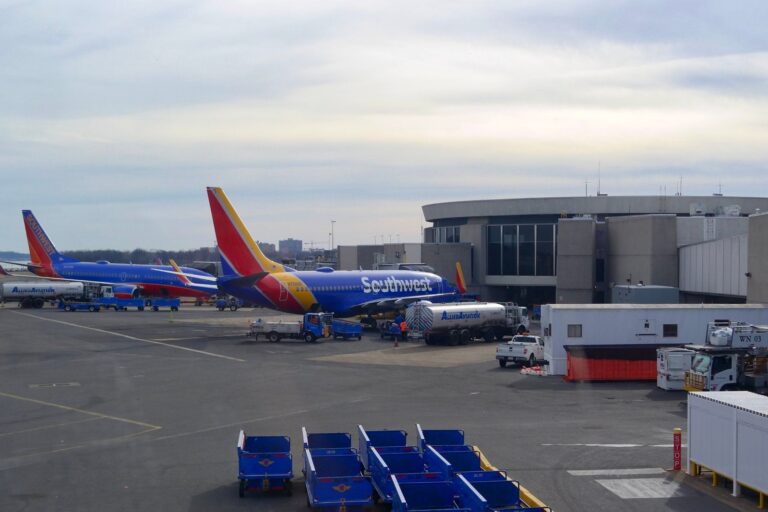
The expansion represents a significant modernization of Terminal 1 at Reagan National, which Southwest Airlines operates as one of its key East Coast hubs. Terminal 1 hosts not just Southwest, but also Air Canada and Frontier Airlines. The project will replace the distinctive “banjo”—the midcentury concourse and rotunda dating to 1970, instantly recognizable by its instrument-like shape—with a modern nine-gate concourse designed by PGAL, the same architecture firm that recently completed the $1 billion Project Journey expansion (completed five years ago).
The 2031 opening target means Southwest frequent flyers have roughly seven years before they experience a redesigned Terminal 1 passenger flow. Given that DCA handled this level of investment just half a decade ago, the airport authority appears committed to staying competitive with other major gateway hubs. For miles accumulators, this suggests Southwest will remain a priority carrier in Washington, with expanded infrastructure to support growth.
The Historic Terminal Gets Modern Treatment
The expansion preserves the historic 1941 terminal building—a landmark structure—while completely reorganizing how passengers move through the space. The new design addresses one of DCA’s longest-standing passenger complaints: the disconnect between the main lobby and security screening. Currently, travelers check in far from the Metro and Terminal 2. Under the new plan, a separate processor building for check-in and baggage claim would sit on the existing taxi staging lot between Terminals 1 and 2, bringing the check-in process closer to transit connections and the rest of the airport.
What Frequent Flyers Actually Care About: The Lounge Situation
The most significant detail for Southwest credit card holders is the 10,000 square feet of space reserved for a new airline lounge. Southwest has never operated a lounge network—a major gap compared to competitors like United, Delta, and American. Southwest executives have “repeatedly teased plans to potentially invest in a lounge network,” according to reporting on the expansion. The Terminal 1 space could represent the airline’s opening move into this space.
For cardholders earning Rapid Rewards points, this matters because lounge access dramatically improves redemption value. Unlike legacy carriers with complex tiered lounge hierarchies, Southwest has historically directed premium tier members to third-party lounge access through Priority Pass or similar programs. A dedicated Southwest lounge at DCA—one of the highest-traffic terminals in the U.S.—would signal a major shift in how the airline values frequent flyer status. The exact lounge brand and partnership structure remain unannounced, but the reserved space guarantees something will materialize by 2031 or shortly after.
Award Capacity Implications
From an award availability perspective, the expansion adds nine gates to Terminal 1, increasing Southwest’s physical capacity at DCA. More gates means more flights, and more flights create more low-availability award inventory. The Rapid Rewards program operates on an inventory-based model, where award availability depends on unsold revenue seats. Increased flight frequencies typically improve award seat availability, especially on off-peak flights that award hunters seek.
The Passenger Experience Overhaul
The redesigned flow removes a major friction point for frequent travelers. Passengers will now walk from the new processor building through an enlarged corridor, pass the B gates (currently used by United), proceed through the historic 1941 lobby—now inside security for the first time—and into the new concourse. The estimated walking distance from check-in to the farthest gate is 2,700 feet, roughly equivalent to 7.5 football fields.
While this might sound long, it represents a logical improvement over the current setup, where passengers must navigate between terminals to access current security checkpoints. The Metro connection becomes more convenient, and the overall passenger journey streamlines. For elite frequent flyers managing tight connections, the predictable layout and shorter overall path matter significantly.
Historic Preservation Meets Modern Convenience
The Metropolitan Washington Airports Authority emphasized that the project would “deliver a modern passenger convenience while respecting the terminal’s historic context.” The iconic 1941 terminal building won’t be demolished; instead, it becomes integrated into the passenger flow, finally bringing it inside the security perimeter. The “banjo” and other non-historic additions will be removed once the new concourse opens. This approach satisfies both preservation advocates and the operational needs of an increasingly busy terminal.
Timing and Cost Considerations
The $835 million price tag (in 2025 dollars) may rise with inflation and construction timelines, which typically extend beyond initial projections. The 2031 target assumes smooth approval processes and no major construction delays. For frequent flyers, the key takeaway is that this capital investment locks in Southwest’s presence and capacity growth at Reagan National through the 2030s.
This expansion follows the $1 billion Project Journey completed five years prior, which added the 14-gate E Concourse, eliminated the dreaded Gate 35X, and added two new security checkpoints. That project demonstrated both DCA’s commitment to growth and Southwest’s importance to the airport’s strategy. Back-to-back major expansions suggest Reagan National will remain a competitive hub for Rapid Rewards redemptions and elite status benefits.
The Regional Context: DCA and Dulles Strategy
The DCA expansion sits alongside a much larger redevelopment effort at Dulles International Airport (IAD), where the Metropolitan Washington Airports Authority is pursuing a $22.5 billion redevelopment championed by the Trump administration and United Airlines. While DCA is optimized for Southwest, Dulles caters to United’s hub operations and international traffic.
For frequent flyers based in the Washington, D.C. area, this dual-airport strategy matters. Southwest’s commitment to DCA expansion signals the airline views the market as essential, even as United doubles down on Dulles. Travelers with status on both carriers now have clarity: Southwest will grow DCA, United will expand Dulles. Loyalty program value depends on consistent, growing capacity, and both airlines are signaling major long-term commitment to their respective Washington hubs.
What to Watch
The next milestones are environmental approval (planning documents were released in July) and formal project green-lighting. Southwest’s lounge announcement should come once the airline commits to the Terminal 1 timeline. For frequent flyers, the main benefit materializes in three phases: the immediate capacity gains (more flights when new gates open), the lounge launch (better premium experience), and the passenger experience redesign (smoother security and wayfinding).
Air Canada and Frontier also gain from the expansion, but Southwest’s role as Terminal 1’s anchor tenant ensures the airline’s interests drive the project scope. For Rapid Rewards members earning and burning points in the Mid-Atlantic, this is bullish news about redemption value and network growth through the 2030s.
Frequently Asked Questions
When will Reagan National's new Terminal 1 concourse open?
The new nine-gate concourse is expected to open in 2031, pending project approvals and construction timelines.
Will Southwest Airlines finally get its own lounge?
Yes—10,000 square feet of space is reserved for an unnamed new airline lounge, and Southwest executives have repeatedly teased plans to invest in a lounge network for the first time.
How does this expansion affect award ticket availability?
The new gates increase Southwest's capacity at DCA, which typically improves award seat availability on Rapid Rewards redemptions through increased flight frequency.
