
Key takeaways
- The TSA's eight-lane e-gate trial at Charlotte Douglas automates credential verification for PreCheck members, reducing security times by approximately three seconds per passenger.
- Access requires TSA PreCheck membership, which premium travel credit cards from Chase and American Express include as a cardholder benefit.
- Passengers retain explicit authority to decline facial photography and proceed through conventional checkpoint procedures instead.
- The trial represents one element of broader TSA modernization efforts including Touchless ID at 60+ airports and the private TSA Gold Plus screening program.
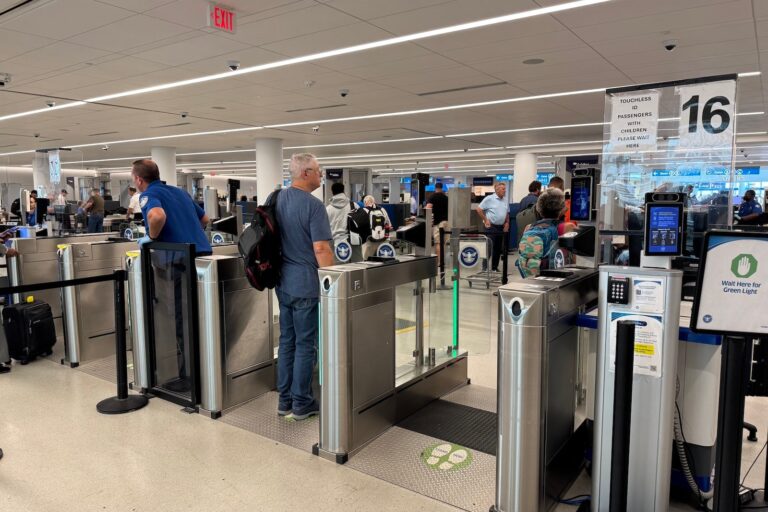
The Transportation Security Administration commenced testing automated identity verification systems at Charlotte Douglas International Airport (CLT) in early summer, introducing the first self-service e-gates deployed at a U.S. airport security checkpoint. The technology eliminates manual credential examination in favor of machine-based biometric photo comparison, fundamentally altering the checkpoint experience for frequent flyers and TSA PreCheck members.
The eight-lane installation operates within Security Checkpoint 2, functioning as what the TSA designates an “operational assessment” to evaluate performance metrics and passenger throughput. Prior trials at Ronald Reagan Washington National Airport (DCA) preceded Charlotte Douglas. If initial assessments prove successful, this technology could expand to additional major hubs nationwide, reshaping security operations at busy travel corridors.
How the E-Gates Technology Works
The Physical Setup and Components
Eight dedicated automated booths with electronic gates now occupy lanes within Security Checkpoint 2 at Charlotte Douglas. The installation resembles self-service immigration gate systems deployed throughout major European airports, featuring mounted camera systems, display screens, and electronically controlled gate mechanisms. Unlike conventional checkpoint configurations featuring seated officers at credential stations, passengers approaching an e-gate encounter only the automated infrastructure. The booths operate continuously when activated, processing passengers sequentially through the credential verification cycle.
The gates themselves are electronically controlled, opening only after the system confirms identity verification. This design prevents unauthorized passage while maintaining passenger flow efficiency.
The Three Credential Verification Pathways
The e-gate system accommodates three distinct methods for credential presentation, allowing passengers to use whatever documentation they carry. Some passengers insert a driver’s license into a scanning slot, while others tap a passport against an integrated sensor. For those enrolled in the TSA Touchless ID program, no physical credential contact is required—the traveler simply faces the mounted camera.
Regardless of the method selected, the TSA’s biometric software captures a photograph of the passenger’s face. This image is compared against the photo embedded in the presented credential using facial recognition technology. The system processes this comparison rapidly; when identity verification confirms a match, the display screen notifies the passenger and the electronic gate opens. This entire transaction—from credential insertion or presentation through gate opening—typically completes within a few seconds.
During testing, the system demonstrated consistent performance across multiple trial cycles. Technical failures or delays were minimal, and passengers generally experienced seamless gate opening without extended wait times.
Touchless ID Integration and Time Advantage
The Touchless ID pathway offers the fastest verification route. Rather than inserting a license or tapping a passport, enrolled passengers simply face the camera. The system retrieves stored credential information and completes the facial comparison automatically, with no document handling required. The TSA quantifies this contactless approach at approximately three seconds faster than conventional checkpoint credential verification procedures.
This three-second reduction might appear marginal in isolation, but compounds significantly when applied across frequent travelers. A passenger making ten airport transits monthly gains thirty seconds of aggregate time savings—meaningful when connections are tight or security lines are unexpectedly long. For quarterly business travelers or frequent leisure travelers, this efficiency gain distributes across dozens of annual checkpoint experiences.
TSA PreCheck Membership Requirements
Access to the Charlotte Douglas e-gates requires active TSA PreCheck enrollment. The system does not mandate additional registration, special enrollment processes, or supplementary fees beyond standard PreCheck membership costs. Passengers who have already obtained PreCheck simply proceed to these eight dedicated e-gate lanes when transiting Security Checkpoint 2.
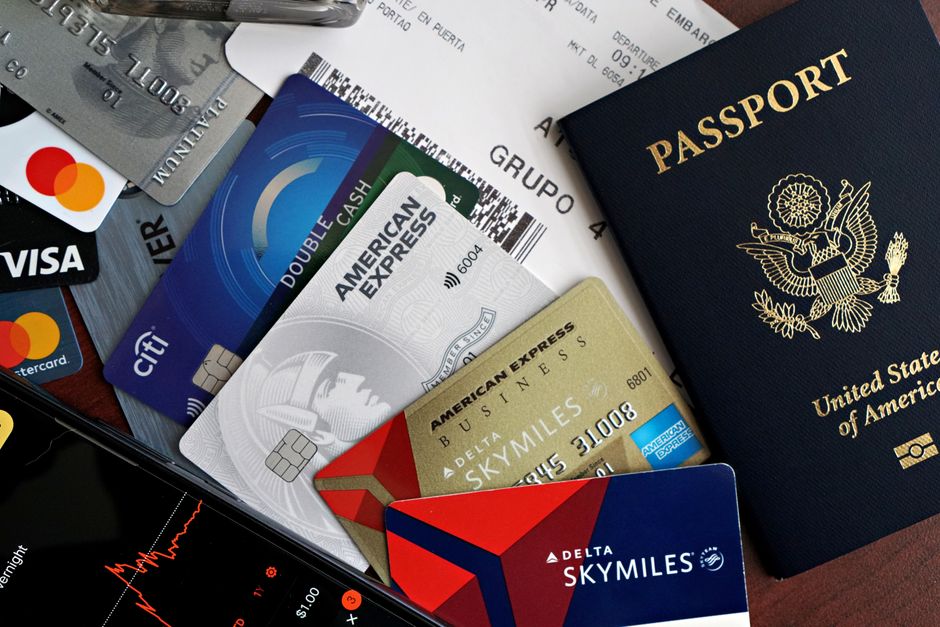
This requirement is particularly relevant for premium travel credit card holders. Numerous high-tier credit cards—including the Chase Sapphire Reserve, American Express Platinum Card, and others—include TSA PreCheck or Global Entry benefits as premium cardholder perks. For these cardholders, the e-gate access arrives as an added benefit of their existing credit card membership, with no separate enrollment required.
The credential verification component represents the only procedural change from conventional checkpoints. All subsequent security screening—baggage screening, metal detection, advanced imaging scanners—proceeds identically to standard TSA checkpoint protocols. Passengers place carry-on items on conveyor belts and proceed through detection equipment using familiar procedures. The automation affects exclusively the identity verification stage of the security process.
Cumulative Time Impact and Operational Benefits
The TSA projects that each three-second reduction in credential verification, when multiplied across thousands of daily passengers at a major hub like Charlotte Douglas, creates substantial operational capacity gains. These automation-driven efficiencies permit the agency to redirect personnel from credential-checking duties toward other security functions. Officers previously stationed at credential examination stations can assist infrequent travelers with standard checkpoint procedures, answer security protocol questions, or support other screening operations.
For business travelers conducting frequent airport transits, the time savings accumulate measurably. A consultant making five airport journeys monthly gains approximately 15 seconds of cumulative time savings. A traveler with weekly business travel—52 annual transits—accumulates roughly 150 seconds (2.5 minutes) of aggregate security checkpoint time reductions annually. While individual reductions are brief, these compounded gains become material for high-frequency travelers, particularly those operating with minimal buffer times between arrival and gate departure.
The three-second average represents just one benefit; reliable e-gate performance eliminates variability in credential checking duration. Conventional credential checks might require 5 to 15 seconds depending on officer experience and passenger ID legibility. The automated system provides consistent, predictable timing across all passengers.
User Experience During Operational Testing
Observation of the e-gates during initial testing phases revealed reliable technical performance and integration into normal checkpoint operations. Passengers processed through the automated lanes without encountering extended delays, line blockages, or operational disruptions. Unlike some automated airport systems that have created bottleneck scenarios when technical malfunctions occur, these gates demonstrated consistent functionality across multiple test cycles.
TSA personnel stationed adjacent to the e-gate booths provided passenger assistance when guidance was required. For travelers unfamiliar with the system, this staffing ensured smooth operations without confusion. Most passengers adapted quickly to the automated process; observers did not report significant hang-ups or repeated system failures.
The remainder of the security experience remained entirely conventional. Once credential verification completed and the gate opened, passengers proceeded to baggage screening and detection equipment using standard procedures. The automation altered exclusively the identity verification component of the checkpoint; everything downstream remained unchanged.
Broader TSA Modernization Context
The Charlotte Douglas e-gates represent one component of a comprehensive TSA infrastructure modernization spanning multiple initiatives. The agency recently completed nationwide deployment of Touchless ID capabilities to more than 60 major airports, enabling contactless credential verification for eligible PreCheck members. This parallel program addresses the same operational bottleneck through a different technological approach—by reducing time spent on credential handling rather than automating verification.
Concurrently, the TSA Gold Plus program introduced private security screening operators to select airports, offering alternative checkpoint pathways to conventional TSA lanes. This public-private partnership model provides premium screening experiences for passengers willing to pay supplementary fees. The Department of Homeland Security simultaneously advanced “one-stop security” programs at certain major hubs, streamlining screening protocols for passengers arriving on international flights.
These overlapping initiatives reflect a coordinated modernization strategy, addressing distinct pain points within airport security operations. Some initiatives focus on speed (e-gates, Touchless ID), others on alternative access (TSA Gold Plus), and others on specific passenger categories (one-stop security for international arrivals).
Future Expansion Prospects
The TSA characterizes the Charlotte Douglas installation as an “operational assessment,” indicating that this trial serves as a data-gathering phase before broader deployment decisions. The prior trial at Ronald Reagan Washington National Airport demonstrated agency confidence in the underlying technology and operational approach. While specific expansion timelines remain unannounced, testing at additional airports appears probable as the agency evaluates performance metrics and passenger acceptance data.
Frequent travelers should monitor TSA announcements regarding e-gate expansion, particularly those transiting major hubs where similar infrastructure projects might be planned.
Privacy Safeguards and Passenger Autonomy
Passengers retain explicit authority to decline facial photography at security checkpoints. For travelers with privacy concerns regarding biometric data collection, this opt-out option permits processing through conventional checkpoint procedures. TSA policy mandates deletion of all identity verification photos within 24 hours following scheduled departure. This retention window limits the duration that facial recognition data persists in TSA systems.
The combination of retention limits and explicit opt-out authority balances operational benefits against privacy considerations.
Frequently Asked Questions
What TSA membership is required to use the Charlotte Douglas e-gates?
You must have an active TSA PreCheck membership to access the eight dedicated e-gate lanes at Security Checkpoint 2. No additional registration or fees are required beyond standard PreCheck enrollment.
How much faster are the e-gates compared to conventional security checkpoints?
The TSA estimates that e-gate credential verification is approximately three seconds quicker on average than traditional officer-conducted checks, with Touchless ID providing the fastest passage at three seconds faster than standard procedures.
Can I opt out of facial photography at the e-gates?
Yes. Passengers retain explicit authority to decline facial photography at security checkpoints and may proceed through conventional checkpoint procedures instead. The TSA deletes all photos used for identity verification within 24 hours of your flight's departure.
