
Key takeaways
- First Cabin International opened its first U.S. pod hotel in Honolulu on Kalakaua Avenue with three tiered room types: first-class ($130), business-class (~$119), and premium economy (~$65) bunks.
- First-class pods delivered quality sleep and airport-lounge amenities; premium economy bunks proved so noisy and chaotic that one guest departed at midnight for the Sheraton Waikiki.
- The hotel books exclusively through Expedia One Key, earning only $3.27 cash back on a two-night stay with no major loyalty program benefits or elite recognition.
First Cabin International, a Japanese capsule hotel concept rebranding dorm-style accommodations as “first class,” “business class,” and “premium economy” tiers, opened its first United States location in Honolulu. The 14-story property sits on Kalakaua Avenue in downtown Waikiki, steps from the beach. For travelers hunting budget lodging with class-tier options, it represents an intriguing experiment—though success depends heavily on which room type you choose.
The hotel occupies the upper floors of a nondescript high-rise on Waikiki’s main strip. Check-in happens via touchpad computer on the 14th floor, though a front desk agent can assist if the digital keypad proves confusing. The property centers on shared facilities: separate bathrooms for men and women, each accessed via numeric code, plus a common living space with a compact kitchen. Free coffee and tea, a refrigerator for storing meal leftovers, and a microwave round out the shared amenities.
The First-Class Experience: Privacy Works
A Double Bed Separated from Chaos
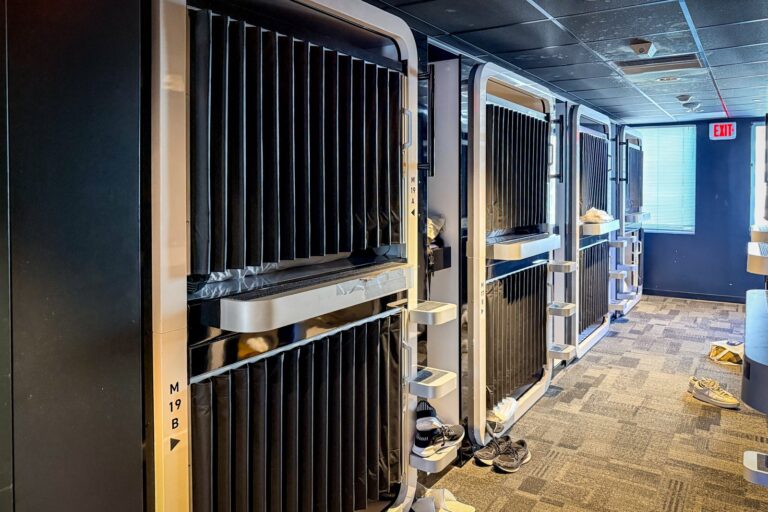
Booking a first-class pod at First Cabin International felt like trading a youth hostel for controlled comfort. At $130 per night, the tier comes with a double bed isolated in a separate locked room, accessed by numeric code. This physical separation from other guests matters more than amenities. The pod includes a small table, lockable drawer, wall-mounted coat rack, slippers, and towels. A wall-mounted television offers streaming content, though use headphones—sound travels easily through the thin screens separating adjacent pods.
Airport-Lounge Seating and Views
The first-class section reserves a separate seating area featuring airport-lounge-style recliners and direct views of Waikiki and the harbor. That dedicated social space signals the hotel’s deliberate tiering—paying more doesn’t just mean privacy; it means separation from the dorm experience entirely.
Sleep Quality Despite the Setup
The mattress was firm, the screen wall thin, and the neighbor situation intimate by any definition. Yet the first night delivered unexpected sleep quality. The cabin’s isolation, combined with the seating area’s ambiance, made the experience feel genuinely intentional. For a single night, the $130 price positioned the pod as an alternative to mid-range hotels rather than a true budget bed, albeit with novelty value that resists direct comparison. The hotel sweetens the first-class tier with one-person sauna pods available for $5 per 20-minute session—a private sauna experience tucked behind a curtain, the kind of touch that justifies the airline-hotel branding.
Booking and Loyalty: No Major Program Recognition
First Cabin International does not participate in major hotel loyalty programs—no Hyatt, Marriott, IHG, or Best Western recognition here. Instead, the property operates exclusively through Expedia, which channels bookings into Expedia’s One Key loyalty program.
For a two-night stay booked through Expedia, the property earned $3.27 in One Key cash. That conversion rate—roughly 0.6% back—reflects One Key’s general positioning: modest rewards relative to category-specific cards, but broadly useful for any accommodation without forcing loyalty lock-in. The trade-off is clear for frequent travelers: you forego elite status, point acceleration, and recognition from your primary hotel chain. For casual travelers or those between loyalty programs, the Expedia route removes friction. Yet it underscores that First Cabin International lacks the recognition and rewards traction of established brands.
Business-Class Pods: The Compromise Tier
Business-class pods start around $119 per night, positioning themselves as a compromise between first-class privacy and economy-dorm proximity. These cabins are considerably more compact than first-class—the trade-off for price. They retain the same amenities (TV, towels, slippers, lockable entry) but sacrifice the separate section entirely. Instead, business-class pods occupy the same floor as premium economy but behind their own locked door, creating a buffer against the full open-dorm experience.
Premium Economy: The Concept’s Breaking Point
Noise and Privacy Collapse
The second night’s downgrade to premium economy revealed the model’s fault line. At approximately $65 per night, premium economy trades privacy for volume, offering bunk-bed arrangements in open rows of two. Each pod still includes a small television, towels, and slippers, but the thin screens separating each bed from the dorm-style room proved entirely ineffective at blocking sound or activity.
Disorder and Uncontrolled Behavior
The chaos escalated rapidly. Shoes, luggage, and clothing scattered across the shared spaces. Unpleasant odors lingered. Guests treated the dorm as personal territory—doors opening and closing throughout the night, neighbor conversations bleeding through, and at least one guest stripping down to underwear before climbing into his bunk. A particularly loud neighbor held phone conversations during daylight hours and returned late at night talking to himself before collapsing.
Departure at Midnight
By midnight, noise and disorder overwhelmed any possibility of sleep. The fight-or-flight response triggered by the chaos forced a decision: leave the pod and relocate to safety. The Sheraton Waikiki, where a traveling companion was staying nearby, offered an obvious alternative. The experience crystallized the gap between aspirational concept and execution. The bunk tiers may function adequately in Japan, where capsule hotels originated and cultural norms around shared spaces differ markedly. In Honolulu, the premium economy tier inherited the concept’s weakness: insufficient soundproofing and inadequate community standards for shared living.
Tiers Compared: Where to Spend
First-class pods at $130 per night occupy an uncomfortable position—not quite mid-range hotel territory but substantially more than economy alternatives. The $65 premium economy tier undercuts them by exactly half, an attractive split that dissolves the moment noise and disorder surface. Business-class pods at $119 per night offer middle ground: locked access and reduced chaos compared to open premium economy, yet more compact than first-class. They represent the tier most likely to deliver value—the psychological and practical boundaries matter, even if space compression takes a toll. The actual value proposition hinges on risk tolerance. First-class guarantees sleep; premium economy guarantees conflict. Business-class gambles on the locked door being sufficient buffer.
Who Should Book Here—And Who Shouldn’t
First Cabin International works as a loyalty play only if you’re indifferent to hotel program recognition. Expedia One Key bookings and the absence of chain affiliation mean no status, no night credits, no elite perks beyond whatever One Key itself offers. For that trade-off to make sense, the price advantage must exceed the value of forgone recognition. First-class pods merit consideration as a novel mid-range option with personality—a boutique experience at mid-range pricing. The separate seating area, guaranteed privacy, and sauna access deliver memorable travel moments. The $130 price sits high enough that traditional mid-market hotels become alternatives, yet low enough that curiosity might justify trying it once. Premium economy bunks? Skip them. No amount of price savings compensates for the noise, disorder, and privacy violation. Travelers seeking budget lodging will find safer options in Waikiki’s established hostels or budget chains. Business-class represents the real test—whether the locked door and reduced chaos offset the compact quarters. Without direct experience, the risk remains high for such a new property.
Frequently Asked Questions
How much does it cost to stay at First Cabin International in Honolulu?
First-class pods cost $130 per night and include a double bed in a private locked room with separate seating area. Business-class pods start around $119 per night with more compact accommodations. Premium economy bunks cost approximately $65 per night. One-person sauna pods are available for $5 per 20-minute session.
Does First Cabin International work with hotel loyalty programs?
No. First Cabin International does not participate in major hotel loyalty programs like Hyatt, Marriott, or IHG. All bookings go exclusively through Expedia's One Key loyalty program. A two-night stay earned only $3.27 in One Key cash, a conversion rate of roughly 0.6% back.
Which room tier at First Cabin should you actually book?
First-class pods at $130 are recommended for their guaranteed privacy, separate seating area with Waikiki views, and reliable sleep quality. Premium economy bunks at $65 should be avoided due to noise, disorder, and privacy violations. Business-class pods at $119 offer a compromise but carry higher risk since the property is new and the locked-door buffer may not be sufficient.
