
Key takeaways
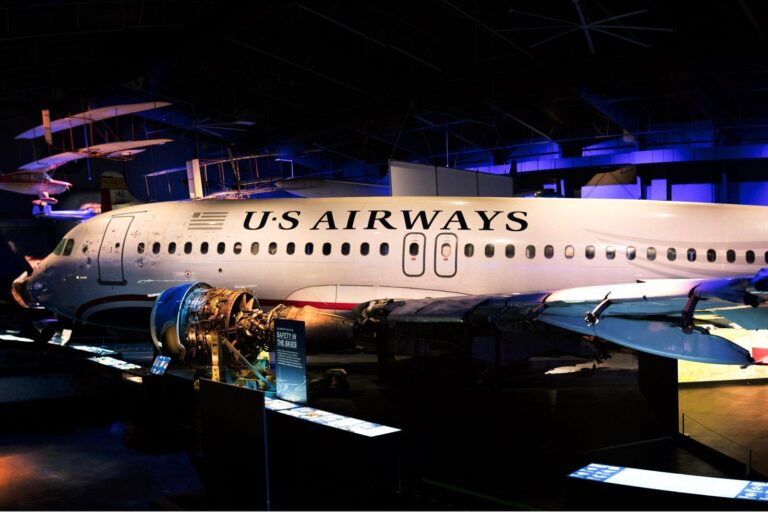
- The actual Airbus A320 from the January 2009 Hudson River emergency landing is on permanent display at the Sullenberger Aviation Museum near Charlotte, fully intact with visible damage from recovery.
- The new "Miracle on the Hudson Experience" guided tour assigns each visitor a boarding pass tied to a specific survivor or crew member, making the historical event personal rather than abstract.
- Museum tickets cost $35 (including $25 general admission), tours run Wednesday, Friday, and Saturday mornings, and groups are limited to 14 people; book up to two months in advance.
When I arrived at the Sullenberger Aviation Museum near Charlotte Douglas International Airport in early 2026, I expected a themed attraction—something akin to a flight-simulator experience with theatrical flourishes. Instead, I found myself standing a few feet from the actual Airbus A320 that made one of aviation’s most consequential emergency landings. The museum’s newly introduced “Miracle on the Hudson Experience,” a small-group guided tour, transforms the plane from spectacle into a deeply human story, anchored to specific people, decisions, and moments frozen in January 2009.
The Flight That Lasted Six Minutes
On January 15, 2009, US Airways Flight 1549 departed New York City’s LaGuardia Airport (LGA) at 3:27 p.m., bound for Charlotte. At 3,000 feet and less than six minutes into the flight, the aircraft struck a flock of geese. Both engines failed simultaneously. Captain Chesley “Sully” Sullenberger made the decision that would define his career: ditch the plane in the Hudson River rather than attempt a water landing at an airport too far away.
The Airbus A320 hit the river’s surface and remained intact. All 155 people aboard—150 passengers, three flight attendants, and two pilots—survived. The rescue boats, led by the Thomas Jefferson ferry, pulled 56 people from the freezing water. No fatalities. Aviation experts call it a miracle; engineers credit the aircraft’s design redundancy and Sullenberger’s judgment. What everyone agrees on is that the plane sitting inside the museum’s 35,000-square-foot main building is now a historical artifact as significant as any in the National Air and Space Museum.
Why This Plane Ended Up in Charlotte
The recovered aircraft could have gone to Washington, D.C., Seattle, or been scrapped after recovery. Instead, it’s displayed in full—fuselage, wings, tail, and all—in Charlotte. Shelby Dains, the museum’s collections specialist, explained the practical reason: “We were one of the few museums that had the room and could make a commitment to display the entire plane.”
The Space to Tell the Complete Story
Displaying the entire aircraft allows visitors to see damage that most people will never witness. The back of the fuselage bears gouges and marks from the cables and straps used to extract the plane from the river. The recovery process damaged the skin of the aircraft, but those scars are now part of the exhibition—physical evidence of the plane’s ordeal and resurrection. No other museum could offer that perspective.
Geography Matters
US Airways Flight 1549 was en route to Charlotte when it ditched. Most passengers lived or worked in the area. The plane’s connection to this city runs deeper than simple logistics. Charlotte gained stewardship of a plane that was coming home when disaster struck.
The Guided Experience: Stories Over Spectacle
The museum introduced the “Miracle on the Hudson Experience” in early 2026. Tours depart Wednesdays, Fridays, and most Saturdays from 10:45 a.m. to 12:45 p.m. Tickets cost $35, which includes $25 general admission. Groups are capped at 14 people, ages 13 and up. Booking up to two months in advance is wise, as the tours fill quickly.
The Boarding Pass System
Each visitor receives a boarding pass—not for a real flight, but for the experience. Your boarding pass assigns you to one person connected to the incident. Mine was Vince Lombardi, captain of the Thomas Jefferson ferry, the first rescue vessel to reach the plane. With his crew, Lombardi pulled 56 people from the water into his boat.
This method works. Instead of absorbing abstract facts about 155 survivors, you’re following one person’s six minutes and aftermath. When the guide describes the evacuation, you’re not thinking in statistics—you’re imagining how your assigned person experienced those minutes in the river, the rescue, the aftermath. The boarding pass transforms the experience from a museum tour into something closer to witnessing history through a specific, human lens.
Handling the Artifacts
The tour concludes with visitors “gloved up” to handle artifacts recovered from the flight. Personal possessions from passengers, crew members, and Captain Sullenberger himself are available to touch—objects that survived the ditching and the river. These items ground the experience in physical reality. You’re not reading about what happened; you’re holding something that was there.
The inclusion of Sullenberger’s personal effects is particularly poignant. In 2026, he publicly shared news of his Alzheimer’s diagnosis. The museum’s decision to include his belongings in the hands-on portion of the tour honors his legacy during a time when his public visibility has shifted from the triumph of 2009 to the reality of his current health.
Beyond the Miracle Plane: The Broader Collection
While the A320 dominates the museum, it’s far from the only aircraft on display. The facility originated in 1992 as the Carolinas Aviation Museum, operating out of a single WPA-era hangar. That historic structure still stands and houses one gallery dedicated to North and South Carolina aviation history, including a World War II-era Douglas DC-3 and regional aircraft artifacts.
The main building contains more than 30 additional aircraft spanning different eras and types, along with hundreds of historical artifacts. Exhibits cover the broader story of aviation and aerospace development, with emphasis on how these industries shaped the Carolinas region. The museum achieved Smithsonian affiliation, ensuring that curation standards meet institutional benchmarks for accuracy and historical significance.
Interactive Elements for All Ages
Flight Simulators
Computer-based flight simulators let visitors understand how pilots manage aircraft in various conditions. These aren’t entertainment games but educational tools that demonstrate the inputs required to maintain control and course.
The Makerspace
An all-ages hands-on area invites visitors to design and build airworthy gliders and other projects, introducing principles of aeronautical design through creation rather than lecture.
The Observation Deck
Outdoor bleachers overlook both Charlotte Douglas International Airport and the adjacent Charlotte Air National Guard base. Visitors watch planes land and depart in real time, observing the normal operations that Flight 1549 interrupted briefly on January 15, 2009.
Planning Your Visit
The museum’s location near CLT makes it convenient if you’re passing through Charlotte on an award ticket or have elite status with American Airlines. The “Miracle on the Hudson Experience” requires advance reservation—book two months out if you want to secure a specific date, particularly if visiting on a weekend. General admission ($25) allows full access to the facility without the guided tour, though the guided experience provides context that self-guided browsing cannot match.
The museum represents a complete story: an artifact of extraordinary significance, expert interpretation, survivor testimony, and interactive learning opportunities. Whether you’re an aviation enthusiast, a history buff, or simply someone who remembers where they were on January 15, 2009, the Sullenberger Aviation Museum provides an encounter with a moment that redefined what’s possible in emergency aviation.
Frequently Asked Questions
When did the Miracle on the Hudson occur?
US Airways Flight 1549 struck geese and ditched in the Hudson River on January 15, 2009. All 155 people aboard—150 passengers, three flight attendants, and two pilots—survived.
How much does it cost to visit the museum and take the guided tour?
The guided "Miracle on the Hudson Experience" costs $35, which includes the $25 general admission fee. Tours run Wednesdays, Fridays, and most Saturdays from 10:45 a.m. to 12:45 p.m., with groups limited to 14 people ages 13 and up. Book up to two months in advance.
Where is the Sullenberger Aviation Museum located?
The museum is near Charlotte Douglas International Airport (CLT) in North Carolina. The 35,000-square-foot main building houses the recovered Airbus A320 plus more than 30 other aircraft and hundreds of historical aviation artifacts.
