
Key takeaways
- TSA launched facial recognition e-gates at Newark Terminal C this week, available only to United Airlines passengers enrolled in PreCheck Touchless ID.
- The biometric system saves approximately 3 seconds per passenger by automating identity verification, while freeing TSA officers to support other checkpoint functions.
- The TSA is piloting the e-gates at three major airports (Newark, Charlotte, and Washington DC) and plans to expand to additional cities.
- Use of the facial recognition e-gates is entirely voluntary, and passengers can opt out at any stage of the security process.
The Transportation Security Administration rolled out its latest airport security technology at Newark Liberty International Airport this week, marking another step in the agency’s push toward faster, contactless screening. Starting in Terminal C, passengers on certain United Airlines flights can now use automated e-gates that process travelers through an initial security checkpoint with no ID exchange, no boarding pass scan, and no conversation with a TSA officer.
How the E-Gates Work at Newark
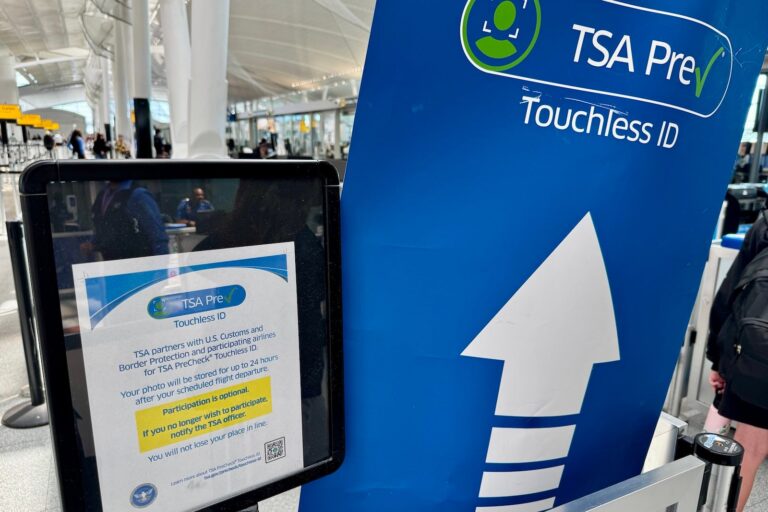
The technology at Newark operates through a biometric verification system called TSA PreCheck Touchless ID, a program that eliminates the traditional identification step in security screening. Rather than handing credentials to an officer, eligible passengers enter a small booth where the system captures a photograph. This image is then compared against passport data already on file with the government. If the match confirms the traveler’s identity, translucent gates open automatically—typically within seconds.
Once past this initial gate, passengers continue through standard security screening with their bags. The e-gate technology handles only the identity verification stage; metal detectors, X-ray machines, and other safety checks remain in place downstream. The system is designed to streamline the most time-consuming part of security: the manual check-in where officers review documents and passengers often fumble with IDs and boarding passes.
Who Can Use the Newark E-Gates
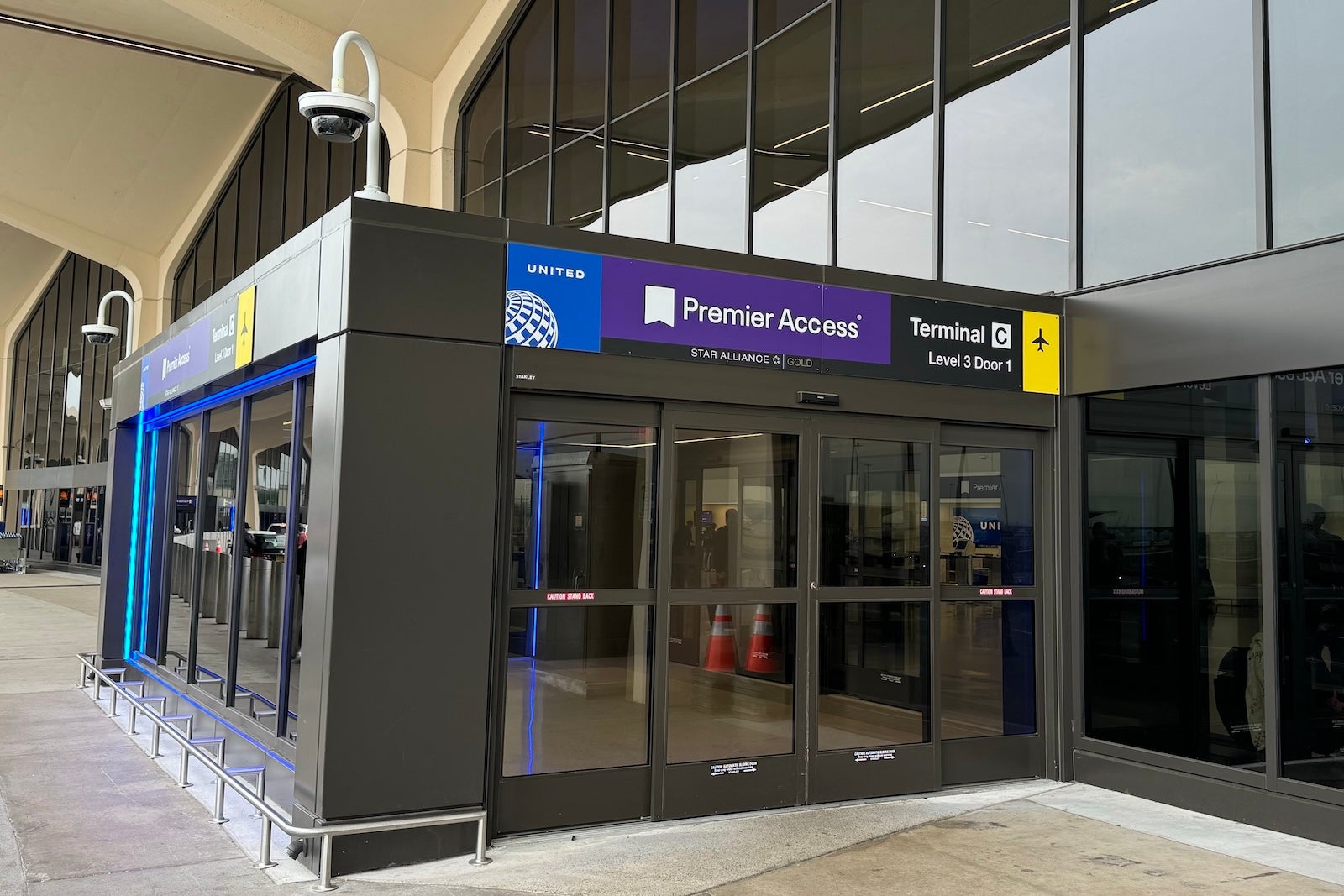
Access to Newark’s e-gates is currently restricted to United Airlines passengers who have actively enrolled in the TSA PreCheck Touchless ID program through the airline. At Charlotte Douglas International Airport, where the TSA piloted this same system earlier in the summer, the e-gates serve all travelers registered for standard TSA PreCheck—a much broader pool of eligible users. Travelers who fly other carriers through Terminal C will not yet have access to the e-gates, even if they hold TSA PreCheck status. United passengers interested in the Touchless ID program must opt in explicitly; the program does not activate automatically for existing PreCheck members.
The Enrollment Process
Opting into TSA PreCheck Touchless ID requires action through United Airlines directly. Passengers cannot enroll via the TSA website or at the airport; the enrollment must happen in advance through United’s systems. This means that travelers planning to travel through Newark on United in the coming weeks should check their account now if they want to take advantage of the e-gates on their next trip. The airline has not published extensive public documentation on enrollment steps, so some travelers may need to contact United customer service for guidance.
Speed and Efficiency Gains
The TSA has measured the e-gates’ performance and released concrete data on their time benefit. On average, each passenger saves approximately 3 seconds passing through an e-gate versus a standard security checkpoint. While three seconds might seem trivial, the cumulative effect across thousands of daily passengers at a major airport hub is substantial. On a busy travel day at Newark, which handles several hundred thousand passengers monthly, those small time savings accumulate into meaningful queue reductions during peak hours.
Beyond the clock savings for individual travelers, the e-gates free up TSA officers who would normally staff the document-checking lane. These officers can redeploy to assist with capacity issues elsewhere in the checkpoint or provide extra support in other security functions. This staffing flexibility may help the TSA maintain service quality during the heavy travel periods that typify holiday weekends and summer vacation season.
Real-World Comparison to Other Fast-Track Programs
For travelers accustomed to moving through PreCheck lanes, the e-gates represent a modest but meaningful evolution. Standard TSA PreCheck already eliminates shoes, belts, and jackets, and it consolidates bags for faster scanning. The e-gates add one more friction point to eliminate: the ID verification stage itself. Passengers familiar with the PreCheck experience will recognize that the e-gates are not a revolutionary departure—they’re an optimization of a system already designed for speed.
Expansion Plans and the Broader Biometric Rollout
Newark is now the second major U.S. airport to host the TSA’s e-gate technology, and the agency has confirmed pilots at a third location: Ronald Reagan Washington National Airport. The TSA has not announced a specific timeline for rolling the e-gates to additional airports, but the agency has stated it intends to expand the program to more cities. The fact that three major hub airports are now testing this technology suggests the TSA views the pilot phase as successful and is working toward broader national deployment.
The TSA’s e-gate rollout is part of a much larger shift toward biometric identity verification at U.S. airports. Earlier this summer, U.S. Customs and Border Protection began testing facial recognition technology for Global Entry processing. Rather than approaching a blue kiosk, travelers walk through a designated corridor where cameras capture and verify their identity, eliminating the kiosk step entirely. Some airlines have already integrated facial recognition into the boarding gate process, allowing passengers to board aircraft without scanning their boarding pass.
How This Fits Into the Broader Travel Security Landscape
The private sector has not waited for the government to lead on expedited security. Clear, a paid biometric identity service, has deployed its own version of e-gates at dozens of airports across the country. Clear operates separately from TSA PreCheck and Global Entry, requiring its own subscription and enrollment. The company’s expansion suggests strong demand from frequent flyers for faster security processes, even when that speed comes at additional cost. Clear’s presence in the market has likely pushed the TSA to accelerate its own modernization efforts.
Opting Out and Privacy Considerations
The TSA has emphasized that enrollment and use of the e-gates is entirely voluntary. Passengers who prefer not to participate in facial recognition screening can opt out at any stage. Those who decline Touchless ID enrollment will proceed through standard security—either the standard line or, if they hold TSA PreCheck, the traditional PreCheck lane where an officer still manually verifies their ID. Even passengers who have enrolled can request to opt out of the biometric scan on a particular travel day.
This opt-out provision is significant for travelers concerned about facial recognition databases and government collection of biometric data. Privacy advocates have raised questions about how images are stored, how long they are retained, and what safeguards exist against unauthorized access. The TSA has not released detailed documentation addressing these concerns in the context of the e-gates. Travelers who want more information should consult the TSA website or contact the agency directly before enrolling.
What This Means for Frequent Flyers and Status Holders
Frequent flyers who hold elite airline status or travel credit cards bundling TSA PreCheck benefits now have another reason to stay loyal to their programs. United passengers with TSA PreCheck through a card or elite status gain access to a security process that is incrementally faster than the standard PreCheck lane. For business travelers and those moving through Newark regularly, even small time savings compound over many trips per year.
However, the current limitation to United passengers creates an asymmetry in the travel experience. Passengers flying other carriers through Newark’s Terminal C will not yet have the same option. This may shift some traveler behavior toward United at Newark, at least until the TSA expands e-gate access to other airlines or other carriers negotiate their own pilot programs.
The TSA PreCheck Touchless ID program represents a distinct benefit separate from standard PreCheck itself. Travelers with PreCheck through their credit card or elite status should check whether they are automatically enrolled in Touchless ID or whether they need to take additional steps through United to activate it. The distinction matters for passengers planning their next trip to Newark.
Timeline and Next Steps
The e-gates are operational now at Newark Terminal C for enrolled United passengers. The TSA has not announced when or if the gates will expand to other terminals at Newark, other airlines at the airport, or when additional hubs will come online. Travelers interested in using the technology should plan to enroll through United in advance of their next Newark trip, as enrollment through the airline is a prerequisite. The TSA website may provide additional guidance, though the agency’s public communication about the program remains limited.
Frequently Asked Questions
Who can use the TSA e-gates at Newark?
Only United Airlines passengers who have opted into the TSA PreCheck Touchless ID program can use the e-gates at Newark Terminal C. This differs from Charlotte Douglas, where all TSA PreCheck passengers can access them.
How much faster are the e-gates than standard security?
The TSA has measured the e-gates as saving approximately 3 seconds per passenger on average compared to a standard security checkpoint.
Can I opt out of using the facial recognition e-gates?
Yes, the TSA has stated that participation in the e-gates and facial recognition scanning is entirely voluntary, and passengers can opt out at any point in the process.
