
Key takeaways
- Viking now operates 109 ships, making it the world's largest cruise operator by fleet size, surpassing Carnival Corporation's 92 vessels.
- The company controls 52% of the North American river cruise market and 27% of the luxury ocean cruise segment, leading positions in both.
- With 36 river ships and 17 ocean ships on order through 2034, Viking plans to expand its advantage as the cruise industry's fastest-growing operator.
- All Viking cruises are adults-only, targeting passengers over 55 with culturally immersive itineraries that prioritize destinations over onboard entertainment.
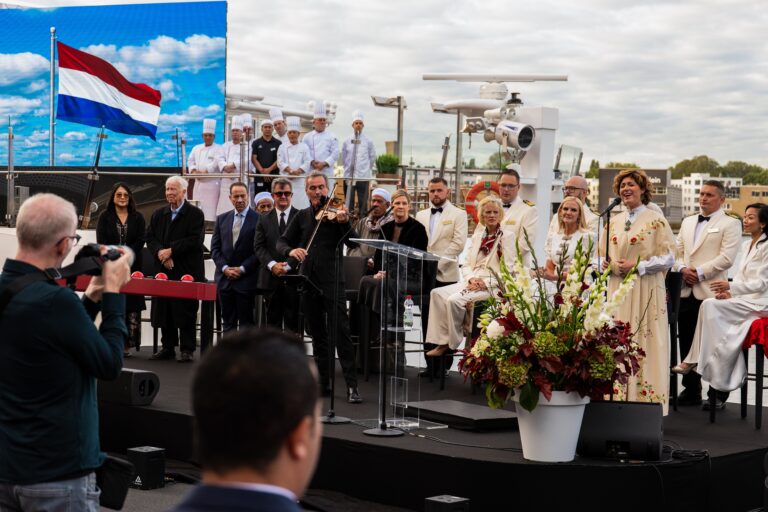
Viking celebrated another major expansion milestone Thursday as the cruise operator formally named seven new ships during an elaborate ceremony in Amsterdam, bringing its total fleet to 109 vessels. The achievement underscores the remarkable growth trajectory of a company that has fundamentally reshaped the river and luxury ocean cruise markets over the past 14 years.
The ceremony took place at Amsterdam’s historic Koepelkerk waterfront, where CEO and president Leah Talactac presided over festivities attended by more than 100 Viking executives, port officials, travel industry partners and media. The event featured performances by soprano Sissel Kyrkjebø and Norwegian violinist Tor Jaran Apold, lending cultural weight to the proceedings. In a tradition honoring founder Torstein Hagen’s Norwegian heritage, Viking used bottles of aquavit rather than champagne to ceremonially name each vessel. The godparents and godmothers for all seven ships were owners or senior executives of travel advisor companies that sell Viking cruises.
According to The Points Guy Articles’ coverage, only two of the seven newly named ships—Viking Rota and Viking Haki, each carrying 190 passengers—were physically present in Amsterdam. The remaining five transmitted live video feeds from their respective locations as they received their official names. Two vessels were positioned on the Nile in Egypt and the Seine in France, while another pair remained under construction at the Neptun Werft shipyard in Rostock, Germany.
Deployment Across Europe, Egypt and Beyond
Central European river expansion
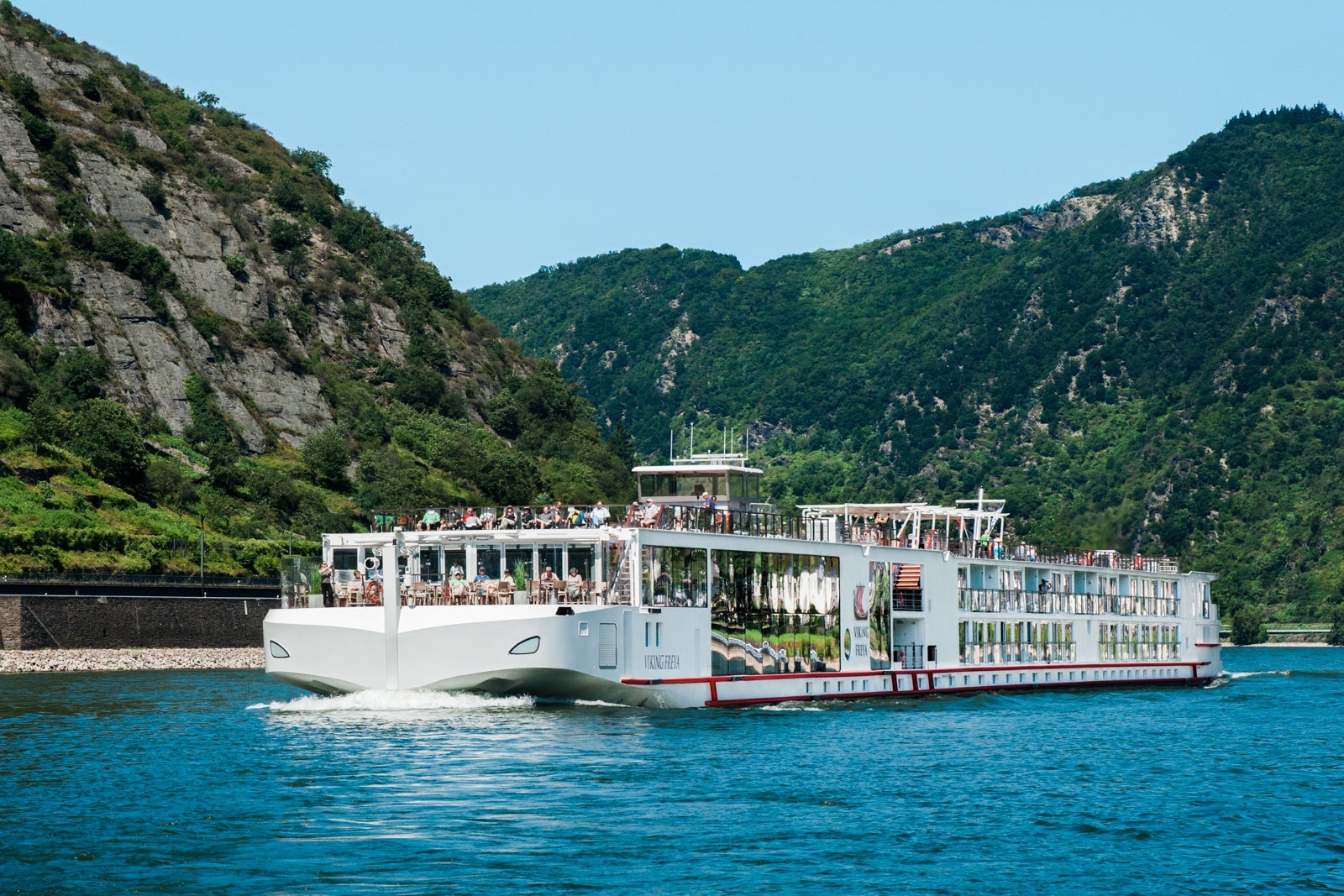
Four of the newly named ships will enter service on the Rhine, Main and Danube rivers, among the company’s most popular destinations for North American passengers. Viking Rota and Viking Haki, the two vessels present in Amsterdam, will join existing operations on these central European routes. Viking Halogi and Viking Sjofn will similarly serve these waterways, allowing passengers to explore Germany, Austria, Hungary and neighboring countries. Both ship types frequently depart from or arrive in Amsterdam, supporting the company’s established European hub strategy.
Egyptian and French river operations
Egyptian river cruising expands with the addition of Viking Ptah and Viking Sekhmet, both destined for the Nile. These vessels allow Viking to serve growing demand among affluent North American travelers interested in ancient civilizations and African natural history. The company’s existing Nile operations will be enhanced significantly with the new capacity. The Seine River in France welcomes Viking Fjolvar, positioning the company to serve passengers interested in Paris-based itineraries and the wine regions of Burgundy and Provence. This geographic diversification appeals to repeat passengers who have already explored the Rhine and Danube, offering new itineraries while maintaining the cultural and destination-focused strategy that defines the brand.
Market Position and Competitive Standing
Fleet size advantage
Viking’s addition of seven vessels moves the company decisively ahead of competitors by raw fleet count. With 109 ships now operating, Viking surpasses Carnival Corporation, owner of Carnival Cruise Line, Princess Cruises, Holland America and several other major brands, which currently operates 92 vessels. Carnival has been actively reducing its fleet from a previous high of 104 ships. The gap between the two operators continues widening as Viking adds ships at a pace unmatched by competitors.
Market share dominance
Market dominance extends beyond raw numbers. Viking commands 52 percent of the North American river cruise market, a segment the company helped define and develop. The company also holds 27 percent of the luxury ocean cruise segment, the largest share in that category. These positions ensure that passengers seeking these voyage types encounter Viking prominently whether through travel advisors or direct channels.
Stock market valuation
The company’s financial performance has gained investor confidence as well. As of the latest market close, Viking’s stock valuation reached $37.4 billion, exceeding Carnival Corporation’s by approximately one billion dollars. This represents a significant achievement for a company that went public relatively recently and remains younger and smaller by most operational metrics than the Carnival conglomerate. Royal Caribbean Group, parent of Royal Caribbean, Celebrity Cruises and Silversea, maintains the industry’s highest valuation at roughly $75 billion, though the competitive ordering among the top operators continues shifting.
Rapid Expansion from 29 to 109 Ships
The scale of Viking’s growth becomes clear when measured against its recent history. In 2012, the company operated 29 river ships and no ocean-going vessels. Today, the fleet comprises 94 river ships, 13 traditional ocean cruise ships and two expedition vessels. This transformation reflects successful identification and capture of a market segment previously underserved by larger operators: affluent travelers aged 55 and older seeking destination-focused, culturally immersive voyages.
The company was founded 29 years ago, approaching its 30th anniversary in 2027. Founder Torstein Hagen built the business around a specific hypothesis: a market existed for small-ship cruising that prioritized ports and destinations over onboard entertainment and amenities. That hypothesis has proven correct, attracting passengers willing to pay premium prices for differentiated experiences. The company now employs more than 12,000 people globally and recently achieved public company status. This combination of strong brand equity, consistent profitability and access to capital markets enabled the aggressive shipbuilding program currently underway.
The Viking Passenger and Cruise Experience
The brand’s expansion has been powered by a highly specific demographic. Viking’s ships are adults-only, prohibiting passengers under 18, a policy that sharply distinguishes it from competitors serving families. The typical Viking passenger is a retiree with substantial discretionary travel budgets and limited interest in typical cruise ship entertainment like casinos, Broadway-style shows or water slides.
Viking has designed its onboard experience around cultural programming, included shore excursions emphasizing history and local character, and Scandinavian design principles that evoke residential elegance rather than resort opulence. Ship sizes remain deliberately modest compared to industry peers, limiting capacity to maximize intimacy and passenger experience quality. Longer port stays and included tours in each port form the core value proposition, distinguishing Viking’s model from the high-capacity, quick-turnaround approach of mass-market operators.
The Expansion Pipeline Through 2034
The growth shows no deceleration. Viking has 36 additional river ships on order or under option scheduled for delivery by 2032. The company has also committed to 17 ocean ships arriving by 2034, including two expedition-class vessels due in 2030 and 2031. These commitments will further extend Viking’s fleet advantage and cement its position as the world’s fastest-growing major cruise operator by vessel count. For both travel advisors and passengers, the expanding capacity signals increased availability and route options in segments that have historically faced supply constraints.
Source: The Points Guy Articles
Frequently Asked Questions
How many ships did Viking have 14 years ago?
In 2012, Viking operated 29 river ships and no ocean-going vessels. Today, the fleet comprises 94 river ships, 13 traditional ocean cruise ships and two expedition vessels, totaling 109 ships.
Which new ships serve the Rhine, Main and Danube rivers?
Four of the seven newly named ships serve these European waterways: Viking Rota, Viking Haki, Viking Halogi and Viking Sjofn. The first two carry 190 passengers each.
What makes Viking's cruise experience different from competitors?
Viking's ships are adults-only, prohibiting passengers under 18. The line targets passengers over 55 and emphasizes cultural programming, included shore excursions and longer port stays rather than onboard entertainment like casinos or Broadway shows.
