

Key takeaways
- Delta's six cobranded cards range from no annual fee to premium tier, each serving different travel frequencies and spending patterns.
- The right card delivers at least one benefit you'll reliably use every year, whether that's free checked bags, lounge access, or a companion certificate.
- Gold cards suit occasional flyers, Platinum and Reserve cards accelerate elite status, and business versions separate corporate expenses from personal rewards.
American Express and Delta offer six cobranded credit cards targeting different travel patterns and spending habits. Choosing among them requires understanding what benefits you’ll actually use, not just which card sounds most premium. The difference between overpaying for features you ignore and capturing genuine value often comes down to one or two specific perks that align with your flying schedule.
Personal Delta Credit Cards
No-Fee Entry Level: Blue Card
The Delta SkyMiles Blue serves travelers who fly Delta occasionally but want to earn miles without paying an annual fee. The card skips the premium perks found on higher tiers: no free checked bag and no priority boarding. It still enables mileage earning on everyday purchases. Cardholders can use the Pay with Miles feature to redeem points toward Delta flights and receive statement credits on qualifying inflight purchases. For someone flying Delta once or twice yearly, this stripped-down approach eliminates the question of whether the card “paid for itself.”
For Occasional Flyers: Gold Card
The Delta SkyMiles Gold targets travelers taking one to three trips per year on Delta and willing to pay a $150 annual fee, with an introductory $0 in year one. The practical benefits accumulate quickly: two free checked bags, priority boarding, and a 15% discount on Delta-operated award flight bookings. An annual up to $100 Delta Stays statement credit further reduces the effective cost. According to The Points Guy, staff retention of this card comes from the concrete benefits delivering measurable savings. Gabrielle Bernardini, a senior content strategist at The Points Guy, explained her choice: the free checked bags alone save money if you fly even one or two round trips annually, the priority boarding streamlines the airport experience, and the award flight discount compounds the value of accumulated miles. The combination of benefits, plus the Delta Stays credit, keeps this card in her wallet despite infrequent Delta flying.
For Frequent Flyers Seeking Status: Platinum Card
The Delta SkyMiles Platinum builds on the Gold card by adding an annual companion certificate, redeemable on one Delta Main round-trip domestic flight within the U.S. and to Mexico, the Caribbean, or Central America per year, with taxes and fees ranging from $22 to $250. The card also includes an annual MQD (Medallion Qualification Dollar) boost, accelerating progress toward Delta elite status. Statement credits for Delta Stays, rideshare, and Resy dining bookings provide additional redemption paths. Clint Henderson, principal spokesperson at The Points Guy, emphasized the appeal of this combination, particularly valuing the statement credits for business travel when the rideshare and Resy benefits align with his expenses.
Premium Lounge Option: Reserve Card
The Delta SkyMiles Reserve positions itself as the premium personal option, targeting frequent Delta flyers who view lounge access as a core benefit. The card includes Delta Sky Club access subject to annual visit limits, guest passes, an annual companion certificate, and an annual MQD boost. The higher annual fee justifies itself through lounge visits alone for regular travelers. According to The Points Guy, staff members using the Reserve card highlight the layered value. Tarah Chieffi, a senior writer at The Points Guy, explained that the combination of lounge access for herself and companions, the companion certificate, the award travel discount, and baggage benefits for multiple passengers makes the card defensible year after year for her travel cadence.
Business Cards for Self-Employed and Entrepreneurs
Separating Business Spending: Gold Business Edition
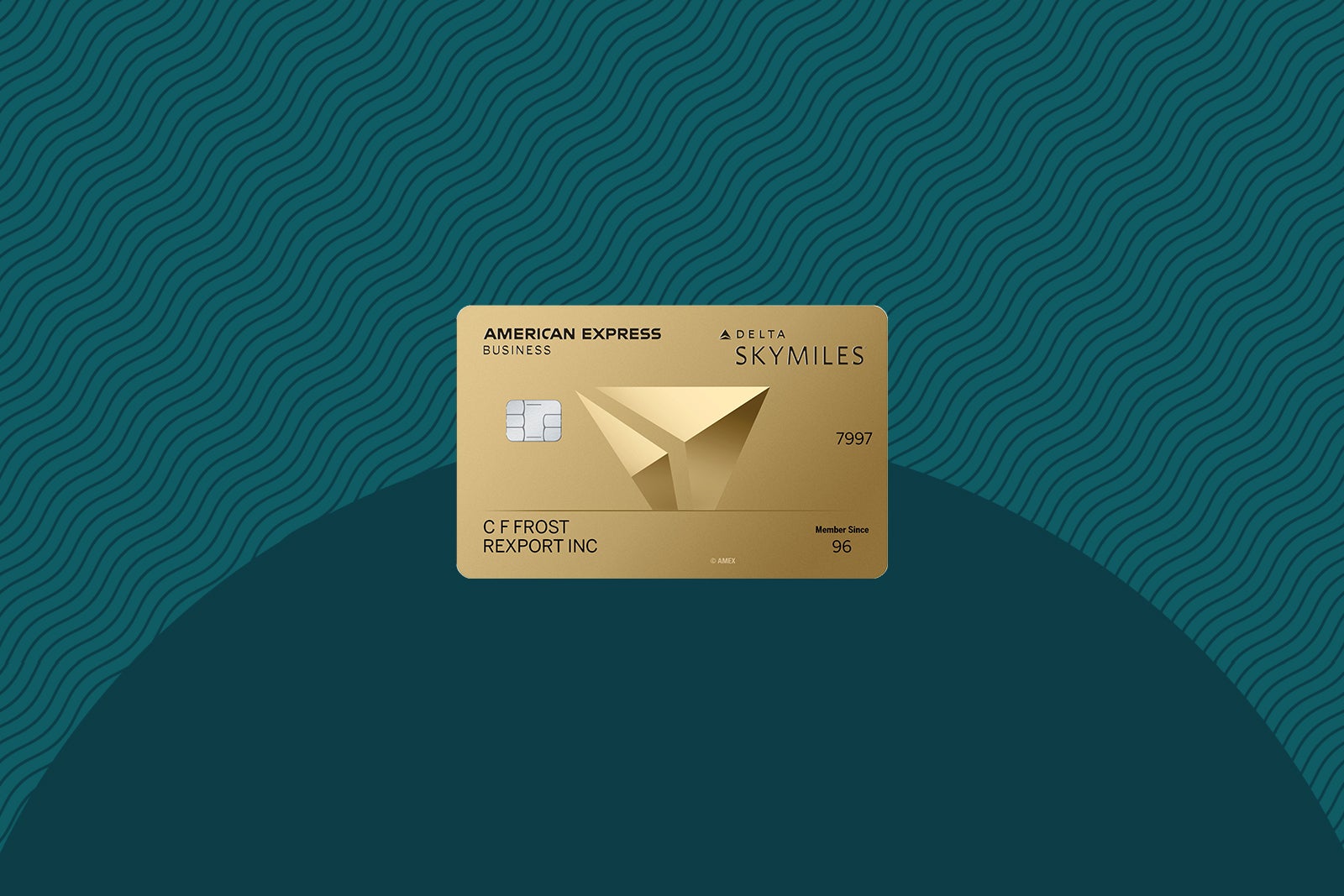
The Delta SkyMiles Gold Business carries a $150 annual fee, with introductory $0 in year one, and applies benefits to business spending. The card delivers the same free checked bags as the personal Gold: first checked bag free on all Delta flights worldwide and a second bag free on U.S. domestic flights, plus priority boarding. The annual up to $150 Delta Stays statement credit effectively reduces the net annual fee to $0 when fully used. Katie Genter, loyalty programs lead writer at The Points Guy, emphasized the business version’s practicality: the free checked bags extend to up to eight companions on a reservation, and the 15% discount on Delta-operated SkyMiles award tickets compounds across multiple bookings for business owners mixing personal and professional travel. She retains the card specifically for the free baggage benefit and the credit offset.
Premium Business Travel: Platinum and Reserve Business
The Delta SkyMiles Platinum Business adds an annual companion certificate and annual MQD boost to the baseline benefits, mirroring the personal Platinum’s status acceleration tools. The Reserve Business extends further with Delta Sky Club access, guest passes, and annual MQD progression, targeting frequent flyers with significant business expenses. According to The Points Guy, staff who upgraded to the Reserve Business version did so to combine lounge access with status boosts. Nick Ewen, senior editorial director at The Points Guy, upgraded to the Reserve Business using a targeted bonus offer for an organization where he serves as treasurer. He valued the annual MQD boost combined with additional Sky Club visits stacked on top of his personal card benefits, enhancing comfort on frequent business travel and offsetting the annual cost through lounge access alone.
Understanding Each Card’s Core Appeal
The correct Delta card emerges not from comparing complete feature lists but from identifying which specific benefits align with your actual travel behavior. Most Delta cardholders keep cards year after year not because they’re flashy or expensive, but because they reliably deliver at least one benefit used consistently: avoiding checked bag fees, accessing a lounge before flights, redeeming a companion certificate, or discounting award travel. These targeted perks, rather than the full benefit suite, drive renewal decisions.
Matching Benefits to Your Actual Flights
Occasional flyers taking fewer than two trips annually benefit from the no-fee Blue card or the Gold card’s free bags if they exceed one round trip per year. Casual regular flyers taking one to three trips per year often find the Gold card’s benefits outweigh its annual fee. Frequent travelers who value comfort and status progression lean toward the Platinum or Reserve, depending on whether an annual companion certificate or lounge access provides more value. Business owners separating corporate expenses while capturing airline benefits should evaluate the business versions using the same framework: which single perk will generate value reliably every year?
The perks you’ll ignore are the ones that break the value proposition. A lounge benefit unused because you fly mostly regional routes, a companion certificate unused because you travel solo, or a statement credit you can’t reallocate within the calendar year all suggest the card isn’t a fit. Conversely, even modest-sounding benefits like a 15% award flight discount or a second checked bag compound in value across multiple yearly trips.
Why Cardholders Retain Their Choice
According to The Points Guy, staff who actively carry and renew Delta cards use a consistent decision rule: keep the card if at least one benefit generates clear, measurable savings or convenience every year. This framework eliminates the trap of holding a premium card “just in case” while avoiding underpowered cards that leave money on the table. The Delta card that works is the one whose annual fee or lack thereof, combined with the specific perks you’ll redeem, results in net value. That might be the no-fee Blue card for sparse flyers, the Gold’s free bags for quarterly business travelers, the Platinum’s companion certificate for annual leisure trips, or the Reserve’s lounge access for frequent travelers. None is “best” universally; each is optimal for a specific travel pattern and budget.
Source: The Points Guy Articles
Frequently Asked Questions
Which Delta credit card has no annual fee?
The Delta SkyMiles Blue offers no annual fee, enabling mileage earning on everyday purchases through the Pay with Miles feature and inflight statement credits, making it ideal for occasional Delta flyers.
What benefits does the Gold Business card offer?
The Delta SkyMiles Gold Business includes two free checked bags (first bag free worldwide, second on U.S. domestic flights), priority boarding, 15% off Delta-operated award flights, and an annual up to $150 Delta Stays statement credit that can offset its $150 annual fee.
What is the main benefit of the Reserve card?
The Delta SkyMiles Reserve offers Delta Sky Club access with guest passes, an annual companion certificate, an annual MQD boost for elite status progression, and baggage benefits for multiple passengers, justifying its higher annual fee for frequent flyers.
