
Key takeaways
- BlueFirst rolls out before end of 2026 with majority of fleet equipped by 2028, making award seats more available for frequent flyers.
- Seats feature Collins Aerospace design with Tuft and Needle foam, 13.3-inch Bluetooth screens, seven extra inches of legroom, and bento-style meals on 899-mile-plus flights.
- Standard and flex tickets include two free checked bags and Group 1 boarding, while basic fares come with undisclosed restrictions and lounge access requires elite status.
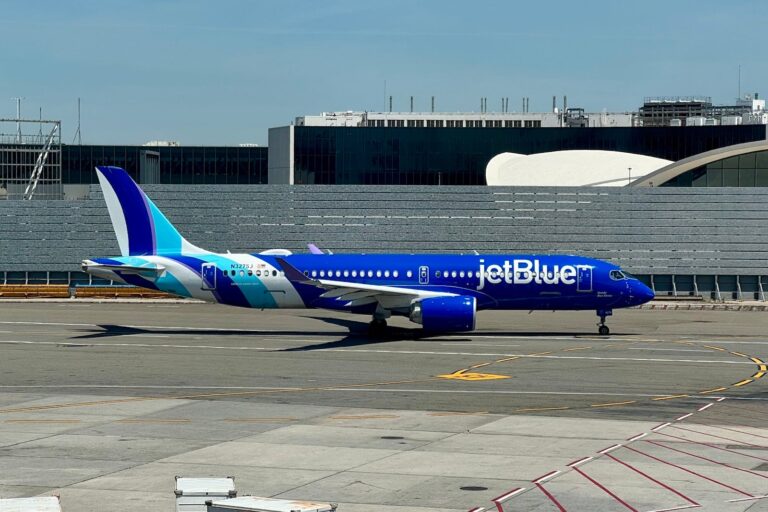
JetBlue has finally pulled back the curtain on what domestic travelers have been waiting for since 2024—the carrier’s inaugural first-class cabin, branded BlueFirst. After years of offering its lie-flat Mint product on select international and premium domestic routes, JetBlue is now preparing to compete head-to-head with American, Delta, and United by introducing a full domestic first-class experience across its mainline fleet.
The rollout begins before the end of 2026, with installations accelerating throughout 2027. Marty St. George, JetBlue’s President, confirmed on the carrier’s July earnings call that the company has planned an “aggressive schedule” for next year, targeting a “majority” of the fleet by year-end. All retrofits are expected to conclude by 2028. For award searchers, this timeline means BlueFirst seats will gradually become available across more routes and date ranges as the year progresses.
The Seat and Hardware Design
BlueFirst’s physical foundation comes from Collins Aerospace, the same manufacturer behind American Airlines‘ first-class recliners. Rather than develop an entirely new product, JetBlue licensed this proven design and then layered its own customizations to set the cabin apart. The decision to use American’s seat model signals both pragmatism and confidence—American’s first-class recliners have been tested across years of operation and thousands of flights.
Recline, Legroom, and Materials
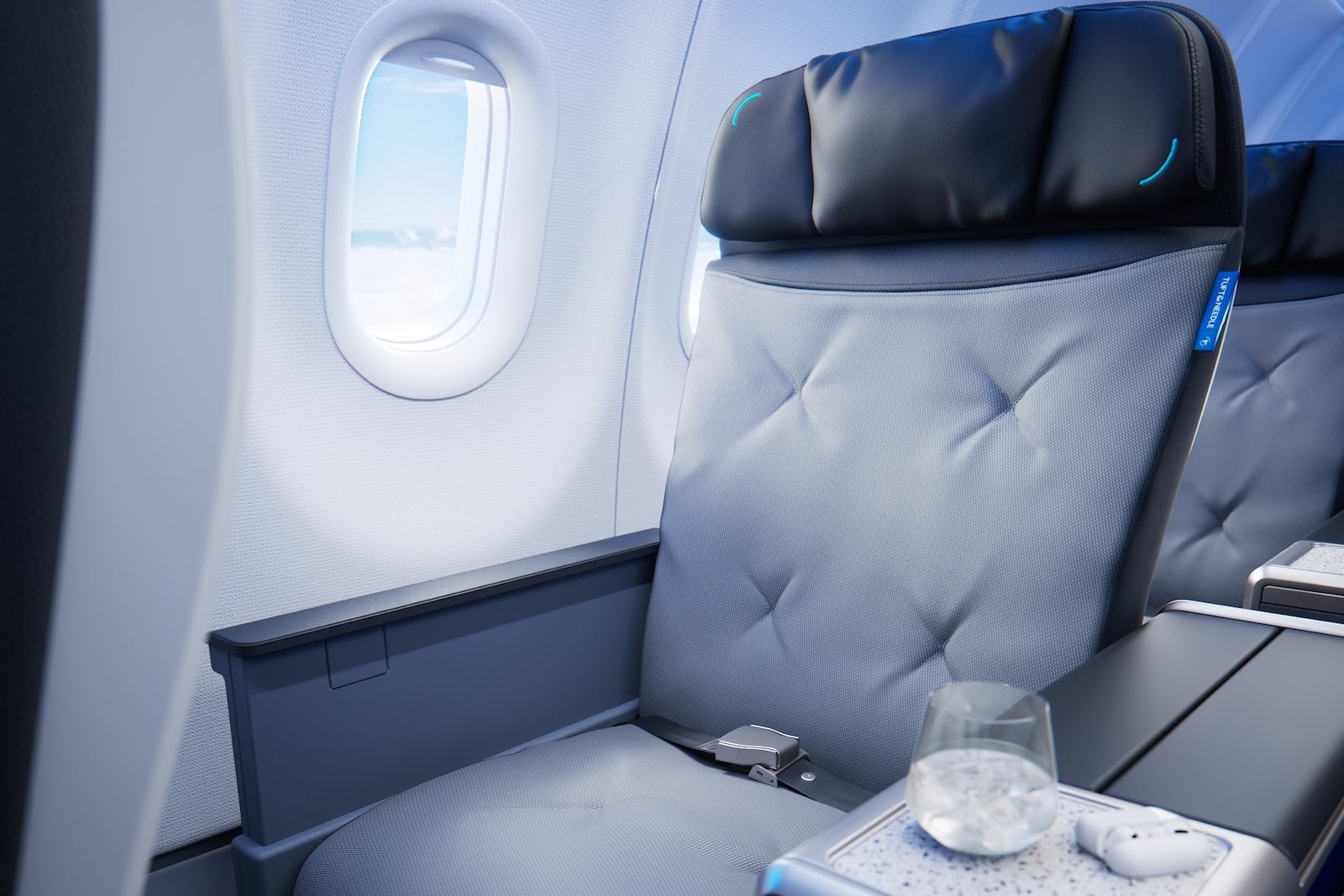
The seat delivers up to seven additional inches of legroom compared to JetBlue’s current premium cabin offerings. The recline mechanism has been engineered to offer what the airline describes as a “generous” range, though JetBlue has not specified the exact recline angle in degrees. Underneath the gray upholstery, the airline has integrated “flex foam” from luxury bedding maker Tuft and Needle—a departure from typical airline seating foam and a signal that comfort is a design priority rather than an afterthought. The headrests are adorned with a unique BlueFirst decal, visually reinforcing the product’s identity.
Screens and Personal Connectivity
Every BlueFirst seat will feature one of JetBlue’s trademark seatback screens, a 13.3-inch display that the airline has outfitted with Bluetooth connectivity. This means passengers traveling with AirPods or any other wireless headphones can pair their devices without hunting for a wireless connection or fumbling with proprietary jacks. The standard hard-product amenities—cocktail trays, USB-A ports, USB-C ports, and conventional power outlets—round out the seat hardware, ensuring travelers have multiple charging and data transfer options.
Cabin Configuration and Fleet Integration
Depending on aircraft type, BlueFirst cabins will occupy three or four rows per plane. This limited footprint reflects a strategic choice: JetBlue is not attempting to convert massive portions of its fleet to first-class the way legacy carriers have, but rather inserting a premium tier between economy and Mint. Airlines that don’t fly the Mint configuration (JetBlue’s lie-flat seat used on longer international routes and some premium domestic flights) will eventually receive BlueFirst across the carrier’s mainline fleet. This means award travelers should expect BlueFirst availability on most domestic routes once installation ramps up, with Mint remaining the top-tier experience on international and premium domestic itineraries.
The Dining Experience
One of the industry’s most closely watched aspects of any new first-class rollout is the meal service, and JetBlue has signaled a departure from what CEO Joanna Geraghty called the “stuck in the past” nature of traditional first-class catering. Geraghty’s statement, released Tuesday, reflects JetBlue’s broader strategy of modernizing the first-class proposition rather than defaulting to legacy-carrier formulas.
Meal Format and Specific Examples
On flights covering 899 miles or more, BlueFirst passengers will receive meals served in “bento-inspired boxes”—a nod to JetBlue’s existing Mint dining philosophy, which has drawn praise for elevated, contemporary options rather than the steak-and-chicken routines of earlier eras. The boxes will include an entree, a side dish, and dessert. The airline has shared specific examples: sweet and savory crepes, and sesame noodles paired with beef or tofu. These selections suggest a menu informed by global flavors and dietary flexibility, aligning with how premium cabins have evolved over the past five years.
Consistency with Mint and Shorter-Flight Considerations
JetBlue’s long-running success with Mint dining has been a defining feature of the product. The airline now faces the task of crafting a BlueFirst meal service that feels coherent with Mint while remaining distinct—Mint is lie-flat international, BlueFirst is domestic first-class. Both will likely draw from the same culinary playbook, but BlueFirst meals may be more modest in portion or variety given the shorter flight times typical of domestic service. For instance, a three-hour transcontinental flight may receive a single bento box, whereas a Mint flight to London might include multiple courses.
Ticket Tiers and Passenger Benefits
JetBlue is not offering a single BlueFirst fare level. Instead, the cabin will support at least two commercial configurations: a standard or “flex” version and a “basic” tier with restrictions.
Standard and Flex Ticket Benefits
Standard and flex BlueFirst passengers receive two free checked bags, Group 1 boarding priority, and the ability to change or cancel their ticket without penalty. These benefits are table-stakes in the first-class market and align with what American, Delta, and United offer in their comparable cabins. Group 1 boarding ensures premium cabin passengers board ahead of most other passengers, reducing the likelihood of overhead bin space constraints.
Basic BlueFirst and Cost-Conscious Options
The “basic” tier introduces restrictions that JetBlue has not yet detailed publicly. Typically, restricted first-class fares in the industry involve limitations on bag allowances, change fees, or seat selection, but JetBlue has not specified which apply to its basic product. Travelers should expect that the lowest first-class fares will come with trade-offs, allowing JetBlue to offer BlueFirst seats at multiple price points and capturing price-sensitive passengers who want the hard product and premium experience without paying full-boat first-class fares.
Lounge Access and Status Restrictions
Not all BlueFirst passengers will automatically unlock access to JetBlue’s BlueHouse lounges in New York City or Boston. The airline reserves lounge access for passengers meeting specific criteria—likely tied to elite status within its loyalty program or specific premium ticket classes, but JetBlue has not disclosed the exact qualifying conditions. This tiering approach mirrors strategies used by other major carriers, where lounge access is a privilege earned through status or specific premium ticket classes rather than a universal first-class benefit. Award travelers redeeming points for basic BlueFirst fares should not assume lounge access unless they hold elite status.
Rollout Timeline and Implications for Award Searchers
The first BlueFirst-equipped aircraft will enter revenue service before December 31, 2026. From there, the pace accelerates sharply. St. George’s remarks about a “pretty aggressive schedule” in 2027 and the target of a “majority” of planes equipped by end of 2027 suggest JetBlue plans to retrofit a substantial portion of its mainline fleet within a 12-month window.
Completion of all retrofits is expected by the end of 2028, giving JetBlue three years from the initial rollout to transition its domestic first-class operation from zero presence to fleet-wide availability. For award travelers, the implications are significant: the more planes with BlueFirst, the easier it will be to find award seats in the cabin using JetBlue points, and the sooner the cabin becomes a realistic redemption target for frequent flyers planning domestic trips.
Frequently Asked Questions
When will JetBlue's BlueFirst cabin debut?
JetBlue plans to debut BlueFirst before the end of 2026, with an aggressive rollout schedule in 2027 targeting a majority of the fleet by year-end and completion of all retrofits by 2028.
What are the main features of BlueFirst seats?
BlueFirst seats feature 13.3-inch Bluetooth-ready seatback screens, Tuft and Needle flex foam under the upholstery, up to seven additional inches of legroom, USB-A and C ports, power outlets, and a generous recline.
Do all BlueFirst passengers get lounge access?
No. BlueHouse lounge access in New York City and Boston is reserved for passengers meeting specific criteria, likely related to elite status or ticket class, and is not automatically included with all BlueFirst fares.
