
Key takeaways
- Hubbard Glacier is North America's longest tidewater glacier at over 400 feet high and nearly 7 miles wide; Glacier Bay contains seven tidewater glaciers visible in a single day.
- Glacier Bay wins on viewing time (9-10 hours), higher reliability due to multiple glacier options, and better cruise costs for round-trip routes.
- Hubbard offers more dramatic ice calving and features more cruise line options (16 lines), though the visit is shorter.
- Tracy Arm Fjord, Endicott Arm, and College Fjord provide alternative glacier viewing for Alaska cruises unable to access the two main destinations.
Glacier viewing stands at the top of most Alaska cruise itineraries. Visitors dream of seeing towering walls of ice, calving events that shake the bay, and the wildlife that congregates near these frozen rivers. Yet not all Alaska cruises include glaciers. Many itineraries skip them entirely due to seasonal scheduling, weather, or the ship’s size. For those determined to see glaciers, knowing which destination offers the best odds matters.
Understanding Alaska’s glacier cruises
Not every Alaska cruise passes a glacier. Weather, dense ice in the water, and ship emergencies can force captains to skip scheduled glacier visits even when an itinerary promises them. An early-season short cruise visiting only Ketchikan and Victoria may not encounter any glaciers at all, and that outcome is not unusual.
To improve your chances of seeing glaciers, consider three rules. First, book a cruise that mentions glaciers in its itinerary multiple times, not just once. Second, if a cruise offers a paid shore excursion focused on glacier viewing on the day of scenic cruising, book it. That excursion often signals the ship will not get as close as passengers would prefer. Third, choose a destination known for reliable glacier visibility even when conditions shift.
Two glacier destinations dominate Alaska cruise itineraries: Hubbard Glacier and Glacier Bay National Park and Preserve. Many cruises feature one or the other, though some include both. If your itinerary forces a choice, understanding what each delivers becomes essential.
Hubbard Glacier: North America’s advancing ice wall
The glacier and its setting
Hubbard Glacier is the longest tidewater glacier in North America. Its face towers more than 400 feet high and stretches almost 7 miles wide. The glacier sits within the 13.2 million-acre Wrangell-St. Elias National Park and Preserve, a UNESCO World Heritage Site. That park contains the largest glacial system in the United States, with glaciers covering 35 percent of its territory.
The glacier earned its nickname “The Galloping Glacier” because it has been advancing into Disenchantment Bay continuously for more than 100 years. Occasional surge events can advance it rapidly enough to close off nearby Russell Fjord. Today it remains stable in overall size, but it continues its steady march forward into the bay. That movement is key to what makes Hubbard dramatic to observe.
What you will witness
Ships typically position themselves within a quarter- to a half-mile of the glacier’s face, though floating ice in the water sometimes pushes them farther out. Even from that distance, Hubbard’s scale is unmissable. The glacier’s forward motion causes massive sections of ice to break off and fall into the sea, a process called calving. Ice chunks the size of three-story buildings plunge into the water, producing a roar that carries across the bay and creating waves that pound shorelines.
During your approach through Yakutat Bay and into Disenchantment Bay, keep watch for humpback whales, orcas, bald eagles, seals, sea lions, and bears on shore. Ships typically carry naturalists who announce wildlife sightings, helping passengers spot animals they might otherwise miss.
Which cruise lines serve Hubbard
Sixteen cruise lines include Hubbard Glacier on at least one itinerary. Most cruises visiting Hubbard are one-way sailings or 10- to 14-night voyages. Only a handful of 7-night round-trip cruises include the glacier. Those that do come from newer and smaller operators: Virgin Voyages, Crystal, Silversea, and The Ritz-Carlton Yacht Collection. Ships typically spend just a few hours near the glacier’s face.
Glacier Bay: Seven tidewater glaciers in one national park
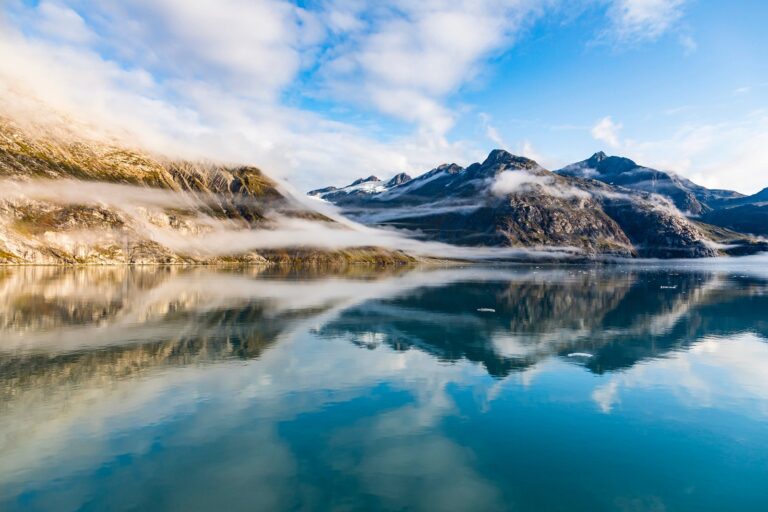
Glacier Bay National Park and Preserve spans over 3 million acres. Within that vast territory sit more than 1,000 glaciers. Seven of those are tidewater glaciers, rivers of ice that flow all the way to the ocean, and you can see all seven from the ship during a single day’s visit.
The most striking advantage of Glacier Bay is sheer numbers. While Hubbard offers one dramatic glacier, Glacier Bay delivers seven, each unique. The bay is part of a protected national park, and rangers board your ship to answer questions about the glaciers, wildlife, and park ecology. They bring maps, charts, and expertise. Your ship’s visit lasts 9 to 10 hours, during which it travels more than 120 miles through the bay. Departure times range from early morning (6 a.m. on some itineraries) to mid-morning (8:30 a.m. on Holland America sailings), with most ships staying until early evening (around 6:30 p.m.).
The ship will position itself in front of one of the tidewater glaciers and rotate 360 degrees, giving everyone on board a clear view during roughly an hour of scenic cruising. Only two large cruise ships are permitted in the bay per day. This restriction keeps the destination less crowded. Smaller vessel operators, including UnCruise, Lindblad, and American Cruise Lines, are classified as tour vessels rather than cruise ships, so they operate under different rules and can visit more frequently.
Wildlife is abundant. Expect to see harbor seals, Steller sea lions, sea otters, and bald eagles throughout the day. You may also encounter brown bears, black bears, humpback whales, harbor porpoises, mountain goats, orcas, and puffins. Visitors can even have their national park passports stamped as a memento.
Cruise lines serving Glacier Bay include Cunard, Holland America, Norwegian, Princess, Seabourn, Viking, American Cruise Lines, Lindblad, UnCruise, and Alaskan Dream Cruises. A handful of seven-night round-trip itineraries include Glacier Bay stops, giving it an edge over Hubbard in terms of cruise cost and schedule flexibility.
Comparing the two: Which delivers more
Scenic cruising time and drama
Glacier Bay wins decisively on time. The strict limit of two large ships per day means passengers get an entire day of glacial exploration. Hubbard cruises, by contrast, schedule only a few hours of viewing.
On drama, Hubbard claims the title. Its brilliant blue face, thunderous calving events, and sheer monumental scale create an intense spectacle. The glaciers in Glacier Bay present a quieter, subtler beauty. They calve far less frequently and less dramatically than Hubbard.
Wildlife and other experiences
Both destinations place you in prime viewing territory for Alaskan wildlife and marine life. Glacier Bay edges ahead because the longer time in the bay extends your chances of animal encounters. It functions as an extended wildlife-viewing excursion without leaving ship. National Park rangers add educational value that appeals to curious passengers, particularly children. Hubbard, being a shorter visit, suits passengers with limited patience for slow-paced cruising.
Availability and cost
Hubbard appears on 16 different cruise line itineraries, offering more options. Glacier Bay has fewer cruise line partners but commands the greatest number of small-ship options if that appeals to you. Both glacier stops typically require one-way itineraries, which can increase airfare costs. Glacier Bay holds a slight cost advantage because some seven-night round-trip cruises include it. Hubbard cruises may also require a paid shore excursion on a smaller tender boat to get the views you want, adding to your total expense.
Reliability
With seven glaciers to choose from, Glacier Bay offers far better odds of seeing at least one glacier, even if weather turns poor or thick fog rolls in. Hubbard, being a single destination, depends more heavily on favorable conditions. Severe weather, dense ice, or a ship emergency makes it much easier to miss Hubbard entirely.
Other glacier options in Alaska
Beyond the two major glacier destinations, Alaska’s cruise routes include several alternatives. Tracy Arm Fjord showcases the twin Sawyer glaciers in a narrow fjord setting. The closeness to land here offers better views of waterfalls and wildlife than the open bays. Look for brown and black bears along the shoreline, as well as mountain goats. MSC Cruises included Tracy Arm in its first Alaska season.
Endicott Arm branches off from Tracy Arm and serves as a backup when weather or ice prevents access to the Sawyer glaciers. This fjord accommodates larger ships, including Royal Caribbean’s Anthem of the Seas and Ovation of the Seas. Disney Cruise Line lists Dawes Glacier at Endicott Arm as the glacier destination on its Alaska itineraries. Windstar Cruises offers close-up Zodiac boat excursions to see these glaciers.
College Fjord, located near Whittier and Seward in Alaska, serves as a bonus glacier-viewing opportunity. Most itineraries featuring College Fjord also include either Hubbard Glacier or Glacier Bay. College Fjord itself is home to five tidewater glaciers, giving passengers additional viewing opportunities.
Making your choice
According to The Points Guy, Glacier Bay represents the stronger choice for ease of viewing, time spent before the glaciers, cost to visit, and overall reliability. However, you will find nothing disappointing about either option. The decision ultimately depends on your preferences. If you prize a shorter, more dramatic experience, Hubbard delivers. If you value extended time, multiple glacier views, and educational ranger programs, Glacier Bay pulls ahead. Regardless of your choice, book an itinerary that includes multiple glacier-viewing opportunities as a safety net. Weather and circumstances shift, and having backup destinations increases your odds of fulfilling your glacial dreams.
Source: The Points Guy Articles
Frequently Asked Questions
What is calving and why does it happen at Hubbard Glacier?
Calving is the process of large ice chunks breaking off a glacier and falling into the ocean. At Hubbard Glacier, it results from the glacier's thickness and the steepness of the terrain beneath it, not from temperature. Ice chunks the size of three-story buildings produce loud roars and create waves that impact shorelines.
How many cruise lines visit each glacier destination?
Sixteen cruise lines include Hubbard Glacier on their itineraries, typically on one-way sailings or 10-14 night cruises. Glacier Bay is served by ten cruise lines: Cunard, Holland America, Norwegian, Princess, Seabourn, Viking, American Cruise Lines, Lindblad, UnCruise, and Alaskan Dream Cruises.
Why is Glacier Bay more reliable for seeing glaciers?
Glacier Bay contains seven tidewater glaciers within the national park. Because there are multiple glaciers to view, severe weather or fog would have to be intense to prevent sighting at least one glacier. Hubbard, being a single destination, requires favorable conditions throughout the visit.
