
Key takeaways
- Shore excursions in Alaska cost significantly more than Caribbean cruises due to remote access, higher U.S. labor expenses, and specialized equipment requirements.
- Each major port offers free or low-cost museums, hiking trails, and cultural experiences without requiring paid tours, including four free museums in Skagway, tram-base performances in Juneau, and Russian heritage sites in Sitka.
- Budget cruisers can balance free cultural exploration at each port with one or two memorable paid activities like dog sledding, kayaking, or wildlife watching.
An Alaska cruise can deliver unforgettable moments, but the price tags on shore excursions often shock travelers accustomed to Caribbean ports. Helicopter rides to glacier dogsledding start above $700 per person. Fishing tours run over $400. A scenic train ride on the White Pass and Yukon Route Railroad costs more than $150 per traveler. According to The Points Guy Articles, these costs reflect Alaska’s remote location, where importing goods and materials drives up operating expenses, combined with higher U.S. wages and tour insurance premiums. Many excursions also rely on specialized equipment—seaplanes, helicopters, specialized boats—that multiplies the price of each onshore experience. That reality doesn’t mean every port day requires a big-budget outing. Throughout the cruise ports, travelers can find plenty of activities that range from free to inexpensive while still delivering authentic cultural and natural experiences.
Skagway’s Gold Rush History and Trails
Skagway’s fame rests on its gold rush past, but immersing yourself in that history requires no expensive guide. The Klondike Gold Rush National Historical Park operates four free museums open to cruise visitors. The Visitor Center Museum features interactive exhibits, while the Moore House Museum preserves the Victorian-era rooms of Skagway’s first family. The Jeff Smiths Parlour Museum occupies a former bar with a notoriously shady history, and the Mascot Saloon Museum showcases a restored gold rush era saloon. All four are maintained by the National Park Service and open to the public at no charge.
For something less formal, the Red Onion Saloon, once Skagway’s most famous brothel, now serves Alaska-brewed beers and appetizers with a tongue-in-cheek menu featuring names of former residents. A $20-per-person Quickie Tour includes access to the brothel museum, with tales of reported ghost sightings included at no extra cost.
Several hiking trails start within an easy walk from the cruise docks. The National Park Service publishes its Skagway hikes organized by distance from the Historic District and by difficulty level. Options include the Upper and Lower Dewey Lake Trail, Reid Falls and Gold Rush Cemetery Trail, and the Icy Lake and Upper Reid Falls Trail. None require a guide or entrance fee.
Juneau: Tram Closures and Free Alternatives
The Mount Roberts Trail and Tram Situation
The Goldbelt tram, which normally charges $60 for an all-day pass up and down Mount Roberts, has been closed for maintenance since late April 2026. Despite the closure, visitors can still explore the base area to watch Tlingit artists carve totem poles, weave ceremonial robes, and perform cultural dances for free. For those in good physical condition, the Mount Roberts Trail offers a challenging hike from the cruise ship to the tram’s summit at no cost. The ascent is steep and can turn muddy after rain, requiring hikers to make noise as a precaution against bears. If the hike down proves too difficult, the tram offers a $20 return trip.
Additional hiking options from the port include the Gold Creek Flume Trail and the Perseverance Trail, both accessible without fees.
Museums and Self-Guided Exploration
The Juneau-Douglas City Museum, a 20-minute walk from port, displays permanent and rotating exhibits on regional history and art, with admission at $7. The museum also operates a free guided tour of the Alaska State Capitol Building. The Alaska State Museum, another 20-minute walk away, costs $14 and covers the cultures of the Tlingit, Haida, and Tsimshian peoples. The Sealaska Heritage Institute’s Walter Soboleff Building charges $10 and showcases a signature totem pole, handcrafted clan house, and local artwork in its gift shop.
Self-guided walking tours of Juneau cost nothing. The Juneau Voices project installs audio installations at 11 locations around town where visitors can listen to stories from Native Alaskans about the city. Tourist welcome centers distribute free maps to follow a walking tour highlighting key downtown sites, and a PDF guide to Juneau’s totem poles is available online. For those interested in the gold rush era, Basin Road climbs uphill to the Last Chance Mining Museum, where a historic mining building tells the region’s mining story for $5 admission.
Ketchikan: Creek Street and Native Heritage
Historic Boardwalk and Museum Combinations
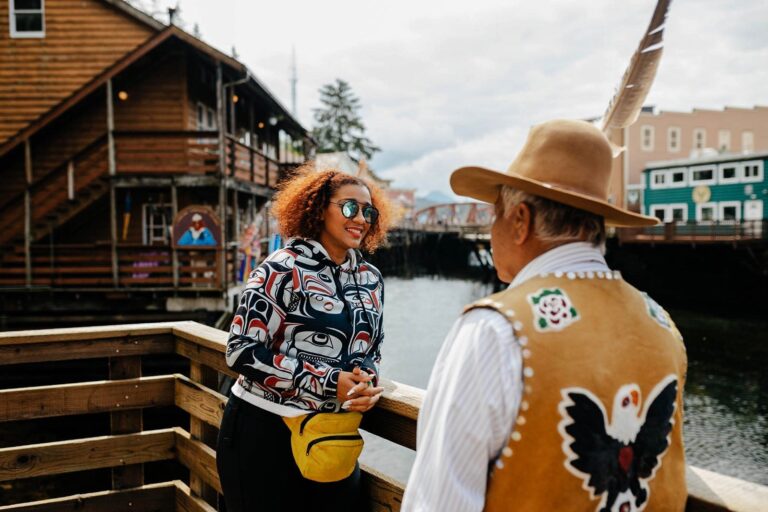
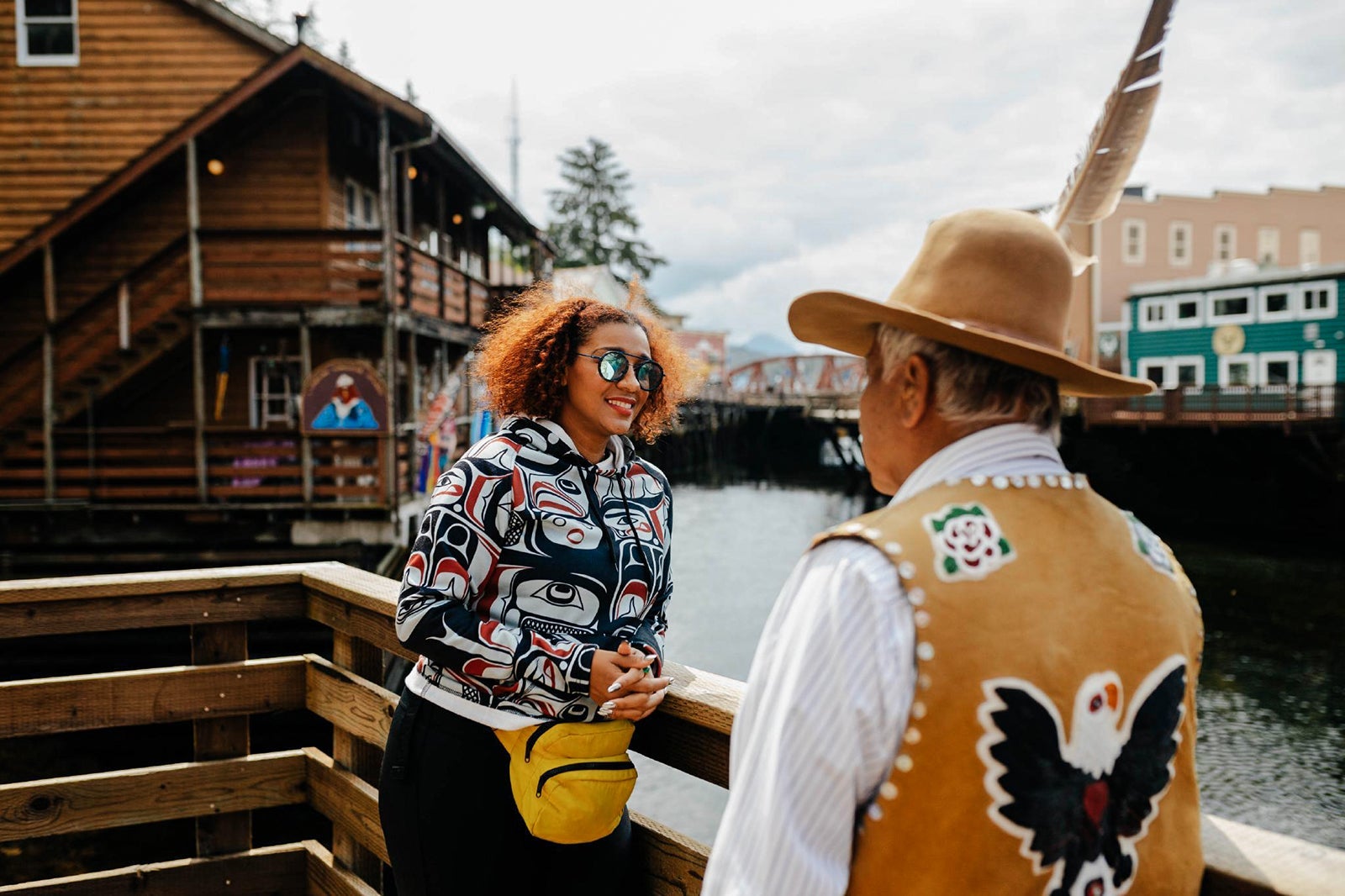
Ketchikan’s Creek Street Historic District, built on a wooden boardwalk suspended above the salmon-filled creek, invites free exploration. Historic buildings, shops, and restaurants line the boards. Dolly’s House, an artifact of the city’s former red-light district, opens for $10. The Tongass Historical Museum and Totem Heritage Center sit near Creek Street, each charging $6 for admission, though children and military personnel enter free. A combo ticket covering both museums costs $9.
The self-guided 1.5-mile Ketchikan Salmon Walk departs from the Totem Heritage Center and traces the historical and ongoing importance of salmon to the town. Visitors may spot salmon at the Salmon Ladder depending on the season.
Saxman Native Village Access
Saxman Native Village lies 2 miles south of Ketchikan, walkable but more practically reached via city bus for a few dollars. Entry to the village costs $5, where visitors observe 25 replica totem poles and watch Native carvers at work using traditional techniques on new poles.
Icy Strait Point: A Purpose-Built Port with Free Options
Icy Strait Point, a cruise port engineered near the town of Hoonah, was designed to offer cruisers every possible activity, though many come with a price. Still, free and cheap options exist throughout. A free gondola ferries visitors between pier areas, while nature trails provide an alternative for those concerned about heights or impatient with queues. Wildlife spotting opportunities appear along the trails.
Beach access remains completely free. Visitors can wander the Icy Strait shoreline, capture scenic photographs, and search for marine life without payment. The Hoonah Cannery building houses exhibits from the Hoonah Packing Co. Cannery Museum interspersed among shops, and visitors can browse these displays at no cost. A Native dance performance at the on-site ticket booth costs $20 per person.
From the cannery, a 1.5-mile walk (roughly 30 minutes) reaches Hoonah, the actual town where many of Icy Strait Point’s employees reside and home to Alaska’s largest Tlingit village. A $10 shuttle provides an affordable alternative to walking. In town, visitors can admire totem poles and sample local beer at Icy Strait Brewing.
Sitka: Russian and Tlingit Heritage Sites
Free Historic Sites
Sitka’s layered history, a blend of Native Alaskan and Russian influences, reveals itself through self-guided exploration that costs little or nothing. The Russian Bishop’s House, an example of 19th-century Russian colonial architecture, offers free tours. Baranof Castle State Historic Site (Castle Hill) served as a home to Tlingit people across centuries, then Russian settlers, and finally as the venue for Alaska’s transfer from Russia to the United States. Views and informative signage are available at no charge.
St. Michael Cathedral National Historic Landmark replicates the first Russian Orthodox church built in the Americas. The cathedral houses a collection of 17th-century religious artifacts displayed during limited visiting hours, with access available to active congregation members and visitors.
Admission-Based Museums and Nature
The Sitka History Museum presents exhibits on local history, while the Sheldon Jackson Museum contains Alaska Native artifacts. Both charge modest admission. The Sitka Russian Cemetery, over 200 years old, contains gravestones fashioned from the ballast of Russian ships and offers a glimpse into the region’s heritage. The Sitka National Historical Park visitor center and grounds remain free to all, with walking trails winding through totem pole installations. A scenic nature walk or ranger program can deepen understanding of Sitka’s Russian and Tlingit cultures.
The Alaska Raptor Center, set on forested grounds with a bit of a walk from downtown, charges $16 admission. Visitors observe injured birds recovering flight in a natural setting. Dance performances add another cultural experience at accessible prices. The Alaska Storytellers dance show ($15) celebrates traditional and modern Russian dance, while the New Archangel Dancers highlight Russian folk choreography. The Naa Kahidi Tlingit Dancers perform within a clan house, showcasing Tlingit music, costumes, and movement.
Balancing Budget Excursions with Splurge-Worthy Experiences
Alaska’s culture and natural landscape can be experienced affordably through free museums, self-guided walking tours, and public hiking trails distributed across the cruise ports. According to The Points Guy Articles’ cruise expert Erica Silverstein, who has sailed on more than 60 ships across nearly two decades covering the cruise industry, budget-conscious cruisers can balance inexpensive port days without skipping all paid activities. Silverstein encourages travelers to reserve budget for a few memorable paid tours that venture beyond port areas into Alaska’s wilderness or immerse them in activities like dog sledding, kayaking, fishing, or whale and bear watching. The combination of free and low-cost cultural exploration with one or two signature paid experiences creates a balanced Alaska cruise that honors both a travel budget and the memory-making potential of the destination.
Source: The Points Guy Articles
Frequently Asked Questions
Why are Alaska cruise shore excursions so expensive?
Alaska's remote location increases costs for importing goods and materials, while U.S. wages and insurance premiums exceed those in Caribbean ports. Many excursions also require specialized equipment like seaplanes and helicopters.
What free activities are available at Alaska cruise ports?
Free options include the four Klondike Gold Rush museums in Skagway, the Mount Roberts Trail hike and tram-base Tlingit performances in Juneau, the Creek Street boardwalk walk in Ketchikan, Icy Strait Point's gondola and beach access, and Sitka's Russian Bishop's House tour and Baranof Castle.
Can you cruise Alaska on a budget?
Yes. Budget cruisers can save on excursions by choosing free museums, self-guided walking tours, and public hiking trails at each port while reserving money for one or two signature paid activities like dog sledding or wildlife watching.
