
Key takeaways
- Frontier will debut first-class seating and Starlink Wi-Fi this fall as it pivots toward premium products and loyalty-driven revenue to compete with legacy carriers.
- Credit card sign-ups jumped 30% year-over-year in Q2, signaling customer response to the airline's new value proposition and loyalty benefits.
- The airline must improve operational reliability through 2027 to convert product enhancements into sustainable loyalty, CEO Dempsey acknowledges.
- JPMorgan analysts question whether a budget carrier can profitably compete with legacy airlines on loyalty despite Frontier's strategic product investments.
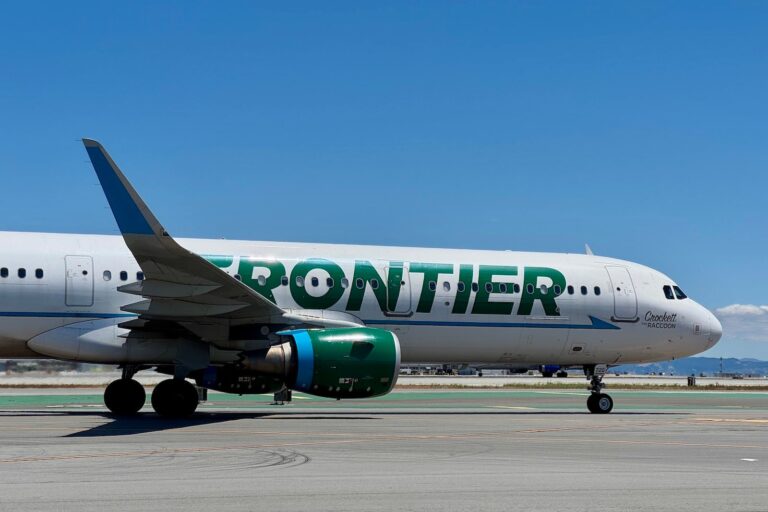
When Spirit Airlines ceased operations in May, the landscape of ultra-low-cost travel shifted. That left Frontier Airlines as the largest surviving U.S. budget carrier — but also exposed the airline to a harder test: Can a discount airline compete on more than just price alone?
CEO James Dempsey, who took the helm in January, believes the answer is yes. His strategy centers on product enhancements and operational fixes that would have seemed implausible for a carrier once known for no-frills economics and chronic delays.
This fall, Frontier will introduce first-class seating on its Airbus fleet — a departure so stark from its history that it signals how aggressively the airline is chasing the loyalty-driven revenue playbook that Delta Air Lines and United Airlines have perfected since the pandemic.
Alongside first-class, Frontier is rolling out Starlink-powered Wi-Fi, which delivers inflight internet speeds that outpace every other airline. These aren’t cosmetic tweaks; they’re deliberate moves to make Frontier a carrier you might choose for reasons beyond the lowest fare.
The First-Class Gambit
A Historically Unexpected Move
Frontier’s first-class debut this fall marks a dramatic tonal shift. For years, the Denver-based airline operated with uniformly tight cabins and economy-only seating. The notion of a premium cabin at Frontier would have drawn skepticism from industry observers even two years ago. But Dempsey sees first-class as a linchpin in a larger strategy to court high-value customers.
Premium Amenities as Loyalty Tool
The first-class addition isn’t isolated. Frontier is bundling these premium offerings with a broader effort to strengthen its loyalty ecosystem. The airline has already launched new perks over the past year and is actively promoting its loyalty program as a reason to earn and spend miles — and crucially, to sign up for its branded credit card.
In the second quarter of this year, Frontier recorded a 30% surge in credit card sign-ups compared to the same period last year. That jump suggests customers are responding to the value proposition the airline is building.
Starlink Internet: A Connectivity Edge
Inflight Wi-Fi has become table stakes for airlines competing for premium customers. Frontier’s move to Starlink-powered connectivity puts it ahead of every competitor in terms of raw speed. This is a tangible benefit that frequent flyers will notice immediately — faster browsing, seamless streaming, reliable email access at altitude.
For a loyalty program, such perks matter. They give credit card members and status-holding passengers a concrete reason to choose Frontier, even when competing fares exist elsewhere.
Operational Reliability: The Harder Challenge
A Troubled History
Frontier’s historical weakness has been execution, not ambition. The airline has routinely ranked last in TPG’s Best Airlines Report, driven by a stubborn pattern of flight delays and cancellations. A passenger booked on a twice-weekly route faces real risk of disruption — a reputation Frontier cannot afford to carry forward if it wants to build a sustainable loyalty program.
Recent Improvement, Long Path Ahead
The good news: Through the first half of 2026, Frontier climbed to the middle of the pack among U.S. carriers for on-time performance. Dempsey called this progress a “step forward,” but emphasized the airline needs “multiple steps forward from here.” His timeline is realistic — he expects the carrier will need through 2027 to reach “a really good place” operationally.
Maintenance as a Foundation
The core fix centers on overnight maintenance at Frontier’s bases. Aircraft that go in for service after evening flights must be ready for the first departure the next morning. Dempsey emphasized the mechanics: “If you start cleanly in the morning, the airline tends to run on time for the rest of the day.”
This is unsexy but essential. Loyalty programs crumble on operational failure. No premium seat or Wi-Fi speed can compensate for chronic cancellations.
The Credit Card Bet
Airlines no longer view loyalty as a nice-to-have; they see it as a profit driver. Delta and United have demonstrated that sophisticated loyalty programs, coupled with premium products and branded credit cards, generate substantial revenue independent of airfare sales.
Frontier’s 30% year-over-year jump in credit card sign-ups during Q2 suggests the market is willing to test whether a budget carrier can execute the same playbook. Credit card issuers earn interchange fees and annual fees; the airline earns miles sold, premium cabin upgrades purchased with credit card points, and data on high-value customers.
For a card applicant, the calculus is straightforward: Does the earning rate, annual benefits, and ability to use miles on Frontier’s routes justify the fee? At a discount airline with limited daily flight frequencies, that answer may not be obvious — but the 30% surge indicates enough consumers believe it’s worth exploring.
Wall Street’s Skepticism
Not everyone is convinced. JPMorgan analyst Jamie Baker has publicly stated it remains “still not clear” whether Frontier can “profitably and permanently” gain ground against the Big Three legacy carriers. The concern is structural: loyalty programs thrive on network density and frequent flyer status tiers that incentivize repeat purchases. Frontier’s smaller network and lower fares per flight create inherent friction in that model.
Dempsey isn’t dismissive of the skeptics. Instead, he leans into the one thing Frontier can always offer: “Everybody wants low fares, right?” His argument is that low-cost discipline, combined with genuine product improvements and operational reliability, can coexist. Frontier doesn’t need to beat Delta on legroom or United on route breadth. It needs to offer a compelling option for price-conscious flyers who also value loyalty benefits.
The 2027 Reckoning
By the end of 2027, Frontier’s strategic bet will be substantially tested. First-class cabins will be in service. Starlink Wi-Fi will be live across the fleet. Operational metrics will reveal whether maintenance improvements stuck. And credit card sign-ups will either continue climbing or flatten, signaling whether Frontier’s loyalty value proposition resonates with its target customer.
For loyalty program enthusiasts, the question is whether to begin earning Frontier miles in earnest. The airline is offering something new: a product experience elevated from its historical bare-bones model, paired with a commitment to operational stability. Whether that translates into miles worth redeeming on a reliable carrier is the open question Dempsey is betting on answering by the end of next year.
Frequently Asked Questions
When is Frontier launching first-class seating and Starlink Wi-Fi?
Frontier will debut both first-class seats on its Airbus planes and Starlink-powered Wi-Fi this fall, marking a significant departure from its historical bare-bones cabin experience.
How much have Frontier's credit card sign-ups grown?
During the second quarter of 2026, Frontier saw a 30% surge in credit card sign-ups compared to the same period the previous year.
What operational improvements is Frontier making?
Frontier is focusing on overnight maintenance at its bases, ensuring aircraft that go in for service after evening flights are ready for the first departure the next morning. Through the first half of 2026, the airline climbed to the middle of the pack for on-time performance among U.S. carriers.
