

Key takeaways
- Phantom award space appears available when you search but cannot actually be booked, typically due to stale data or system synchronization failures between loyalty programs and airline inventory systems.
- American Airlines AAdvantage, United MileagePlus, Air France-KLM Flying Blue, Air Canada Aeroplan, and Qantas all display phantom space regularly, with Qantas noting this is a persistent issue on Japan Airlines flights.
- Verify award space directly with the loyalty program, search multiple booking platforms, and use award holds before transferring points, since transfers are irreversible for most programs.
- Booking through an operating carrier with your own points is safer than transferring through a partner program, though this isn't always possible due to partnership limitations.
Phantom award space represents one of the most maddening phenomena in reward travel. You spot an open seat for your dream destination, set an alert, and wait patiently for it to show up again. Months later, the alert fires. You search, confirm the space exists, and immediately transfer your hard-earned points to the airline. But when you reach the final booking screen, the system rejects your request: the seats aren’t actually available.
Phantom award space refers to award inventory displayed by a loyalty program’s search engine that the operating airline’s system cannot actually confirm. The mismatch typically originates from stale data—inventory snapshots that haven’t synced with current reality—or communication failures between the loyalty program’s booking platform and the airline’s inventory management system. The result is that what appears available online simply doesn’t exist when you attempt to complete the purchase.
This phenomenon hits hardest when you’re working with a transferable rewards currency. Transfer partners are often necessary because the airline you want to fly doesn’t have a direct partnership with your points program. You might transfer Citi ThankYou Rewards to American Airlines AAdvantage, for example, to access a Japan Airlines premium cabin award. The problem: once those points leave your Citi account, you generally cannot get them back. Transfers don’t reverse. If the award inventory doesn’t materialize, your valuable points are trapped.
Programs Showing Phantom Space
Major Loyalty Programs Affected
TPG staffers have encountered phantom award space across several major carriers through their loyalty programs. American Airlines AAdvantage, United MileagePlus, Air France-KLM Flying Blue, and Air Canada Aeroplan all show this issue regularly. Seats.aero recently flagged that Flying Blue has been experiencing increased phantom award space. The frequency varies, but these programs demonstrate that the issue isn’t confined to a single carrier or booking platform.
Qantas and Japan Airlines Routes
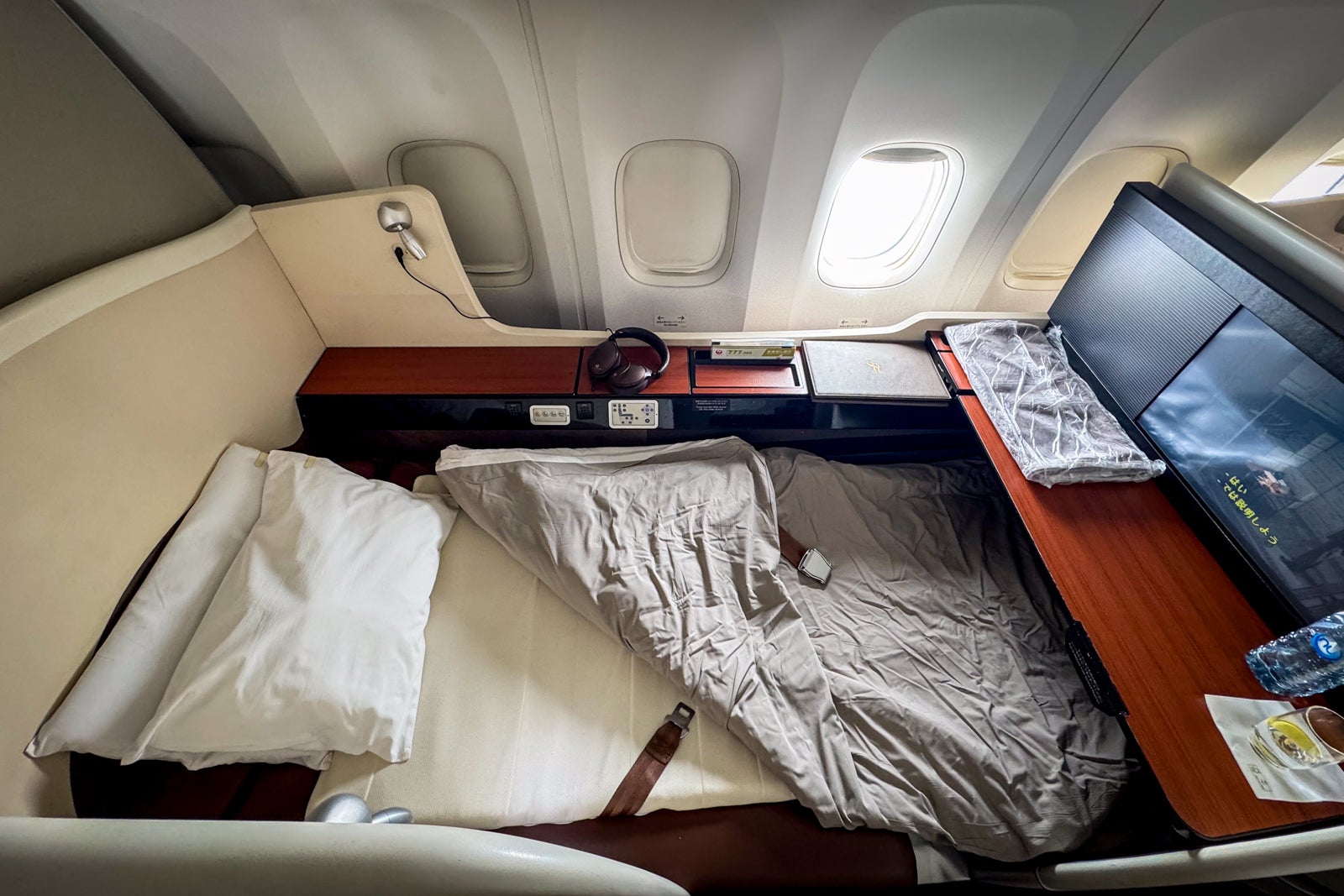
Some airline pairs suffer from phantom space more than others. Qantas members regularly encounter phantom space on Japan Airlines flights. TPG video producer Isabella Boccasino called Qantas directly to verify premium cabin award space she’d spotted for a New York to Tokyo Japan Airlines routing. The Qantas agent told her that phantom award space on Japan Airlines is a known, recurring problem for their members—not a one-off glitch or misunderstanding.
Why Phantom Space Occurs
Phantom award space stems from the technical architecture connecting loyalty programs to airline inventory systems. Loyalty programs typically don’t control the actual seats—airlines do. A loyalty program’s booking engine interfaces with an airline’s inventory management system to display available award seats. When this data connection breaks down, inventory shown to members may not reflect what the airline system actually has available for sale or redemption.
Stale data creates a common scenario. Inventory might have been available when the loyalty program last queried the airline, but seats got sold or reassigned before you attempted to book. Communication errors between systems represent another failure mode, where temporary outages or sync lags mean the loyalty program displays outdated information that the airline has already moved past.
Verification Methods: Before Transferring Points
Contact the Loyalty Program Directly
Calling the airline’s loyalty program customer service provides the most direct confirmation possible. Ask the representative to manually check whether the specific flight and cabin class you’ve identified actually exists in their current inventory system. This doesn’t guarantee the space will remain available through the entire booking process or that it will be accessible for transfer partners, but it confirms what the system currently shows. Even this verification isn’t foolproof for partner awards, but it establishes a baseline of reality beyond what you see on screen.
Cross-Check Multiple Booking Platforms
Award search tools like Seats.aero or Point.me help locate available inventory, but they shouldn’t be your only verification source. These tools aggregate data from loyalty program websites, displaying the same search results you’d see yourself—without independently verifying that the seats are actually bookable. Search through the loyalty program website itself before transferring any points, not just through aggregators.
Searching multiple partner programs independently offers another validation point. If different airline loyalty programs show the same award space on the same flight at the same cabin level, that increases confidence the inventory is real. However, this method has a limitation: multiple partner programs can display the same phantom inventory if they’re all pulling from the same underlying data source at the same moment in time. Synchronized phantom space across partners is possible, so this check should accompany other verification steps, not replace them.
Use Award Holds When Available
Some airlines allow members to place award tickets on hold before finalizing the booking. A hold provides reassurance that the loyalty program has located actual inventory and is setting it aside for you. Holds don’t guarantee the space will remain available or convert to a booked award—nothing guarantees that except a completed booking. Even after placing a hold, complete your booking as quickly as possible, since some programs release held inventory if you don’t finalize within a set time window.
Operating Carrier vs. Partner Bookings
Phantom award space primarily plagues partner bookings. When you book awards directly through the operating airline using that airline’s own points or miles you’ve transferred to that program, you’re accessing the most current inventory data from the source. An intermediate partner program creates the data synchronization lag that spawns phantom space.
If your loyalty program allows you to book your desired flight at a reasonable award rate, this is typically the straightforward option. You sidestep the phantom space problem and eliminate the risk of irreversible transfers. However, sometimes the operating airline doesn’t partner with your loyalty program for that route, or the award rate is substantially higher than through an alternative partner. In those cases, booking through a different partner becomes necessary—along with heightened verification.
Reversing Transfers: The Reality
Once points transfer to an airline program, reversal is nearly impossible. Your credit card company and the airline loyalty program can technically coordinate to reverse the transfer, but this practically never happens. You should assume any transferred points are permanent and committed to that airline account unless you can demonstrate an exceptional error.
Rare exceptions exist. Flying Blue reversed transfers after canceling awards it had priced incorrectly. These cases are exceptional circumstances, not typical outcomes. Unless your situation involves a documented program error or fraud, plan on the transfer being permanent.
Reducing Risk Before Booking
No verification step completely eliminates phantom space risk before you book, particularly for partner awards where the loyalty program doesn’t control the underlying inventory. You can substantially reduce your exposure: confirm through multiple partners, call the loyalty program’s customer service line, place a hold if available, and cross-reference with award search tools. Most critically, complete all verification before transferring any points.
Transferable points are most valuable while they remain in your transferable currency account. Once they move to an airline, your options narrow to that single program and that airline’s inventory. Points held in a premium rewards card account maintain their flexibility across multiple airline partners. Exhaust your verification, then transfer.
Frequently Asked Questions
What exactly is phantom award space?
Phantom award space refers to award seats that appear available when you search a loyalty program but cannot actually be booked. It occurs when the inventory displayed by the loyalty program doesn't match what the airline's reservation system confirms, usually due to stale data or synchronization failures between the two systems.
Which airlines and programs show the most phantom award space?
American Airlines AAdvantage, United MileagePlus, Air France-KLM Flying Blue, Air Canada Aeroplan, and Qantas have all been reported to show phantom space frequently. Qantas specifically has a known issue with phantom space on Japan Airlines flights. Flying Blue has been experiencing increased phantom award space according to Seats.aero.
Can I get my points back if I transfer them and find phantom space?
Reversals are extremely rare and should not be expected. Once points transfer to an airline program, they generally cannot be reversed, even if the award space turns out to be phantom. Transfers have reversed in exceptional cases like when Flying Blue canceled awards it priced incorrectly, but this is not typical.
