
Key takeaways
- A strategic award booking for 14,000 Avios and $3 positioned one traveler directly in the path of totality at 35,000 feet.
- Using FlightRadar24, SeatSpy and Seats.aero, the author identified that BA 2644 from London Gatwick would pass through totality despite peak summer availability.
- Club Gold elite status enabled free seat selection, securing the west-facing window required for an unobstructed eclipse view.
- The 90-second totality moment transformed casual passengers into eclipse witnesses, with shared memories transcending typical flight experiences.
The plan formed on a Monday afternoon: why settle for London’s 90% partial eclipse when the path of totality lay just a flight away? Northern Spain and the Balearic Islands would experience full darkness within hours. The real breakthrough came next: what if the aircraft crossing that path at exactly the right moment could serve as an observation platform?
The Eclipse Insight: What if You Could Board It?
London had disappointed before—nearly 20 years of residence had built expectations. A 90% partial eclipse would normally qualify as remarkable. But the author, a points and miles aficionado, recognized the math differently. The path of totality was accessible, a brief flight away. The question shifted from whether to go, to how.
Research Tools Reveal Hidden Opportunities
SeatSpy and Seats.aero, two tools relied on by frequent flyer strategists, became the starting point. Despite the peak of British school holidays—one of the worst periods for award availability—both tools revealed something unusual: wide-open award availability on multiple British Airways flights departing London during the eclipse window.
The discovery defied expectations. Award seats rarely remain abundant during summer holidays. Yet there they were, in both economy and business class, on routes that could theoretically position an aircraft within the path of totality.
The Failed First Attempt and Course Correction
The author’s initial analysis centered on a flight to Palma de Mallorca (PMI). The research seemed solid: excellent award availability, reasonable departure time, and a destination squarely in the eclipse window. Confidence was high enough to create promotional content—an Instagram reel—encouraging followers to book the same route.
Then viewers pointed out the critical flaw: the science didn’t work. The aircraft would pass too far north to experience totality. The partial eclipse from Palma would be spectacular but not the totality the author sought.
Rather than abandon the idea, the author consulted with a family member who happens to be an airline pilot. Together, they mapped the precise path of totality and pulled three days of historical data from FlightRadar24, a flight-tracking website. By replaying past flights departing from London or nearby airports, they identified which routes had previously crossed the right geographic corridor at the right times.
Finding the Perfect Flight
BA 2644: The Alignment
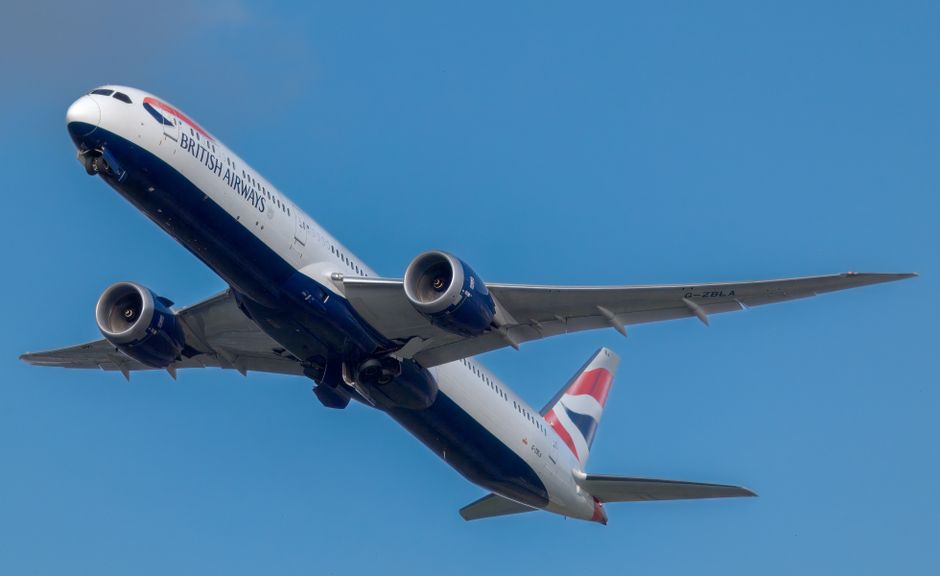
One flight stood out immediately: British Airways Flight 2644, departing London Gatwick (LGW) at 5:10 p.m., bound for Malaga-Costa del Sol (AGP). Historical data showed it typically departed late—about an hour behind schedule. That delay was exactly what the calculations needed. The aircraft would be in the right place at the right time.
A quick check of British Airways’ award inventory confirmed it: wide-open availability in both cabins. During peak summer holidays, this was remarkable. Seats in multiple rows were available, and the right-side, west-facing window seats—the critical vantage point—had openings.
Securing the Perfect Seat
British Airways Club Gold status, the author’s elite tier, provided free seat selection. This advantage proved invaluable. Rather than face a paid upgrade or hope for the right seat during check-in, Club Gold allowed the author to lock in the exact window position needed: a west-facing seat on the right side of the cabin, positioned for an unobstructed southern view.
Friends were recruited for the journey, and confirmation came back: the key seats were still available. The booking was completed within minutes, securing the unobstructed vantage point.
The Award Booking: 14,000 Avios and $3
The cost was strikingly low. The redemption required 14,000 Avios—British Airways’ frequent flyer currency—plus $3 in taxes and fees ($2.50 in British pounds plus additional charges). For comparison, standard award bookings on this route typically require 15,000 to 20,000 Avios depending on the season and cabin.
The value captured here extended beyond the points cost. Commercial eclipse charter flights—flights specifically operated to maximize eclipse viewing opportunities—typically cost thousands of dollars per person. This booking delivered the same outcome for a fraction of the price, thanks to award availability patterns and strategic planning.
Club Gold status eliminated the usual friction points. Without elite benefits, reserving the precise seat would have required either paying additional fees or gambling on availability at check-in. The status protection proved essential to the plan’s success.
The Day of Departure
The logistics unfolded calmly. The author and traveling companions took the train to Gatwick, navigated security during a quiet mid-afternoon window, and had time for a meal before the gate opened. Arriving at the departure area, they noticed something unusual: several other passengers had brought solar-protection glasses and cameras.
Boarding began later than scheduled. Most passengers would view this as an inconvenience, a slight delay. The author welcomed it. The later departure meant the aircraft would push back closer to the ideal timing, increasing the margin for success.
The flight pushed back into a queue of aircraft awaiting takeoff. At 6:05 p.m., the aircraft lifted off—about five minutes later than the theoretical optimum, but well within acceptable range. For the first 40 minutes of the flight, the cabin remained largely unaware of what might unfold.
90 Seconds of Totality from the Sky
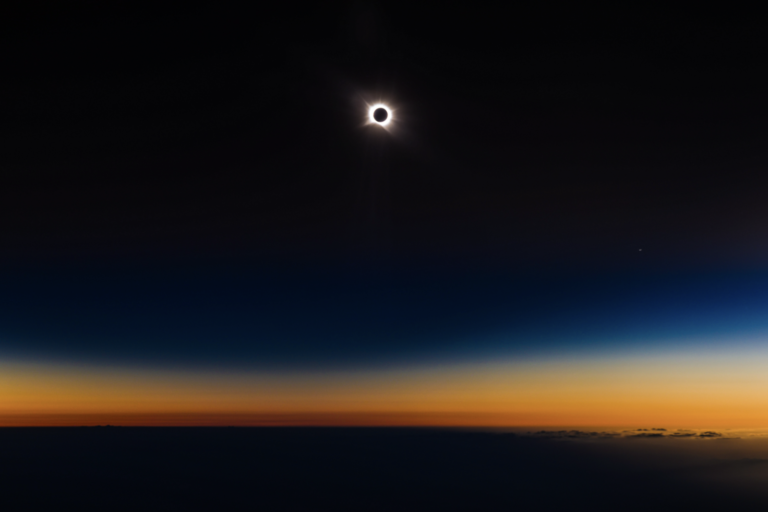
Midway through the flight, the captain made an announcement mentioning the eclipse for the first time. He had been watching the path of totality and confirmed what the author had calculated: the aircraft was positioned to pass through totality at the ideal moment. More than that, passengers would witness something few people ever see—the moon’s shadow sweeping across the Earth from an altitude where it becomes visible as a phenomenon rather than merely a darkening overhead.
What followed was approximately 90 seconds of complete darkness. The cabin fell silent as the sun disappeared behind the moon. Then gasps, followed by excited conversation as everyone grasped what they had just witnessed. Passengers across multiple rows had watched the shadow race across the landscape below—a sight impossible from the ground.
The eclipse retreated as the diamond ring formed, a sliver of sun reappearing at the edge of the moon’s disk. On approach to Malaga, the aircraft encountered another gift: a partial eclipse sunset during the final 10 minutes of descent, the sun framed between the moon and the horizon.
The Points Redemption Victory
The economics of this booking represent a masterclass in award redemption strategy. At 14,000 Avios, the author spent points that most valuations place between $45 and $70, depending on how Avios are assessed (typical redemption rates range from 0.5 to 1 cent per point, with premium cabin bookings sometimes exceeding this). The total cost—points plus $3 cash—positioned this as one of the most valuable uses of miles available.
The execution combined multiple elements: timing (booking when summer availability remained but departure was imminent), tool usage (SeatSpy, FlightRadar24, historical data), elite status benefits (free seat selection), and a generous award program (Avios, particularly on European routes, remained available when other programs showed depletion).
The cabin passengers, most of whom had no idea totality was possible, became witnesses to something extraordinary. New friendships formed as people shared photos and compared perspectives. A shared memory of totality from 35,000 feet became the story everyone on that flight would carry forward—a story made possible by strategic planning, the right tools, and remarkably affordable frequent flyer points.
Frequently Asked Questions
How much did the author pay for the eclipse flight?
The flight cost 14,000 British Airways Avios plus $3 in taxes and fees.
Which flight provided the eclipse viewing opportunity?
British Airways Flight 2644, departing London Gatwick at 5:10 p.m. and arriving in Malaga-Costa del Sol. The actual departure at 6:05 p.m. positioned the aircraft through the path of totality.
What was the duration of totality from the aircraft?
Totality lasted approximately 90 seconds, with the moon's shadow visibly sweeping across the landscape below before the diamond ring effect appeared.
