
Key takeaways
- Fall foliage appears progressively from September in high-altitude areas to November in the South, allowing travelers to time trips based on their schedule and preferred destinations.
- Forecasting tools have improved planning accuracy, though unexpected weather changes can shift peak timing by weeks, making flexible booking essential.
- Southern and less-famous destinations offer the same foliage quality with fewer crowds and later timing than peak-season New England, saving money and stress.
Autumn officially arrives on September 22, 2026, launching one of the year’s most eagerly anticipated travel seasons. Across the United States, deciduous trees prepare to shed their leaves in waves of color that draw millions of visitors annually. The timing and intensity of this natural spectacle depend on geography, altitude, and weather patterns—factors that vary significantly across regions.
Leaves change color earliest in areas with higher elevations and cooler temperatures. Parts of the northern and western United States are already displaying color, while other destinations won’t reach their peak until October or even November. Selecting the right destination and timing requires understanding how these regional variations shape the season.
Understanding Fall Foliage Timing
How weather and elevation shape when leaves turn
Several factors determine when trees in a given region display their most vibrant hues. Altitude plays a primary role—mountainous areas reach peak color in late September and early October. Lower-elevation zones, such as the Hudson Valley in New York and Bar Harbor in Maine, typically peak weeks later. Temperature and precipitation patterns also influence timing significantly. Colorado’s prolonged drought is causing aspen forests to change color earlier than usual, with peak foliage beginning in mid-September in the northern part of the state and gradually progressing southward.
Weather surprises occur regularly. Vermont experienced an unseasonable flash drought last year that caused leaves to drop early, while Pennsylvania saw warming temperatures delay the entire season. This unpredictability underscores why flexibility remains essential when booking fall travel.
Regional variations across the country
The geographic span of the United States creates a leaf-peeping season that spans nearly three months. Early destinations in the North peak in late September, while southern locations don’t reach maximum color until November. This extended timeline offers flexibility if travel dates are fixed but destination is negotiable. North Carolina exemplifies this: the Great Smoky Mountains on the western side peak in early October, while coastal areas don’t reach their peak until early November.
Forecasting and Planning Tools
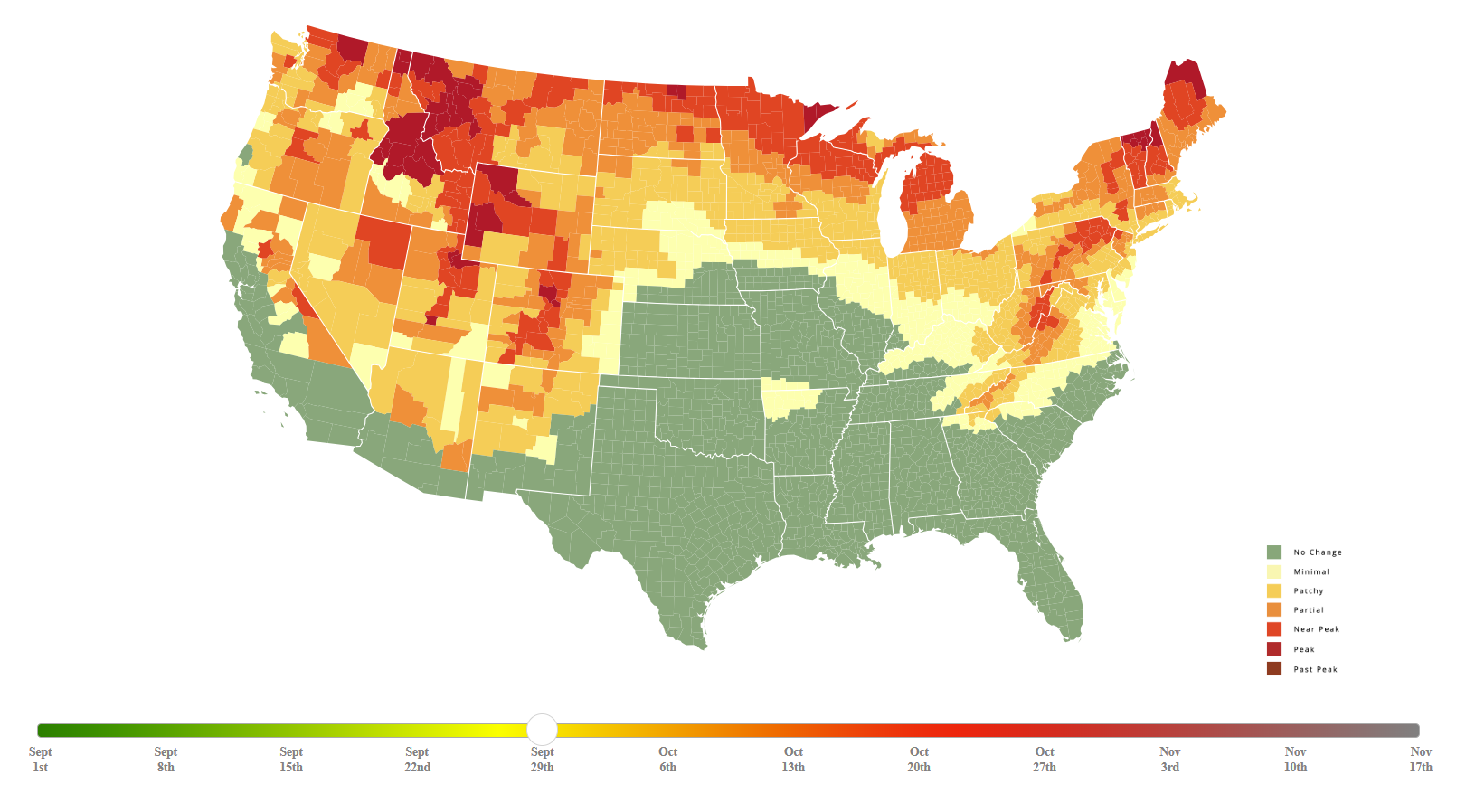
Several resources help travelers anticipate peak foliage timing. The Old Farmer’s Almanac uses historical precipitation and temperature data, past trends for peak leaf peeping, local observations, and model outputs from previous years. A representative from the publication stated that “past results do not necessarily indicate what will happen this year, but it should give you a fairly good idea of how fall leaves typically progress.”
Additional resources include:
- The Smoky Mountains Fall Foliage Prediction Map
- Hipcamp’s interactive map for campgrounds
- State-specific reports—Maine and the Poconos have already launched their 2026 versions
- Local leaf-peeping newsletters for timely updates
Many states offer regular updates throughout the season. Signing up for regional newsletters allows you to adjust plans if peak timing shifts.
New England and Eastern Mountains
New England destinations represent the season’s traditional starting point. Top destinations include:
- Vermont’s ski town of Stowe
- The Berkshires mountain range in Massachusetts
- Acadia National Park in Maine
Mountainous regions in this area should reach peak color in late September and early October, making accommodation booking urgent for these popular areas.
Virginia’s plentiful deciduous trees and varied landscape extend the season considerably. The Virginia Department of Forestry begins issuing weekly foliage updates in late September. South Carolina offers a less-crowded alternative. Columbia reaches peak color in late October and early November, with attractions including Riverbanks Zoo, Three Rivers Greenway, and the nearby Congaree National Park—home to some of the country’s oldest and tallest deciduous trees.
The Blue Ridge Parkway and North Carolina’s coast offer extended viewing opportunities thanks to their elevation range. Coastal areas peak in early November, allowing travelers to pursue color southward as weeks progress.
Western and Mountain Destinations
Colorado’s aspen forests
Colorado’s mountains showcase golden and crimson aspen forests. The state’s prolonged drought is accelerating this year’s transformation, with peak foliage beginning in mid-September in the northern portion and moving south over subsequent weeks. Beyond the signature town of Aspen, closer alternatives to Denver include Guanella Pass near Georgetown and Golden Gate Canyon State Park outside Golden.
Utah and Oregon’s autumn displays
Utah’s famous sandstone cliffs and arches provide an unexpected autumn backdrop. Canyon maple, scrub oak, and native species display their colors against red rock formations in early to mid-October. The autumnal light illuminates these landscapes with particular intensity.
Oregon’s wild landscapes transform dramatically each fall. Portland’s foliage is expected to peak in mid- to late October. The Columbia River Highway, a scenic interstate specifically designed for its vistas, offers one viewing option. Alternatively, steamboat rides along the river provide perspective from the water.
Midwest and Mid-Atlantic Destinations
Michigan benefits from the Great Lakes’ insulating effect, creating a notably long season. Peak color is forecast for early October in northern areas and late October in southern regions. The M-119 road, known as the “Tunnel of Trees,” recently reopened sections following devastating floods earlier this year.
Missouri’s Lake of the Ozarks features 1,150 miles of shoreline lined with maple, oak, hickory, and ash trees. These species reach their November 1 peak, though the American smoke tree—which turns an electric shade of pink—peaks much earlier.
Kentucky’s Lexington provides a different perspective. Paddling tours along the Kentucky River and Elkhorn Creek allow visitors to experience changing leaves from the water. This region peaks in mid-November.
Southern Leaf-Peeping Destinations
The farther south you travel, the later the leaf-peeping season begins, offering additional planning weeks and potentially smaller crowds than northern destinations.
Louisiana offers numerous options from late October through mid-November:
- Chemin-A-Haut State Park
- Lake Claiborne State Park
- Jimmie Davis State Park
Texas presents two distinct options. Lost Maples State Natural Area near San Antonio showcases vibrant red leaves from bigtooth maple trees, though changes likely won’t begin until late October. Garner State Park in southern Texas features 11 miles of hiking trails displaying cypress, oak, mesquite, and persimmon colors.
Arkansas’s Eureka Springs combines mountain scenery with cultural attractions. The town sits surrounded by mountainsides that rival northern destinations, while offering preserved Victorian buildings and therapeutic natural hot springs. Visit between mid-October and early November.
Planning Your Leaf-Peeping Trip
If you’re considering a leaf-peeping trip for 2026, now is the moment to begin booking. The abundance of destinations across the country means experiencing autumn colors while staying relatively close to home, without straining your travel budget or vacation days.
Though forecasting tools offer useful guidance, they cannot guarantee exact peak timing. Maps that incorporate real-world user data as the season unfolds prove especially valuable. However, unexpected weather changes could shift predicted timing for any destination. Build flexibility into your plans whenever possible by booking changeable flights and hotel accommodations.
Frequently Asked Questions
When does fall foliage peak in different parts of the United States?
Peak timing varies by region. High-elevation areas peak in late September and early October, while lower elevations peak several weeks later. Southern regions typically peak in late October or November, allowing travelers to follow foliage southward throughout the season.
What tools can help me predict when foliage will peak?
The Old Farmer's Almanac uses historical weather data and trends to forecast timing. The Smoky Mountains Fall Foliage Prediction Map and Hipcamp's interactive map are also useful resources. Many states and regions, including Maine and the Poconos, publish their own foliage reports with regular seasonal updates.
Which destinations offer the longest leaf-peeping seasons?
North Carolina offers an extended season thanks to elevation variations, with peaks ranging from early October in the western mountains to early November on the coast. Michigan benefits from the Great Lakes' insulating effect, creating a long season from early October through late October. Southern states like Louisiana and Texas peak latest, from late October through November.
