
Key takeaways
- Emirates is exploring flights to Denver, Detroit, and Philadelphia, with president Tim Clark indicating the expansion list goes on and on beyond these three markets.
- The carrier's order for more than 300 new aircraft, including Boeing 777-9s arriving in 2027, will significantly improve route economics and enable profitable service to new markets.
- Strong demand in existing markets and continued profitability despite elevated fuel costs support the timing for U.S. expansion after a nine-year pause since Miami launched in 2021.
- Denver's strategic importance to United Airlines, Emirates' codeshare partner since 2023, makes it a particularly logical candidate as new aircraft arrive in the coming years.
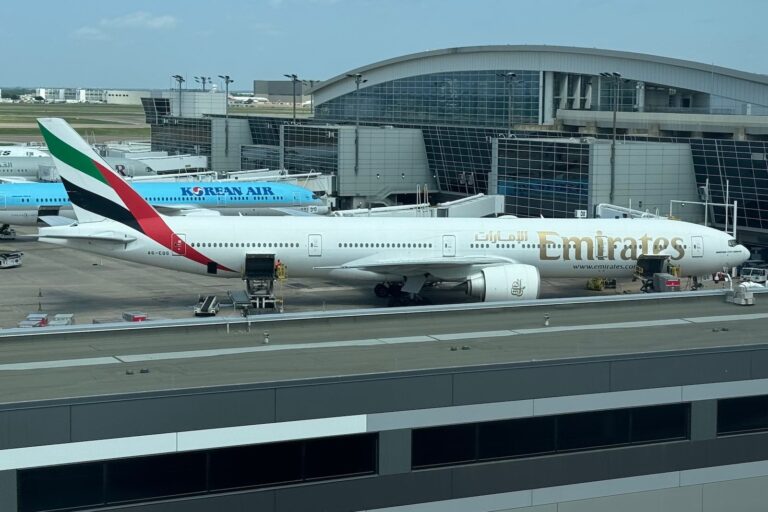
Emirates, the dominant carrier at Dubai International Airport, has no plans to throttle back its network growth. At the Routes World conference, Emirates president Tim Clark outlined the airline’s appetite to explore service into three major U.S. hubs: Denver International Airport, Detroit Metropolitan Airport, and Philadelphia International Airport.
Clark characterized these three as merely illustrative of a much broader opportunity set. “There aren’t many cities in the world that we will not be able to touch if we want to get there,” he said, adding that the potential expansion list “goes on and on.”
Emirates’ Expansion Appetite Reflects Hub Advantages
The carrier’s confidence rests on its position as the dominant operator at Dubai International Airport, where it controls more than half the available capacity. This dominance has been reinforced by the suspension of routes by several Western competitors, giving Emirates additional network flexibility and profitable feed routes connecting Europe and North America to destinations across India, Southeast Asia, and Africa.
Where New Markets Fit
The three named markets represent major metropolitan areas with significant connecting potential. Denver serves as a major United Airlines hub; Detroit and Philadelphia represent large population centers and competitive markets. Each has been identified as profitable enough to justify exploration, though Clark declined to provide specifics on launch timing or frequency.
How Long Since Emirates Added U.S. Capacity
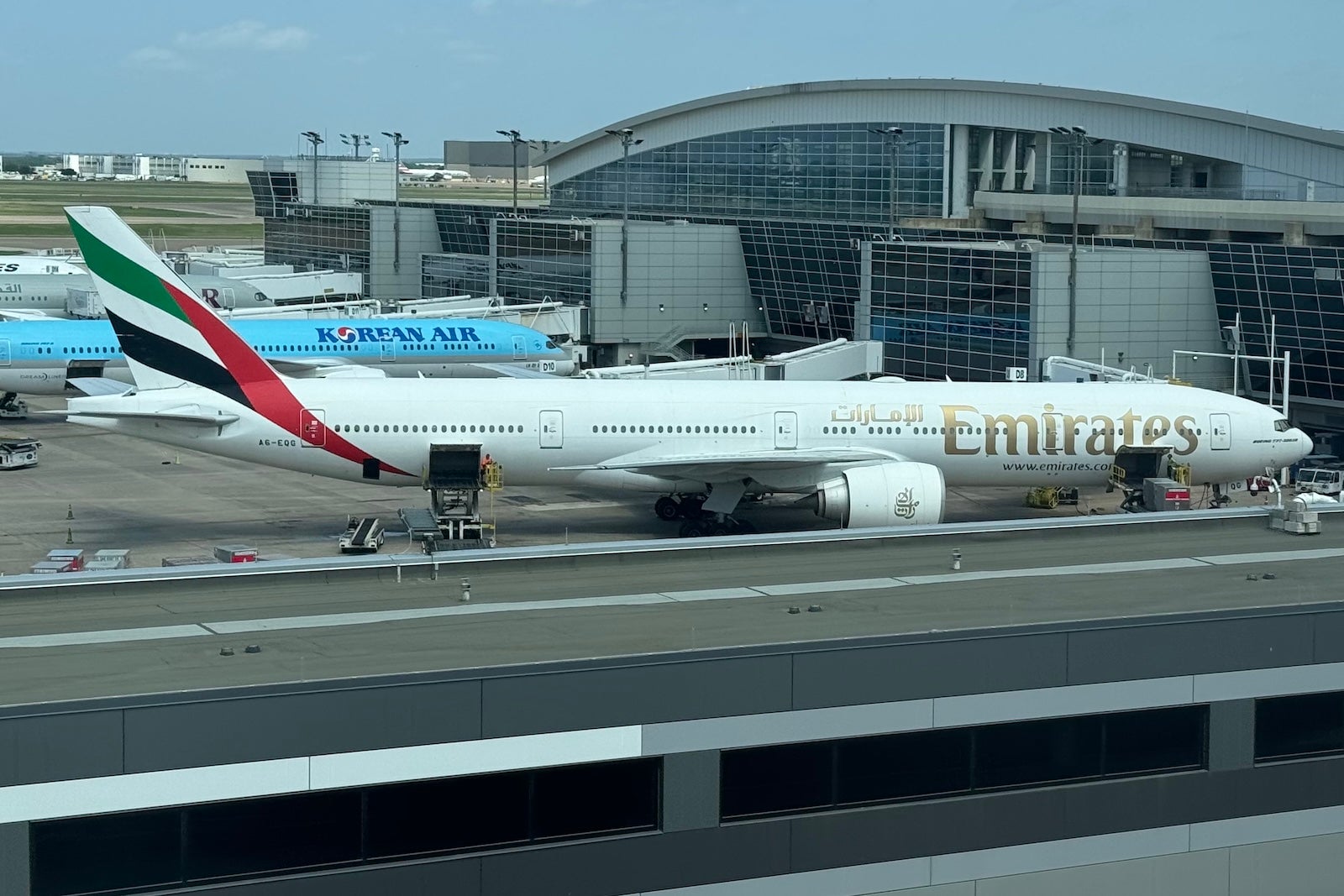
The last time Emirates launched a new U.S. city was 2021, when it began service to Miami International Airport, replacing existing operations into nearby Fort Lauderdale-Hollywood International Airport. Before that, Newark Liberty International Airport became the carrier’s last entirely new U.S. destination in 2017.
This gap of four to nine years, depending on how you measure, underscores how dramatically the aviation landscape has shifted. Geopolitical friction, fuel cost volatility, and capacity constraints have all weighed on expansion decisions industry-wide. Now, a combination of new aircraft and favorable market conditions are repositioning Emirates to resume growth.
Aircraft Orders Enable Profitable Route Expansion
Emirates’ confidence hinges directly on a massive fleet modernization. The carrier’s order book contains more than 300 aircraft: Airbus A350s, Boeing 787s, and the long-delayed Boeing 777X family. These planes will replace aging widebodies and narrowbodies with more efficient, higher-capacity alternatives.
The 777-9 Enters Service in 2027
The centerpiece of this renewal is the Boeing 777-9, which Emirates expects to receive beginning in 2027. The original delivery timeline targeted 2020, but multiple delays pushed that introduction forward by seven years. These widebodies will carry 300 to 400 passengers per aircraft, far exceeding many current long-range widebodies.
Clark declined to detail the cabin configuration, but offered a brief preview of passenger experience across all classes: “stylish, luxurious and cool.” He made clear that travelers regardless of booking class would find the product satisfactory, though he gave no specifics on premium cabin seat counts or layout changes.
Why Newer Aircraft Change Route Profitability
The fuel efficiency, capacity, and per-seat economics of aircraft like the 777-9, 787, and A350 are substantially superior to the widebodies deployed on many long-range routes today. Newer aircraft reduce per-seat costs, improve seat-mile capacity, and lower fuel burn per passenger compared to aging fleet members.
This mathematical advantage expands the universe of profitable markets from a hub like Dubai. Cities that might not have supported daily or twice-daily service under current fleet economics become viable when a more efficient aircraft can deliver equivalent seat capacity on significantly lower fuel costs per passenger.
Demand Remains Strong Despite Geopolitical Headwinds
Regional tensions involving Iran and Houthi military operations in Yemen have not materially impacted demand for Emirates services, according to Clark. The carrier continues to see strong bookings across its traditional markets.
Specific Market Examples Show Sustained Strength
Bangkok emerged as a specific example of resilience, with Emirates’ flights to the Thai capital remaining at or near full capacity. The continued strength on established long-haul routes suggests that demand for connectivity from the Middle East to Southeast Asia and beyond has not softened despite geopolitical friction.
Fuel Costs and Financial Resilience
Jet fuel prices remain elevated, putting pressure on airline margins. As of the week ending October 16, kerosene averaged $4.58 per gallon according to the International Air Transport Association. Despite these headwinds, Emirates reported continued profitability. The carrier’s hub model and network efficiency have allowed it to manage fuel costs better than some competitors facing point-to-point economics or less favorable connectivity.
The United Airlines Partnership and Strategic Implications
A 2023 codeshare and loyalty partnership between Emirates and United Airlines created new dynamics in the U.S. market. United launched new service from Newark Liberty International Airport to Dubai as part of the pact, creating feed traffic for U.S. passengers connecting into Emirates’ Asia-Pacific network.
That Newark service was suspended in February following escalations between the U.S., Israeli, and Iranian governments. The suspension demonstrates how quickly geopolitical developments can reshape route strategies, even for carriers with well-positioned hubs.
Denver and United’s Network Hub
Clark did not specifically mention the United partnership in his expansion remarks, yet one detail stands out: Denver is the only major United Airlines hub that Emirates does not currently serve. Given the strategic importance of United hubs to the codeshare relationship, Denver’s absence from Emirates’ U.S. network makes the market a logical candidate for future expansion.
What New Routes Mean for Award Travelers
Additional U.S. gateways create expanded possibilities for Skywards frequent flyer members and for United MileagePlus members accessing the partnership. Each new city adds connection points through the Dubai hub, multiplying the number of award routing options into Emirates’ extensive Middle East, Asia-Pacific, and Indian subcontinent network.
New U.S. hubs also create additional opportunities for long-haul award bookings. MileagePlus members with high balances gain fresh origination points for extended trips through Dubai into secondary and tertiary markets that may be unavailable from existing U.S. Emirates gateways.
The Expansion Timeline and What Comes Next
Emirates’ expansion into Denver, Detroit, and Philadelphia remains in the exploration and planning phase. No formal launch dates or frequencies have been announced. However, the carrier’s willingness to commit to significant aircraft orders and its indication that the expansion possibilities “go on and on” suggest that U.S. network growth is coming.
The arrival of 777-9 aircraft beginning in 2027, followed by ongoing deliveries of A350s and 787s, will give Emirates the tooling to profitably launch and sustain additional routes. Given the four to nine year gap since the last U.S. expansion, renewed growth in the American market appears to be a natural next step in the carrier’s broader network strategy.
Source: The Points Guy Articles
Frequently Asked Questions
What three U.S. cities is Emirates considering for new flights?
Emirates president Tim Clark confirmed the airline is exploring flights to Denver International Airport, Detroit Metropolitan Airport, and Philadelphia International Airport, though he indicated these are just some options from a much longer list.
When will Emirates receive the new Boeing 777-9 aircraft?
Emirates expects to receive its first 777-9 aircraft in 2027, which will carry 300 to 400 passengers. The plane was originally scheduled to arrive in 2020, but multiple delays pushed the delivery timeline forward by seven years.
How do new Emirates routes affect frequent flyer award options?
Additional U.S. gateways create more connection possibilities through Dubai for Skywards members and United MileagePlus members accessing the partnership, expanding the range of award routing options into the Middle East, Asia-Pacific, and Indian subcontinent.
