
Key takeaways
- Delta now has Wi-Fi coverage across 95% of its fleet, with the Pacific gap closed by a new Viasat satellite expected to significantly improve bandwidth.
- United has 43% of its fleet equipped with Starlink, Alaska is 40% complete, and Southwest expects full coverage before both, intensifying pressure on Delta's network choice.
- Delta plans Viasat improvements by Thanksgiving but won't deploy Amazon's satellite service until 2028, giving competitors years of speed advantage in the meantime.
- Delta's strategy emphasizes global coverage reliability, though all major competitors will soon match that reach while offering faster speeds via Starlink.
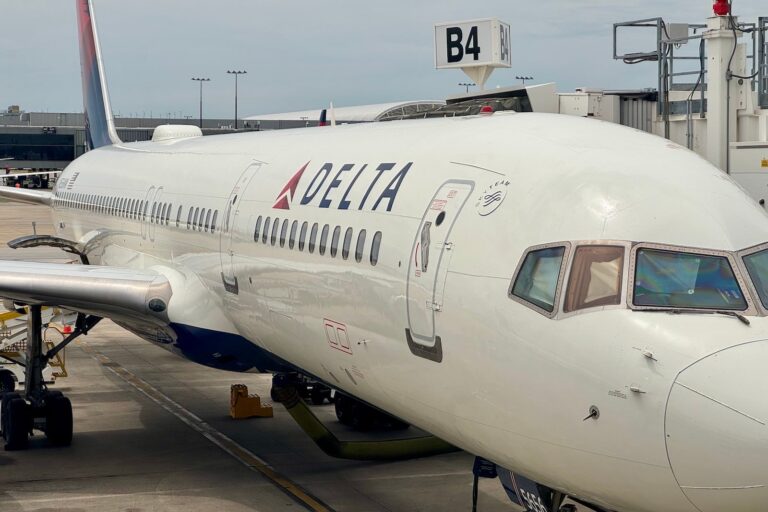
Delta Air Lines on Tuesday announced that Wi-Fi service is now available across its network, with coverage extending to even the longest transoceanic routes. The carrier said it had closed its “last coverage gap” over the Pacific Ocean, made possible by a new satellite from Viasat, its primary internet provider, that came online last week.
This achievement means Delta has equipped more than 95% of its fleet with the technology to deliver free Wi-Fi to every customer, a rollout the airline expects to complete entirely within the next few months. The deployment spans nearly 1,300 aircraft, from regional 70-seat jets to Airbus A350s serving transpacific routes.
A multi-year rollout reaches global scale
The scope of Delta’s Wi-Fi installation reflects years of sustained investment. The airline first announced its vision for complimentary internet access across the entire fleet in January 2020. But momentum accelerated in early 2023, when Delta took a decisive step: it announced that all members of its SkyMiles frequent flyer program would receive free Wi-Fi on every flight. That decision set an industry precedent. Competitors quickly promised their own free internet to loyalty members. Yet the competitive landscape has shifted substantially since.
Starlink changes the conversation
United’s aggressive positioning
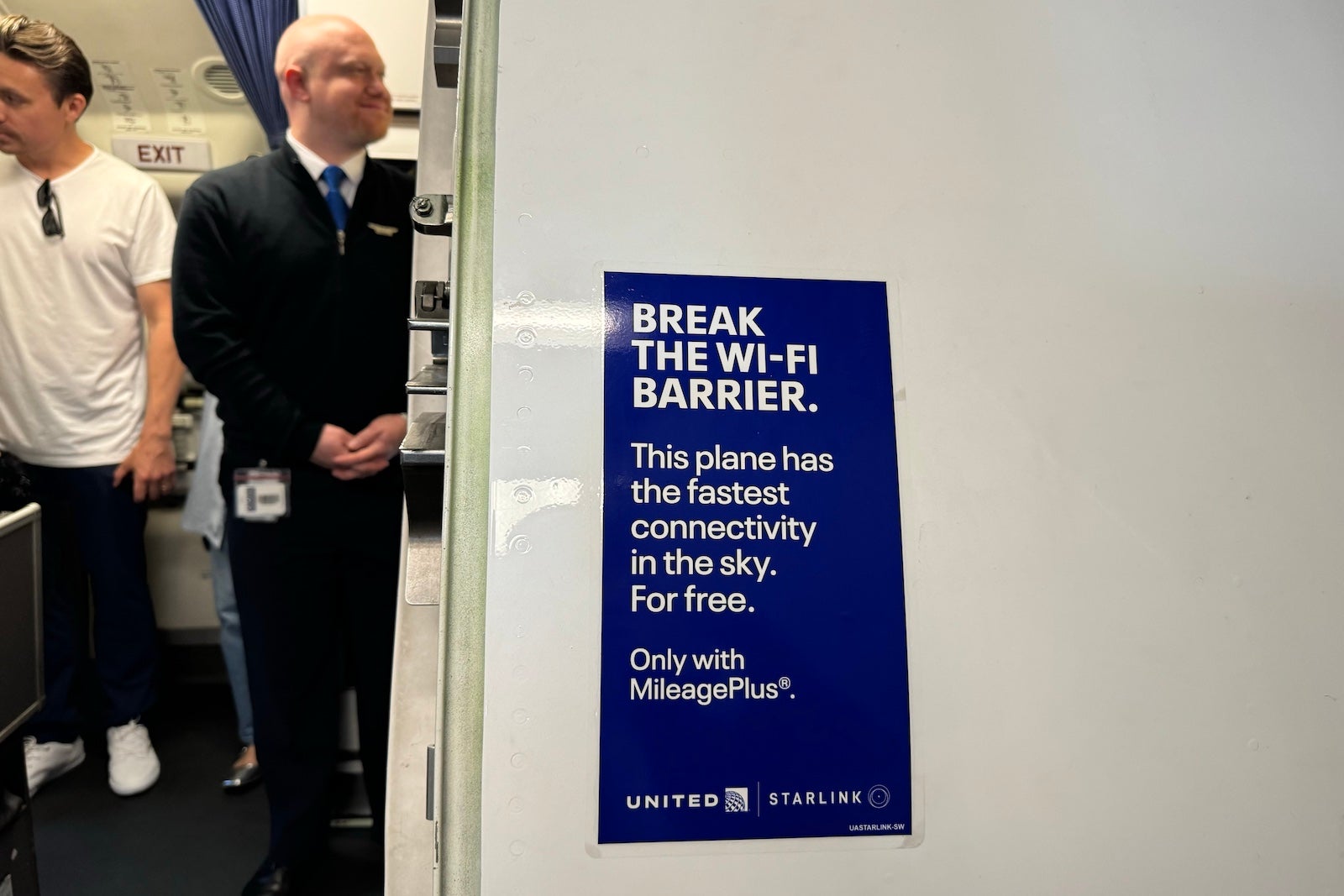
Starlink, the satellite internet service operated by SpaceX, has become the standard by which airlines now measure Wi-Fi quality. United Airlines, American Airlines, Southwest Airlines and Alaska Airlines have all begun deploying Starlink across their fleets, and the competitive messaging has become pointed. United published a real-time tracker last week showing that 43% of its fleet now has Starlink installed. More aggressively, United launched a status match offer specifically targeting longtime Delta SkyMiles members, essentially arguing that switching airlines makes sense if inflight Wi-Fi speed matters.
Alaska and Southwest accelerating
Alaska Airlines is approximately 40% complete with its Starlink deployment. Southwest Airlines announced last week that it expects to have Starlink installed across its entire fleet before either United or Alaska finishes, which would make Southwest the first major U.S. carrier with complete Starlink coverage. All three carriers plan to offer the service free to members of their respective loyalty programs, matching the standard Delta established in 2023. With faster satellite technology as the foundation, these carriers are implicitly offering passengers a choice: stay with Delta’s current network, or switch to airlines with newer, faster infrastructure.
Delta’s response: the Viasat upgrade
Delta’s response has been to remain with Viasat, its existing satellite partner, while deploying new infrastructure designed to improve speed and reliability. The carrier is moving its planes to Wi-Fi powered by a new Viasat satellite that the company says will significantly boost available bandwidth and reduce the slowdowns passengers experienced earlier this year. Delta plans to complete this transition on all North and South America routes by Thanksgiving. Initial responses have been positive, according to the airline. The deployment also includes wrapping up Wi-Fi installations on Delta’s fleet of regional jets and smaller Boeing 717s.
Ranjan Goswami, Delta’s chief marketing and product officer, characterized the airline’s advantage in terms of geographic reach rather than raw throughput. According to The Points Guy, Goswami said: “Global full coverage at scale — whether you’re on a regional jet or an Airbus A350 going to Sydney or Melbourne or Auckland — and having that on almost 1,300 airplanes? That is something that is very unique in today’s world.” He noted that reaching this milestone would take competitors time to match. On passenger experience, Goswami added: “You’re going to see a demonstrable improvement on overall bandwidth to the airplane. Those are improvements literally happening right now.”
The long-term bet: Amazon’s satellite service
Delta is not betting solely on Viasat for its future connectivity. Earlier this year, Delta became the largest airline globally to sign on to Amazon’s new satellite internet service, designed to offer a web-browsing experience comparable to Starlink. That service will not begin appearing on Delta aircraft until 2028, however, representing a significantly longer wait than the rapid Starlink deployments now underway at competitors. It represents a long-term hedge against whatever speed advantages Starlink currently holds.
Coverage versus speed
The choice Delta has made prioritizes geographic reach over immediate speed parity with Starlink. The airline can guarantee connectivity from Los Angeles to Sydney, or from Atlanta to Dayton, with no gaps. Goswami acknowledged that “United soon will be able to offer the same breadth of connectivity. American, too.” Yet he expressed confidence in Delta’s strategy, both for its Viasat improvements and its Amazon service bet. “It’s like repainting the Golden Gate Bridge,” he said. “When you finish repainting, you start painting again because you have to start over. But the beauty here is, this is based off of a really solid foundation.”
Source: The Points Guy Articles
Frequently Asked Questions
Does Delta have Wi-Fi on all flights now?
Delta has equipped more than 95% of its fleet with free Wi-Fi for SkyMiles members and closed its Pacific coverage gap. The airline expects to complete the rollout entirely within the next few months.
How does Delta's Wi-Fi compare to Starlink?
According to The Points Guy, United, Alaska, Southwest and American are deploying Starlink, which is widely regarded as faster. Delta is upgrading its Viasat network instead, with improvements expected by Thanksgiving on routes throughout North and South America. Delta's long-term plan includes Amazon's satellite service beginning in 2028.
Will other airlines' Wi-Fi be faster than Delta's?
Yes, competitors are rolling out Starlink faster. United has it on 43% of its fleet, Alaska is 40% complete, and Southwest expects full coverage before either carrier. Delta's chief marketing officer acknowledged that United and American will soon offer comparable global coverage but expressed confidence in Delta's Viasat and future Amazon service improvements.
