
Key takeaways
- Frontier Airlines is launching its first-ever South American service with three nonstop routes from Orlando to Colombian cities: Bogota, Medellin, and Cartagena.
- All three routes were previously operated by Spirit Airlines, which collapsed earlier in 2026, making them strategic acquisitions for Frontier to capture displaced passengers.
- Frontier is taking a measured approach to Latin American expansion, with CEO James Dempsey indicating opportunities to add more former Spirit routes over the coming one to two years.
- Simultaneously, Frontier is exiting New York's JFK airport next month, retreating from high-cost American mega-markets to focus on underserved international routes.
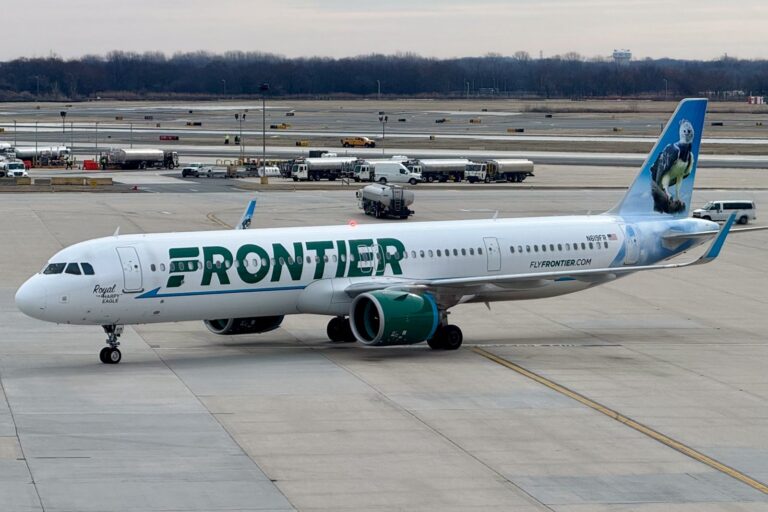
Frontier Airlines announced Thursday that it will launch nonstop service to South America for the first time, expanding to three Colombian cities from Orlando International Airport (MCO): Bogota, Medellin, and Cartagena. The Denver-based budget carrier is directly filling the void left by Spirit Airlines, which dominated ultra-low-cost operations in the region before ceasing operations earlier in 2026. All three routes Frontier is launching were previously flown by Spirit, making this a calculated move to capture displaced passengers and proven markets.
The Three Colombian Markets
Bogota, Colombia’s capital and largest city, anchors Frontier’s South American entry. The city generates consistent demand from business travelers navigating its role as the nation’s government and financial center, while also serving as a gateway for tourists exploring Colombia. Medellin, the country’s second-largest city, expands Frontier’s reach into a major convention and tourism destination experiencing significant international growth. Cartagena, a Caribbean coastal city and Colombia’s premier tourist destination, provides access to the leisure travel segment, particularly from Florida.
Each City’s Travel Profile
Bogota represents core business traffic and government-related travel, providing stable revenue from corporate passengers and frequent travelers. Medellin serves tourists and convention attendees, with growing international appeal and modern infrastructure attracting delegates and vacation travelers. Cartagena captures leisure tourism focused on colonial architecture, beaches, and Caribbean experiences, demographics that typically generate demand for budget-carrier pricing.
Why Orlando as the Hub
Orlando serves as the gateway because of its existing aviation infrastructure, direct connections to Latin America, and Central Florida’s large South American diaspora community. These factors provide Frontier with both efficient operations and immediate access to origin passengers with strong demand for routes to Colombia.

Filling Spirit’s Market Void
Spirit Airlines held the position of America’s top ultra-low-cost carrier in Colombia and throughout South America before its failure. That status meant Spirit’s routes represented proven demand at price points only an ultra-low-cost operator could sustain. By launching these identical three routes, Frontier gains immediate access to markets with established passenger flows.
“We believe there is strong, unmet demand for low-cost travel between Orlando and Colombia, and we look forward to offering affordable flight options between these two magnificent destinations,” said Tyri Squyres, Frontier’s vice president of public and consumer affairs.
Passengers Left Stranded
When Spirit ceased operations, travelers dependent on its low fares lost access to budget options. The “unmet demand” Squyres referenced includes both passengers who flew Spirit routes regularly and those who deferred trips due to lack of affordable alternatives. Frontier’s launch directly addresses this gap, restoring options that disappeared months ago.
Proven Market Economics
The decision to launch these specific routes reflects confidence in their underlying economics. Spirit’s presence on these routes over many years established that sufficient demand existed at ultra-low-cost pricing to justify regular service. Frontier’s move signals the airline believes it can operate these routes profitably, even if Spirit ultimately could not sustain them within its broader network losses.
Frontier’s Measured Expansion Strategy
Frontier executives have explicitly stated they will not pursue every route Spirit abandoned across Latin America. This disciplined approach reflects how ultra-low-cost carriers must operate: carefully selecting routes where economics support sustainable profitability rather than chasing market share aggressively.
During a July interview, Frontier CEO James Dempsey described the airline’s outlook: “There are opportunities to pick off markets that they’ve obviously exited, now, over the coming year or two.” This language signals a multi-year evaluation window for adding additional Spirit routes, not a rapid feeding frenzy.
Why Caution Matters for Ultra-Low-Cost Carriers
Ultra-low-cost carriers operate on unit economics where margins leave little room for error. A route generating modest demand might still produce inadequate returns if operating costs exceed what the market will bear at competitive prices. Frontier’s measured approach reflects lessons learned from Spirit’s aggressive expansion that ultimately exceeded the airline’s financial capacity.
The months between Spirit’s collapse and Frontier’s announcement of these three routes underscore the evaluation process: analyzing competitive intensity, assessing labor and airport costs, confirming sufficient yield potential, and securing necessary operational infrastructure at each airport.
More Acquisitions Anticipated
Despite the cautious tone, Frontier views Spirit’s Latin American exit as a multi-year opportunity. Other markets Spirit served remain under evaluation, with further route additions expected in coming months or years. Colombia represents an opening move within a broader Latin American strategy.
Exiting the U.S. Mega-Markets
The Colombia announcement arrives alongside Frontier’s confirmation that it will exit New York’s John F. Kennedy International Airport next month, abandoning America’s largest metropolitan area. This simultaneous expansion and contraction reveals Frontier’s strategic calculus: expensive, highly competitive U.S. markets generate inadequate returns, while underserved international markets offer better economics.
JFK and similar high-cost American mega-markets force ultra-low-cost carriers to choose between accepting losses or exiting. Landing fees, labor costs, and fuel expenses prevent Frontier from undercutting legacy carriers or multiple budget competitors on the same routes. Colombia, by contrast, offers a market where demand exists and competitive intensity decreased after Spirit’s departure, allowing Frontier to operate profitably on budget fares.
Restoring Traveler Options
Passengers reliant on Spirit’s budget fares to Colombia now have access restored. The three routes from Orlando address a market gap existing since Spirit’s collapse, giving travelers familiar with budget-carrier pricing a return option. Actual fares and scheduling remain to be confirmed; Frontier’s pricing may differ from Spirit’s historical patterns.
The broader signal matters: ultra-low-cost capacity is returning to Colombia and South America despite Spirit’s failure. Spirit’s collapse was not the end of budget travel to the region—rather a transition between operators. Frontier’s aircraft deployment to these markets confirms underlying economics still support low-cost flying, even if Spirit could not sustain profitability across its entire network.
Frequently Asked Questions
Why is Frontier launching these Colombian routes?
Frontier believes there is strong, unmet demand for low-cost travel between Orlando and Colombia after Spirit Airlines ceased operations earlier in 2026. All three routes Frontier is launching were previously served by Spirit, the ultra-low-cost carrier that dominated the region.
Is Frontier planning to add more routes in Latin America?
Yes, Frontier CEO James Dempsey indicated in July that there are opportunities to acquire more former Spirit routes over the coming year or two, suggesting a multi-year expansion strategy rather than rapid acquisition of all abandoned routes.
Why is Frontier exiting JFK while expanding in Colombia?
Frontier is retreating from high-cost American mega-markets like New York where landing fees, labor costs, and competition make it difficult to operate profitably on a budget model. Colombia offers lower-cost operations and less competition after Spirit's departure.
