
Key takeaways
- Before selecting items to pack, establish clear parameters about your destination’s climate, culture, and infrastructure.
- Start with neutral-colored basics that mix and match easily, creating multiple outfit combinations from fewer pieces.
- Shoes consume disproportionate luggage space, so limiting your selection to three or four pairs maximizes efficiency.
- Modern international travel necessitates electronic devices, but managing cables and chargers prevents luggage clutter.
Packing efficiently for a two-week international journey requires strategic planning that balances preparation with restraint. Most travelers overpack by 30 to 40 percent, according to luggage industry surveys, creating unnecessary weight and limiting flexibility during their trip. A methodical packing approach ensures you carry everything necessary while maintaining the mobility to navigate airports, public transportation, and accommodations comfortably.
Understanding Your Destination and Travel Duration
Before selecting items to pack, establish clear parameters about your destination’s climate, culture, and infrastructure. Research the average temperatures, rainfall patterns, and local dress codes for the specific regions you’ll visit. A two-week trip differs fundamentally from weekend travel because you’ll encounter varying weather conditions and social situations, requiring a versatile wardrobe that adapts to multiple contexts rather than a single purpose.
The luggage allowances set by major international carriers directly influence packing decisions. Most airlines permit one carry-on bag measuring approximately 22 by 14 by 9 inches and one checked bag weighing up to 50 pounds for international flights. Understanding these constraints before packing prevents costly overweight fees and the frustration of repacking at airport counters.
Building Your Core Clothing Foundation
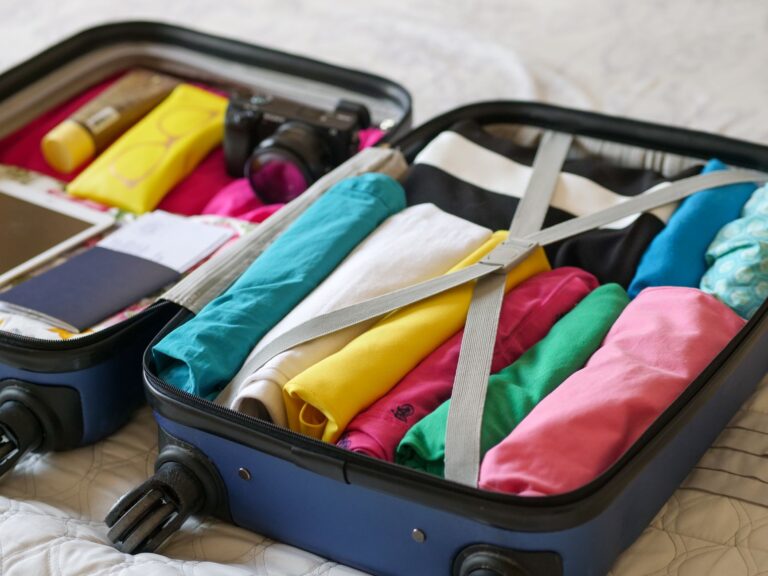
Start with neutral-colored basics that mix and match easily, creating multiple outfit combinations from fewer pieces. Pack five to seven tops, three bottoms, and one dress or equivalent formal piece that works for both casual evenings and dressier situations. This approach, known as a capsule wardrobe (a limited collection of versatile, coordinating clothes), allows you to create ten to fifteen distinct outfits without exceeding luggage limits.
Layering pieces extend your wardrobe’s functionality across temperature variations. A lightweight merino wool sweater, a structured blazer, and a packable rain jacket serve multiple purposes without consuming excessive space. Travel blogger and author Packing Light founder Lara Dunston documents how experienced travelers reduce luggage to carry-on size by prioritizing pieces that function across three or more outfit combinations.
Footwear Strategy and Shoe Selection
Shoes consume disproportionate luggage space, so limiting your selection to three or four pairs maximizes efficiency. Choose one comfortable walking shoe for daily exploration, one dressier option for restaurants or cultural venues, and one casual slip-on for flights and accommodations. If your destination includes beach areas or water activities, pack one multipurpose water shoe that also functions as a casual sandal.
Weight distribution matters significantly during extended travel. Wearing your bulkiest shoes during flights rather than packing them saves several pounds of luggage weight. This practical strategy, used by frequent international travelers, eliminates the need to pack a fifth shoe while maintaining outfit variety throughout your journey.
Toiletries, Medications, and Personal Care Items
TSA regulations (Transportation Security Administration rules governing what passengers can carry through airport security) limit liquid toiletries to 3.4 ounces per container in carry-on bags, though checked baggage permits full-size containers. Decant expensive or bulky products into travel-size containers or purchase solid alternatives like shampoo bars and toothpaste tablets that occupy minimal space. Most international destinations stock familiar toiletry brands, so bringing only essential items reduces packing burden.
Medications require documentation and special consideration during international travel. Carry prescription medications in original labeled containers and maintain a copy of prescriptions or doctor’s notes for customs purposes. This practice, recommended by the International Association for Medical Assistance to Travellers, prevents complications if you need refills or face customs questions during border crossings.
Technology and Charging Equipment
Modern international travel necessitates electronic devices, but managing cables and chargers prevents luggage clutter. Identify the specific charging ports your devices require—USB-C, Lightning, or micro-USB—and consolidate chargers where possible. A universal power adapter compatible with outlets in your destination countries eliminates the need to pack multiple adapters, while a portable battery bank reduces dependency on finding outlets throughout your day.
Travel journalist Rick Steves, who has documented packing strategies for European destinations since the 1970s, emphasizes that most modern hotels and accommodations provide USB ports and outlets, making extensive charging equipment unnecessary. Selecting a lightweight power adapter rated for multiple voltage systems (typically 110-240 volts) serves destinations across continents without requiring separate equipment.
Evolution of Travel Packing Practices Over Time
Travel packing philosophies have transformed dramatically with advances in luggage design and fabric technology. Before the introduction of rolling luggage in the 1970s, travelers relied on steamer trunks and rigid suitcases, making weight and volume critical constraints that encouraged minimal packing. The development of lightweight synthetic fabrics, compression bags, and wheeled carry-on luggage fundamentally changed how travelers approach packing decisions.
Contemporary travel culture emphasizes minimalism more than previous decades. The rise of budget airlines charging baggage fees starting in the early 2000s, exemplified by carriers like Ryanair and Spirit Airlines, forced travelers to reconsider their packing habits. This shift created the modern carry-on-only travel movement, where experienced travelers complete two-week trips with single bags weighing under 22 pounds.
Documents, Money, and Security Considerations
Organize essential documents in a dedicated travel pouch or folder before departure. Gather your passport, travel insurance documentation, vaccination records, driver’s license, and copies of hotel reservations in one accessible location. Storing digital copies of critical documents in cloud storage services provides backup access if physical copies become lost or damaged during your journey.
Currency exchange and payment methods vary significantly across destinations. Carry a mix of local currency obtained before departure and a credit card with international access, while maintaining copies of important card numbers separately from the cards themselves. This multi-method approach, used by frequent international travelers, prevents financial complications if one payment method becomes unavailable.
Miscellaneous Items and Final Considerations
Pack a small first-aid kit containing adhesive bandages, pain relievers, antacids, and any personal medications you anticipate needing. Include a quick-dry microfiber towel, which occupies minimal space compared to standard towels while serving multiple purposes as a beach towel, gym towel, or emergency cloth. A reusable water bottle reduces plastic waste and saves money by eliminating the need to purchase bottled water throughout your trip.
Entertainment items serve long flights and transit periods effectively. Pack a book, download podcasts or entertainment on your device, or bring a travel journal for documenting experiences. These items weigh almost nothing while significantly improving comfort during extended travel periods.
Frequently Asked Questions
How do I pack for multiple climate zones within a single two-week trip?
Select layering pieces and neutral-colored basics that adapt to temperature variations, then choose items appropriate for the coldest destination and remove layers as needed in warmer areas. This approach eliminates the need to pack completely different wardrobes for separate regions within your journey.
Should I pack a checked bag or travel with only carry-on luggage?
Carry-on-only travel saves baggage fees, prevents luggage loss, and increases mobility through airports and accommodations. However, if your trip includes activities requiring specialized equipment or formal events with specific clothing requirements, a checked bag may prove necessary despite additional costs and potential delays.
What items should I purchase after arrival rather than pack?
Plan to purchase toiletries, snacks, and any forgotten items after arriving at your destination, as most international locations stock common brands. This strategy reduces luggage weight while allowing flexibility if your actual needs differ from what you anticipated during planning.
Efficient packing for two-week international travel balances thorough preparation with intentional minimalism, enabling comfortable exploration without excessive luggage burden. By understanding your destination, building a versatile capsule wardrobe, and prioritizing essential items, you create freedom to navigate your journey with confidence and flexibility.
