
Key takeaways
- “Basic” business and first-class fares will exclude several perks currently bundled into premium tickets: free seat selection, Sky Club lounge access, SkyMiles accrual, and ticket flexibility.
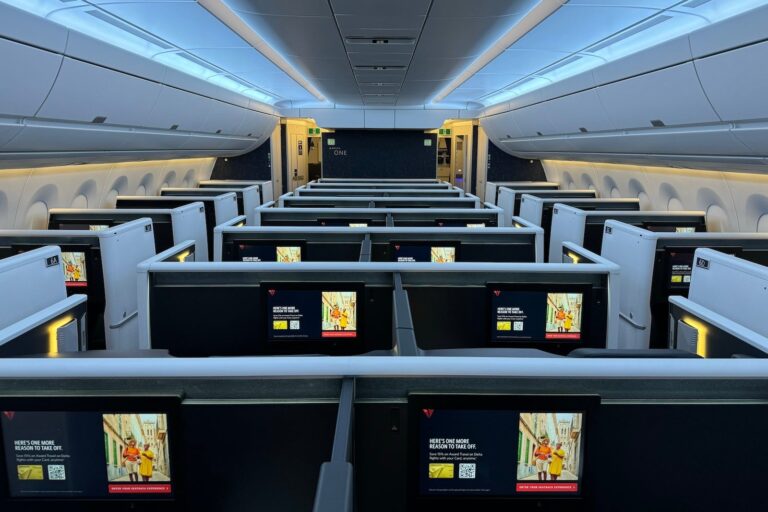
- Delta One (international business class) offers lie-flat seats, premium dining experiences, and Sky Club access—amenities that justify premium pricing on long-haul routes.
- Delta plans to expand fare segmentation across all cabin products throughout 2026, with domestic first-class and Delta One receiving priority.
- Delta introduced enhanced First Class service on February 1, 1969, launching the product across 35 long-haul flights including the Atlanta–Los Angeles route.
Delta Air Lines will become the first major U.S. airline to introduce stripped-down “Basic” business and first-class fares in 2026, fundamentally reshaping how premium cabin pricing works domestically. The carrier announced the expansion during its Q4 earnings call in January 2026, signaling a major shift in fare segmentation strategy that mirrors practices already common among international carriers like Qatar Airways, Emirates, and Air France. Travelers booking premium seats will soon face a three-tier choice: Basic, Main, and Extra—each with vastly different amenities and price points.
Delta’s Three-Tier Premium Strategy Takes Shape
Delta President Glen Hauenstein laid out the airline’s vision during the earnings call, stating: “We’ve talked about really having three categories for every product, which is basic, main and extra.” This three-tier structure will eventually apply to all cabin products, including Delta One (international business class), Delta First (domestic first class), and Delta Premium Select (long-haul premium economy). The rollout reflects Delta’s broader effort to offer customers more choice while capturing additional revenue from travelers unwilling to pay full premium fares.
The pricing differential will be meaningful. Delta executives suggested a “Basic” fare could cost $450 instead of $500 for the same seat, but with tighter restrictions mirroring the trade-offs customers already accept in basic economy. New official fare basis codes—including FIRSTCLASC for Delta First Classic and FIRSTEXTRA for Delta First Extra—show how the airline will label these tiers in booking systems. The fare basis code structure took effect on November 6, 2025, signaling imminent implementation across Delta’s reservation system.
What “Basic” Premium Fares Will Remove—and Why It Matters
“Basic” business and first-class fares will exclude several perks currently bundled into premium tickets: free seat selection, Sky Club lounge access, SkyMiles accrual, and ticket flexibility. Passengers booking these fares will receive a seat assignment after check-in, face cancellation fees with only partial eCredit refunds, earn no miles or Medallion Qualifying Dollars (MQDs), and forfeit complimentary lounge entry. For business travelers and frequent flyers, these restrictions represent a significant departure from traditional premium cabin expectations.
The restrictions mirror Delta’s existing Main Cabin Basic tier (formerly Basic Economy), now rebranded as part of the Delta Main product family following naming changes that took effect October 1, 2025. Delta rebranded its entire cabin structure: First Class became Delta First, Main Cabin became Delta Main, and Comfort+ became Delta Comfort. The new shopping experience launched on Delta.com and the Fly Delta app on May 15, 2025, with full implementation for flights on or after October 1, 2025. This comprehensive rebrand sets the stage for “Basic” premium tiers to roll out seamlessly later in 2026.
How This Compares to Delta One and Domestic First Class
Delta One (international business class) offers lie-flat seats, premium dining experiences, and Sky Club access—amenities that justify premium pricing on long-haul routes. Domestic First Class provides larger seats than main cabin and priority boarding but lacks flat beds and offers limited lounge access compared to Delta One. Understanding these distinctions matters because “Basic” fares will apply to both products, forcing travelers to choose between paying less for a stripped-down experience or upgrading to the Classic or Extra tier to retain familiar amenities.
For international business travelers, the “Basic Delta One” option could theoretically match current Delta One pricing while the “Classic” tier rises 10–20%, according to investor meeting insights. This pricing strategy creates three distinct market segments: budget-conscious premium passengers, standard premium flyers, and ultra-premium customers willing to pay for every amenity. The approach reflects a broader airline industry trend of shifting value from bundled perks to unbundled add-on fees, forcing consumers to pay à la carte for services once included automatically.
When These Changes Take Effect and What Comes Next
Delta plans to expand fare segmentation across all cabin products throughout 2026, with domestic first-class and Delta One receiving priority. The company has already begun rebuilding its brand architecture and pricing infrastructure to support the three-tier model. Travelers should expect to see Basic, Main (Classic), and Extra options appear gradually across Delta’s booking channels as the rollout progresses through the year.
The timing positions Delta ahead of other major U.S. carriers, which still bundle most premium amenities into single-tier offerings. International carriers have operated unbundled premium models for years, proving the strategy can coexist with traditional full-service premium products. Delta’s move signals that U.S. carriers are adopting this proven international model to compete on price while maintaining premium positioning.
A Shift Spanning Nearly Six Decades of Premium Air Travel
Delta introduced enhanced First Class service on February 1, 1969, launching the product across 35 long-haul flights including the Atlanta–Los Angeles route. That decision marked the beginning of a 57-year era during which premium cabins became increasingly bundled with amenities. Today’s “Basic” premium fares represent a complete reversal of that strategy, unbundling services that have been standard fixtures of premium flying for more than half a century.
The shift reflects evolving traveler behavior and revenue management sophistication. Where premium cabins once competed primarily on comfort and service quality, they now compete on price segmentation. This evolution mirrors the basic economy revolution that reshaped main cabin pricing in the 2010s—a strategy that proved highly profitable despite initial customer resistance.
Key Dates and Developments to Monitor Through 2026
Travelers should watch for official rollout announcements specifying which routes and cabin products receive Basic tier options first. Delta will likely prioritize high-volume domestic first-class routes before expanding to Delta One and Delta Premium Select. The company may also announce specific pricing examples and restriction details as implementation approaches, allowing customers to evaluate whether Basic fares meet their travel needs.
Understanding Delta’s new three-tier structure before booking becomes essential for premium passengers starting in 2026. The choice between Basic, Main, and Extra will determine not only ticket price but also lounge access, seat flexibility, mileage earnings, and cancellation policies. Savvy travelers who understand these distinctions will make more informed purchasing decisions, while those unfamiliar with the new structure risk paying for unwanted restrictions or missing savings on streamlined Basic fares.
