
Key takeaways
- Book your cruise for your preferred experience: choose midseason for glaciers, June for whales, and mid-June through mid-August for salmon fishing.
- Verify passport requirements before booking—a closed-loop cruise from a U.S. port allows passport cards, but one-way cruises and any land travel require a passport book.
- Book independent tour operators as an alternative when ship-sponsored excursions are sold out, often saving money while guaranteeing on-time return to the ship.
- Plan to pack layers, rain gear, waterproof boots, bug spray, and binoculars for everyone—skip formal wear and digital distractions to stay present.
Organizing an Alaska cruise requires more detailed preparation than booking a cruise to Mexico or the Caribbean. The stakes are higher because every decision, from timing your sailing to packing your luggage, directly shapes whether you see the glaciers, whales or wildlife you came for.
Match Your Sailing Timing to What You Want to See
Most travelers who book an Alaska cruise carry a specific image of what the trip will deliver. Perhaps you want to stand on a glacier, watch whales breach, fish for salmon, or simply breathe mountain air. Yet timing matters more in Alaska than in other cruise destinations.
Glacier Access and Seasonal Windows
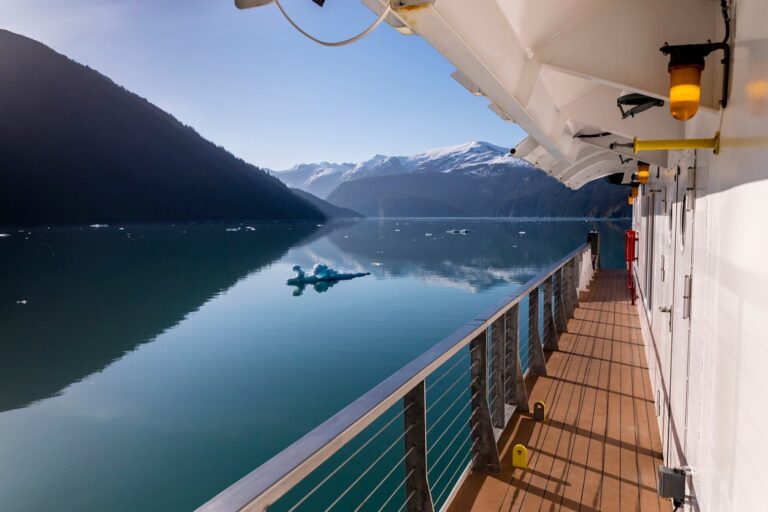
If your priority is glacier viewing, book a midseason cruise that visits Glacier Bay National Park & Preserve. Early-season and late-season sailings often cannot access glaciers safely due to ice floes blocking the fjords. A midseason journey gives you the best odds of seeing glaciers and the longest window for doing so during daytime hours when the light is strongest.
Wildlife and Fishing Seasons
June sailings offer the best chance to see whales. If salmon fishing is on your agenda, plan your trip between mid-June and mid-August when the salmon run peaks. Ketchikan holds the title of salmon capital of the world. Most cruise itineraries include it, but not all. If fishing matters to you, verify that Ketchikan appears on the itinerary before you book.
Ship Size and What It Offers Onboard
Large ships carry more activities for families, entertainment venues and dining options. Expedition-style cruises carry fewer passengers and provide less shipboard activity but deliver closer encounters with the landscape through kayak outings and Zodiac boat excursions launched directly from the vessel. Deciding whether you prioritize what happens onboard or what you experience during port days shapes which ship class makes sense for your travel group.
Plan for Itinerary Changes Before They Happen
Cruise lines adjust their routes during the voyage more often in Alaska than in warmer destinations. A swing from a beach day to a sea day on a Caribbean cruise causes minor disappointment. In Alaska, a route change can mean missing the single experience you paid for.
When Glaciers Become Inaccessible
In 2026, cruise lines scheduled to visit the twin Sawyer glaciers in Tracy Arm Fjord had to reroute for the entire season to Endicott Arm Fjord after rockslides created geological instability. Ice buildup and fog can also force cruise lines to cancel glacier viewing days entirely. While cruise operators prioritize your experience, passenger and vessel safety overrides all other considerations.
Hedging Against Disappointment
The best insurance is booking a midseason cruise (which faces less ice and fog) with more than one glacier viewing day built into the itinerary. Alternatively, book independent excursions on smaller tour boats that venture closer to glaciers than large cruise ships can approach. Having multiple opportunities to see what you came for reduces the risk that weather or geology will erase your main objective.
Understand Documentation Before Arrival
Most Alaska cruises visit Canada by law, even if you never leave the ship. Every passenger must meet Canadian entry requirements at boarding. U.S. citizens flying to or from Canada require a passport book; neither passport cards nor state-issued IDs with birth certificates satisfy the requirement for air travel.
Closed-Loop Cruises Versus Other Routes
Cruises that begin and end at the same U.S. port (called closed-loop) allow more flexibility: a passport book, passport card, Nexus card, Enhanced ID (available only from five U.S. states and Canada), or a government-issued ID paired with a certified birth certificate all qualify. One-way cruises require a passport book regardless of where they start. Any itinerary that includes land travel or an air leg between Alaska and Canada demands a passport book.
Children and Special Cases
Children 15 and younger need only a birth certificate on round-trip sailings, unless traveling with a single parent or an adult other than their parent. Those situations require a passport book along with notarized custody or travel permission documentation. Cruise lines can enforce stricter policies than government agencies, so you can be denied boarding if your paperwork falls short of the ship’s requirements. Non-U.S. citizens should verify Canadian entry visas for their country of origin, and anyone with a felony conviction must know that Canada will deny entry even as a tourist.
Book Shore Excursions Weeks in Advance
Shore excursions in Alaska fill faster than in other cruise destinations. Midsummer sailings see the tightest availability, but even shoulder-season cruises may have no openings for the tours you want by the time you board.
Early Booking and Backup Options
Register for excursions as soon as booking opens. If you snag a last-minute cruise deal, board with a list of second and third choices ready, because your top choices may already be sold out. This strategy prevents the disappointment of reaching port only to find no availability for what you wanted to do.
Independent Tour Operators as Alternatives
Many Alaska ports host independent tour companies that compete with ship-sponsored excursions. These operators often charge less, provide the same quality experience, and guarantee on-time return to the ship. You can book kayaking, wildlife tours, or other activities directly through independent businesses or online aggregators without committing to the cruise line’s pricing or options.
Arrive Early and Depart Late
Book your flight to arrive the day before the cruise departs, not the same day. A single flight delay, mechanical issue, or air traffic slowdown can cause you to miss embarkation. On the return, book afternoon flights home in case the ship is delayed returning to port or held by authorities before clearance to disembark. If flying through Anchorage, remember that the drive to ports at Seward or Whittier takes several hours, making an overnight stay before or after your cruise a practical hedge against missing your ship.
Budget for the True Total Cost
Cruise fares for Alaska vacations run roughly similar to Caribbean sailings of the same length, but total trip cost climbs substantially higher. Port fees and excursions cost significantly more in Alaska. If your cruise is one-way, airfare requires multi-city tickets. Unless everyone in your party already holds a passport, add passport application fees. Hotels in Anchorage and Seattle surge in mid-summer, though Vancouver hotels remain relatively stable.
Early-season cruises like those in the first week of May typically feature mild weather, smaller crowds, fewer mosquitoes, and lower fares, flights and hotels. Purchasing travel insurance protects against medical evacuation costs and expenses related to cruise interruptions. It’s protection worth the investment, since medical emergencies do occur. One passenger required emergency airlifting by the Canadian coast guard mid-voyage; another disembarked in Ketchikan after a child broke an arm and needed surgery. Your health insurance may cover treatment but not the flight changes or evacuation logistics that follow an injury or illness.
Pack for Extreme Weather Variability
Alaska’s weather can shift from 50 degrees and rainy to 85 degrees and sunny within a single day. Combine that with 6 a.m. glacier viewings from deck and you face a complex packing challenge.
Rain Gear and Footwear
Rain gear is non-negotiable; it may not rain on your cruise, but the odds of wet weather at some point are high. Waterproof shoes or boots are essential. Before packing, treat them with water-repellant sealer. Stash lightweight raincoats, ponchos and pull-on rain pants in your day pack for excursions, deploying them only when clouds arrive.
Layering as Your Core Strategy
Wear thin base-layer undergarments that won’t bulk your outfit but remain comfortable if temperatures rise unexpectedly. Puffy vests and lightweight jackets let you shed layers throughout the day as conditions warm. Top the stack with caps, knit hats, earmuffs and gloves; these accessories may feel excessive on a port walk but prove essential on a whale-watching boat in the wind. Pack bug spray and full-coverage clothing because mosquitoes in Alaska can be severe; if you’re checking no bags, buy insect repellent once you arrive.
Binoculars and Cameras Over Phones
Binoculars let everyone in your group view whales, glaciers and eagles in detail; wildlife appears distant from the ship, and sharing one pair creates conflict when pods arrive. A water-resistant camera outperforms a smartphone in two respects: losing a camera to an Alaskan bay stings less than losing a phone, and cameras capture the scale and detail of the landscape more faithfully than phone photos do. Plan to photograph your travel companions enjoying the trip, then set cameras aside and absorb the beauty directly rather than through a lens.
Source: The Points Guy Articles
Frequently Asked Questions
What's the best time to see glaciers on an Alaska cruise?
Book a midseason cruise that visits Glacier Bay National Park & Preserve. Early and late-season sailings often cannot access glaciers safely due to ice floes. Midseason voyages offer the best conditions for glacier viewing and the longest daylight hours.
Do I need a passport for a round-trip Alaska cruise departing from a U.S. port?
It depends on how you travel. For a closed-loop cruise (same U.S. port start and end), you can use a passport book, passport card, Nexus card, Enhanced ID, or a government-issued ID with a certified birth certificate. If your cruise includes air travel, one-way routing, or land packages, you must have a passport book.
How far in advance should I book shore excursions?
Book as early as possible. Excursions fill quickly in Alaska, especially during midsummer sailings. If you purchase a last-minute cruise deal, board with second and third choices ready, because your preferred tours may be sold out. Independent tour operators offer alternatives at lower prices.
