
Key takeaways
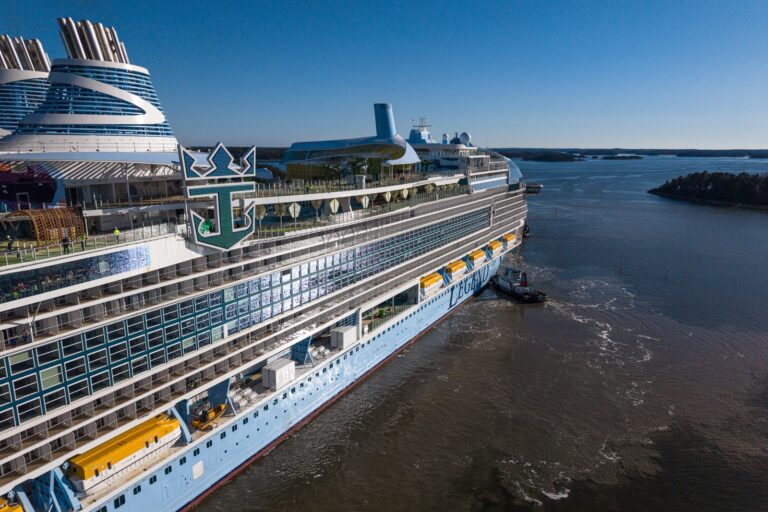
- Legend of the Seas is the third ship in Royal Caribbean’s Icon Class and officially holds the title of world’s largest cruise ship to sail from Europe.
- The arrival of Legend of the Seas reflects Royal Caribbean’s deliberate strategy to expand its European footprint with its most advanced ship.
- The debut of Legend of the Seas redefines the competitive landscape for Mediterranean cruising and signals the cruise industry’s commitment to ever-larger megaships.
- The maiden voyage on July 11, 2026, will be the focal point for industry observers, travel agents, and prospective passengers eager to experience the ship’s amenities and operational performance.
Royal Caribbean’s Legend of the Seas, the largest cruise vessel ever built, will debut in Europe this summer, marking a watershed moment for Mediterranean megacruising. The 250,800-gross-ton ship carrying 7,600 passengers will launch its maiden European voyage on July 11, 2026, from Barcelona. This debut establishes a new benchmark for scale and innovation in European waters and represents the first time an Icon-class ship will operate from the region.
A Record-Breaking Ship Arrives in the Mediterranean
Legend of the Seas is the third ship in Royal Caribbean’s Icon Class and officially holds the title of world’s largest cruise ship to sail from Europe. The vessel was delivered in mid-2026 after nearly two years of construction at the Meyer Turku shipyard in Finland, a facility renowned for building the world’s largest cruise ships. Royal Caribbean positioned the ship as the “biggest and boldest Icon Class Ship” to operate from Europe, emphasizing its role as a floating megacity that elevates the European cruise experience.
The ship will operate weeklong adventures departing from Barcelona and Rome (Civitavecchia) throughout Summer 2026, with open-jaw itineraries that allow passengers to embark in one city and disembark in another. This operational format—new for Royal Caribbean in Europe—maximizes the premium itinerary’s value by eliminating the need for passengers to return to their embarkation port. The ship’s maiden European voyage is scheduled for July 11, 2026, with bookings for the 2026 season having opened in March 2025, featuring early incentives for loyalty members.
Strategic Expansion and Mediterranean Dominance
The arrival of Legend of the Seas reflects Royal Caribbean’s deliberate strategy to expand its European footprint with its most advanced ship. Before settling into year-round southern Caribbean operations later in 2026, the vessel will offer itineraries in the Western and Central Mediterranean, calling at ports including Palma de Mallorca in Spain, Provence in France, and Pisa/Florence in Italy. This deployment capitalizes on strong summer demand in a region heavily promoted by European tourism boards.
Summer 2026 represents the optimal travel season for the ship’s European operations, with warm weather and extended daylight hours attracting cruisers from across North America and Europe. Comparable Icon-class voyages from Europe are projected to start around $1,300–$1,500 per person for double occupancy, with peak summer rates running higher. Prospective passengers must hold valid passports for at least six months beyond their travel dates, a standard requirement for European itineraries; US and UK citizens require no visa for stays under 90 days in the Schengen Area.
Industry Recognition and Competitive Implications
The debut of Legend of the Seas redefines the competitive landscape for Mediterranean cruising and signals the cruise industry’s commitment to ever-larger megaships. The vessel’s arrival displaces the previous record-holder for European waters and establishes a new standard that other cruise lines will likely pursue in coming years. Industry observers view the deployment as a validation of the Icon-class design and a vote of confidence in European demand for premium, large-capacity cruising.
This development carries significant implications for port infrastructure, environmental compliance, and passenger experience standards across the Mediterranean. The ship’s advanced technology and capacity will test the operational capabilities of Barcelona and Rome’s cruise terminals, potentially prompting infrastructure investments in these ports. Other cruise operators are expected to accelerate plans for similar megaships in European waters, intensifying competition and driving innovation in onboard amenities and service delivery.
Engineering Excellence and Environmental Innovation
Legend of the Seas represents a technological leap forward in cruise ship design, featuring advanced liquefied natural gas (LNG) propulsion and solid oxide fuel cell (SOFC) technology that reduces emissions by 95 percent compared to traditional diesel ships. The vessel achieves a maximum speed of 22.7 knots while maintaining state-of-the-art safety systems compliant with 2026 International Maritime Organization standards. This eco-friendly design directly addresses strict emission regulations in the Mediterranean, a region increasingly focused on environmental sustainability.
The ship’s construction at Meyer Turku shipyard in Finland showcases European engineering expertise in building the world’s most advanced cruise vessels. The SOFC technology ensures stable power delivery even in rough seas, enhancing passenger safety and operational reliability. These technological innovations position Legend of the Seas as not merely a larger ship, but a fundamentally more responsible and capable vessel for modern cruising.
Historical Milestone in European Cruise Travel
Legend of the Seas surpasses Wonder of the Seas (236,857 GT) and represents a ~10 percent increase in gross tonnage over Symphony of the Seas (228,081 GT), which previously held the record for the largest ship in Europe from 2018–2022. The Icon-class design, which includes Icon of the Seas and Symphony of the Seas, has redefined expectations for megaship capacity and amenities. Legend of the Seas’ 250,800-gross-ton displacement establishes it as the definitive largest cruise ship to operate from European waters, a distinction that underscores the rapid evolution of cruise technology.
This achievement reflects a decade-long trend toward larger vessels in the cruise industry, driven by demand for premium experiences and economies of scale. The ship’s debut in Europe marks a turning point where the world’s cutting-edge cruise technology is no longer reserved for Caribbean or Asian routes but actively deployed in the world’s most established cruise region.
What Cruisers and Industry Watchers Should Monitor
The maiden voyage on July 11, 2026, will be the focal point for industry observers, travel agents, and prospective passengers eager to experience the ship’s amenities and operational performance. Early booking data and passenger feedback from the first season will signal whether the ship’s premium positioning and record-breaking scale translate into strong demand and guest satisfaction. The ship’s integration into European port operations will also reveal any logistical challenges or infrastructure gaps that may affect future megaship deployments.
Legend of the Seas’ European debut marks a definitive shift in cruise industry priorities, bringing the world’s largest and most technologically advanced ships to the Mediterranean. For travelers planning 2026 vacations, the ship represents an unprecedented opportunity to experience cutting-edge cruise innovation in one of the world’s most celebrated travel regions. The vessel’s arrival reinforces Barcelona and Rome as premier cruise destinations and sets the stage for continued growth in European megacruise travel.
