
Key takeaways
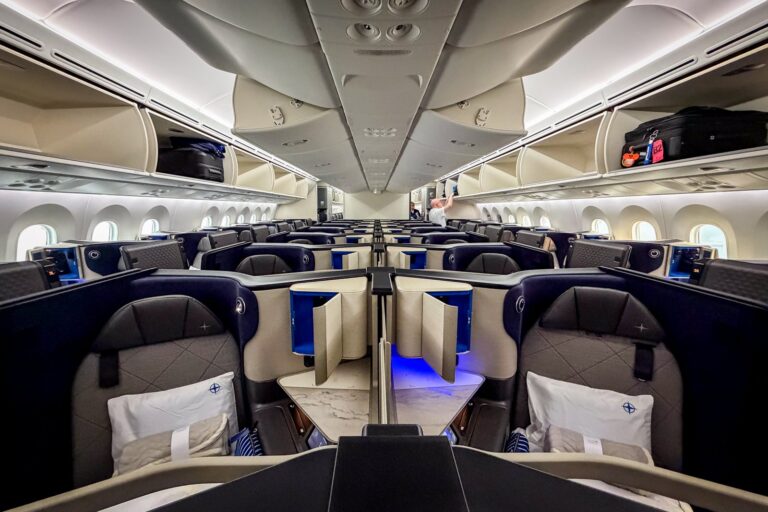
- United's new Polaris Elevated cabins feature suite-style seats with closing doors, available on Boeing 787-9s starting from San Francisco and Houston, with 30 aircraft expected by end of 2027.
- First-generation Polaris seats measure 20–21 inches wide and recline to 76–78 inch beds with 15.4–16 inch screens; Elevated seats are 21 inches wide with 78-inch beds and 19-inch screens.
- MileagePlus elite members and cobranded cardholders receive significant discounts: Chicago-London drops from 80,000 to 72,000 miles; Sydney routes from 400,000 to 90,000 miles, a 77.5% reduction.
- Studio seats in rows 1 and 9 offer larger 27-inch screens and extra amenities for a $499–$799 premium per direction on Elevated aircraft.
United Polaris business class has transformed dramatically since launching a decade ago. What started as a major overhaul of outdated side-by-side seating has now become a two-tier product, with the latest generation featuring closing doors, premium materials, and suite-style privacy. Understanding which version you might encounter—and how to book it efficiently with miles—requires knowing the differences between the existing fleet and the new rollout underway.
Two Generations of Polaris Cabin Design
The original Polaris product arrived around 2016 with bright blue lie-flat seats, a marked improvement over what preceded it. United spent approximately seven years outfitting its wide-body fleet with this first-generation configuration, substantially completing the project by 2023. The uniformity across the fleet made booking predictable for frequent flyers.
In March 2026, the airline announced Polaris Elevated, a suite-based product with closing doors, updated technology, and refined furnishings. According to The Points Guy, the rollout of this new generation is currently in progress but remains limited to newly delivered aircraft. United has clarified it has no current plans to retrofit existing aircraft with the Elevated interiors, meaning access to the new suites depends on catching one of the designated routes and aircraft types.
One caveat worth noting: a small number of Boeing 777-200 aircraft still operate domestic service, including routes to Hawaii, using the airline’s older business-class seating. This guide concentrates on Polaris across the long-haul international network.
First-Generation Polaris: Seat Arrangement and Specifications
Cabin Layout and Positioning
The first-generation cabins employ either a 1-2-1 or 1-1-1 seating pattern, ensuring every passenger has direct aisle access. The staggered arrangement positions window and aisle seats alternately throughout the cabin. Center-row seats appear in one of two configurations: honeymoon-style seating that places couples closer together, or separated pairs with wider dividing armrests.
Specific seat letters indicate positioning for booking purposes. Seats labeled A and L in odd-numbered rows sit solo at the window, appealing to travelers seeking maximum isolation. Seats D, F, or G in odd-numbered rows typically offer the honeymoon layout and attract couples, though privacy dividers remain standard.
Physical Dimensions
First-generation Polaris seats measure roughly 20 to 21 inches in width and recline fully to create beds measuring 76 to 78 inches long. Entertainment screens span 15.4 to 16 inches diagonally.
Polaris Elevated: Suite-Style Seating and New Interior Design
Boeing 787-9 Cabin Configuration
The new Elevated cabins aboard 787-9 Dreamliners split into two distinct zones with different seat arrangements. The forward section uses a reverse-herringbone layout, positioning window seats to face the windows and center seats to angle toward each other. The rear cabin adjusts this pattern, with center pods tilted closer together along the seat backs and footrests angled toward the aisle—a layout generally better suited for traveling pairs.
Seat Specifications and Studio Premium
Elevated seats reach 21 inches in width and flatten to 78-inch beds. The design shifts to a darker color palette with textured seat shells, faux-marble accents, and caramel-toned wood grain paneling that elevates the cabin aesthetic. The most significant distinction from the first-generation product is the closing door, which creates a private suite environment for each seat. Entertainment displays measure 19 inches diagonally.
Eight Polaris Studio seats occupy rows 1 and 9, providing more generous personal space than standard Elevated seats. Studio passengers receive 27-inch entertainment screens and additional soft amenities unavailable to regular Polaris travelers. According to The Points Guy, Studio seats carry a premium of $499 to $799per direction, depending on the route.
Where Elevated Polaris Operates and How to Verify Your Aircraft
Current Route Availability
The Elevated configuration presently operates from San Francisco on a limited set of long-haul routes. Starting in October 2026, service will expand from Houston’s George Bush Intercontinental Airport (IAH). The Houston-to-London route receives the new aircraft in January 2027. United projects having 30 Elevated-equipped 787-9s in service by the end of 2027, meaning availability will remain constrained even as the fleet grows.
The airline operates multiple daily frequencies on many routes and occasionally swaps aircraft, so confirmation of Elevated seating on any given flight is not automatic.
Checking Your Seatmap Before Booking
The most reliable way to identify which Polaris generation your flight features is by consulting the seatmap during booking. United displays seatmaps when you review flight options, allowing comparison across multiple frequencies and aircraft on the same route. Simply knowing a route receives 787-9s does not guarantee your specific flight will have one—equipment swaps do occur, and the number of Elevated aircraft remains limited relative to total fleet size. Always verify the seatmap for your selected flight rather than assuming based on route alone.
Onboard Amenities and Cabin Services
Both generations of Polaris offer similar soft-product services, including meal presentation, beverage programs, premium bedding, and the full array of amenities standard to international business-class travel. The Elevated cabins introduce more upscale menus and refined beverage service compared to the first-generation product. Passengers booking Polaris Studio seats receive additional perks beyond what standard Elevated travelers access.
The airline emphasizes that dining quality and amenity refinement distinguish the new Elevated cabins, with the overall cabin experience positioned as a step above the current fleet standard.
Polaris Lounges and Ticket Fare Categories
Lounge Access and Global Locations
When United launched the original Polaris product a decade ago, it simultaneously unveiled a family of premium lounges available only to Polaris passengers and select Star Alliance partners’ premium cabin travelers. Polaris lounges operate in Houston, Newark, San Francisco, Tokyo, and at London Heathrow, where an arrivals-only lounge serves Polaris passengers. These facilities typically feature sophisticated living spaces, restaurant-style dining with destination-specific menus, cocktail service, quiet zones, day rooms, and shower suites.
Lounge membership requires traveling on Standard or Flexible United Polaris tickets. First-class passengers on Lufthansa, Swiss, and ANA gain access, as do business-class passengers on Air New Zealand, ANA, and ITA Airways. Passengers holding Basic or Flex business-class fares on Lufthansa, Swiss, Austrian, or Brussels Airlines also qualify.
Three Distinct Fare Tiers
United prices Polaris business-class tickets in three categories, each with different feature sets. Base fares eliminate the ability to modify your flight without penalty, select seats complimentary, or access Polaris lounges, though you receive the same cabin seating and onboard services as premium-fare passengers. According to The Points Guy, base tickets cost several hundred dollars less than Standard and Flexible options, making them attractive when travel dates are fixed. Standard fares include lounge access and complimentary seat assignment. Flexible fares provide the most liberal change and modification policies.
Redeeming Miles Across Star Alliance Programs
United MileagePlus: Best Availability and Elite Discounts
United’s own MileagePlus program offers the widest award availability for Polaris bookings across the Star Alliance. The program uses dynamic pricing, meaning higher-priced cash fares require correspondingly higher mile redemptions. MileagePlus elite members and United cobranded credit card holders receive discounted redemption rates that significantly improve value.
According to The Points Guy, a Chicago-to-London business-class ticket priced at 80,000 miles for standard members costs only 72,000 miles for elite or card-holding passengers. More dramatically, a Sydney business-class award—on a route now receiving the new Elevated equipment—would typically cost 400,000 MileagePlus miles for regular members but only 90,000 miles for elites and cardholders, representing a 77.5% discount. Award bookings through MileagePlus are treated as Standard tickets, meaning redemption passengers retain lounge access and complimentary seat assignment.
Air Canada Aeroplan as an Alternative
Travelers without United miles can explore Air Canada Aeroplan, which also operates a Star Alliance partnership with United. Aeroplan uses a hybrid award chart combining region and distance, adding complexity to the pricing calculation. Expect 60,000 to 90,000 Aeroplan miles for U.S.-to-Europe business-class travel, or 85,000 to 115,000 miles between North America and Australia or East Asia. Aeroplan award availability is scarce across most markets, though occasional opportunities emerge—such as Chicago-to-Amsterdam business-class tickets at 80,000 Aeroplan points plus CAD $57 in taxes and fees.
United Polaris remains among the strongest business-class products offered by U.S. carriers, with consistent seating standards across the existing fleet and enhanced cabins rolling out on select new aircraft. Travelers with elite MileagePlus status or cobranded credit cards unlock substantial savings on award bookings, making Polaris redemptions considerably more accessible than standard pricing suggests.
Source: The Points Guy Articles
Frequently Asked Questions
How can I tell which version of Polaris my flight has before booking?
Check the seatmap on United's booking page when viewing flight options. The seatmap will show whether your specific flight features first-generation or Elevated seating. Simply knowing a route operates 787-9s does not guarantee your flight will have Elevated seats, since the airline operates multiple frequencies and sometimes swaps aircraft.
What is the main difference between first-generation and Elevated Polaris seats?
Elevated seats are 21 inches wide (versus 20–21 for first-generation), feature larger 19-inch screens (versus 15.4–16 inches), and include closing doors for privacy. The Elevated cabin also uses updated materials like faux-marble finishes and caramel-toned wood paneling. Beds extend to 78 inches in both versions.
How much do Studio seats cost extra, and where are they available?
Studio seats aboard new Polaris Elevated aircraft cost between $499 and $799 more per direction, depending on the route. These eight premium seats occupy rows 1 and 9 on Boeing 787-9s and include 27-inch entertainment screens and additional amenities compared to standard Elevated seating.
