
Key takeaways
- While United’s solution offers real-time data, the official MyTSA app has failed to deliver consistent, live wait time updates during the shutdown.
- The shutdown has triggered a staffing crisis of historic proportions within the TSA.
- Despite system-wide challenges, TSA PreCheck continues to offer travelers a dependable way to minimize security delays.
- The government shutdown fundamentally altered how travelers access real-time airport security data.
United Airlines has launched the first real-time TSA security wait time tracker integrated directly into its mobile app, marking the first time a major U.S. airline provides checkpoint-specific line data to passengers. The feature, which debuted April 1, 2026, displays estimated wait times for standard and PreCheck lanes across seven major U.S. hub airports. The tool arrives as the Transportation Security Administration grapples with severe staffing shortages during an ongoing partial government shutdown that has left roughly 50,000 essential TSA employees working without pay since February 14, 2026.
United’s New Tool Offers Real-Time Checkpoint Visibility
United Airlines’ updated iOS and Android mobile apps now display estimated TSA security wait times for specific lanes at Chicago (ORD), Denver (DEN), Houston (IAH), Los Angeles (LAX), New York/Newark (EWR), San Francisco (SFO), and Washington D.C. (DCA). The pilot program represents an industry first, giving United passengers granular visibility into security line conditions before they arrive at the airport. This development allows travelers to better plan their airport arrival times and choose between standard security and PreCheck lanes based on real-time data.
The feature was developed in direct response to the operational challenges created by the Department of Homeland Security shutdown. By providing passengers with accurate, lane-specific wait times, United aims to reduce confusion and help travelers make informed decisions about when to depart for the airport. The app distinguishes between PreCheck and standard security queues, enabling eligible passengers to select the fastest available option.
The Official MyTSA App Falls Short During Crisis Period
While United’s solution offers real-time data, the official MyTSA app has failed to deliver consistent, live wait time updates during the shutdown. Users have reported that the app’s wait times are “NOT consistently updating right now,” undermining its reliability precisely when travelers need accurate information most. This breakdown has forced passengers and travel experts to seek alternative sources for checkpoint data.
The MyTSA app’s performance issues stem directly from staffing constraints within the TSA. With approximately 50,000 essential employees working without compensation for nearly six weeks, the agency has struggled to maintain the infrastructure and personnel needed to provide accurate, real-time data. This gap in official service has created demand for alternative solutions that can fill the information vacuum.
Third-Party Trackers Step In With Granular Data
Travel analyst Zach Griff of “From The Tray Table” has released a free live TSA wait time tracker at tsa.fromthetraytable.com, offering checkpoint-by-checkpoint visibility for 19 major airports including JFK, LAX, DFW, and MIA. The tool distinguishes between dedicated PreCheck and CLEAR lanes, providing more granular data than the official MyTSA app. By pulling information directly from airport feeds rather than relying on airport-wide averages, the tracker delivers the precise information travelers need to navigate security efficiently.
Experts now recommend that passengers use airport websites directly for the most accurate updates. Major airports including Orlando International (MCO) and Hartsfield-Jackson Atlanta International (ATL) are posting more accurate, live checkpoint updates on their own platforms than the TSA provides through its official channels. Travel experts also suggest searching airport codes combined with “TSA” on X (formerly Twitter) and Instagram, where real-time posts from other travelers provide crowdsourced wait time intelligence.
Unprecedented Staffing Crisis Drives Extreme Wait Times
The shutdown has triggered a staffing crisis of historic proportions within the TSA. More than 450 TSA agents have quit in the nearly six weeks since the partial government shutdown began, creating the longest wait times observed at major airports in recent memory. This surge in resignations directly correlates with the hardship imposed by working without compensation during an extended government funding lapse.
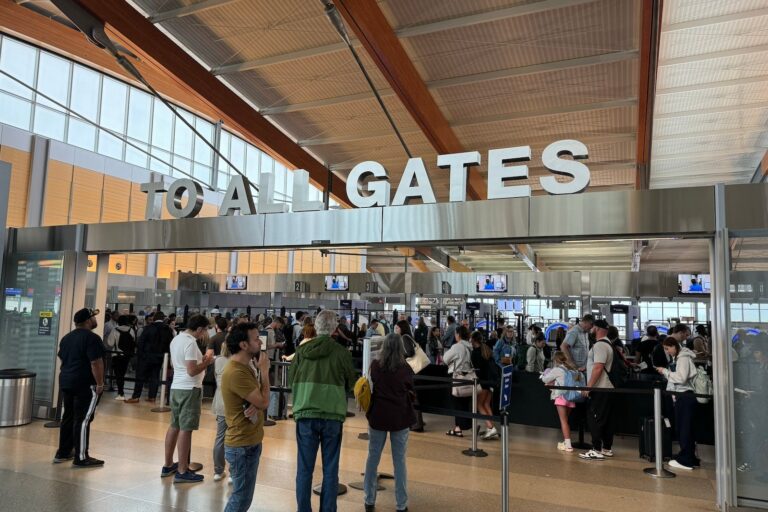
The impact on passenger experience has been severe. Wait times at Houston’s George Bush Intercontinental Airport (IAH) and Atlanta’s Hartsfield-Jackson International Airport (ATL) reached up to two hours during spring break season in March 2026. The situation became dire enough that Louis Armstrong International Airport in New Orleans (MSY) advised travelers to arrive at least three hours prior to flights. Philadelphia International Airport (PHL) took the extraordinary step of closing three security checkpoints entirely due to insufficient staffing levels, forcing remaining personnel to handle increased volume with fewer resources.
PreCheck Remains the Most Reliable Option for Speed
Despite system-wide challenges, TSA PreCheck continues to offer travelers a dependable way to minimize security delays. Under standard security procedures, the TSA estimates that approximately 99 percent of PreCheck passengers experience wait times of less than 10 minutes, a stark contrast to the two-hour waits observed in regular lanes during peak travel periods. With 20 million pre-approved members, PreCheck enrollment represents the most accessible tool available for bypassing extended queues.
However, even PreCheck passengers face uncertainty during the shutdown period. The TSA now advises all passengers to reach out to their airlines and allocate additional travel time due to the unpredictability caused by staffing shortages. While PreCheck lanes continue to move faster than standard security, the unprecedented staffing crisis means that even expedited screening is subject to unexpected delays.
How the Shutdown Reshaped Airport Security Information
The government shutdown fundamentally altered how travelers access real-time airport security data. Prior to the crisis, the official MyTSA app served as the primary source for wait time information, but its failure during the funding lapse created a vacuum filled by airlines, individual airports, and third-party developers. This shift demonstrates how infrastructure systems designed for normal operations can fail under crisis conditions, pushing innovation toward decentralized and alternative solutions.
The emergence of multiple competing platforms for wait time tracking—United’s app integration, Griff’s independent tracker, and individual airport websites—suggests that the travel industry has learned a critical lesson about information redundancy. Passengers now have multiple options for accessing security line data, reducing dependence on any single source.
What Travelers Should Monitor in Coming Weeks
As the government shutdown enters its seventh week, the stability of TSA operations remains uncertain. Travelers should expect continued volatility in wait times, particularly at major hub airports during peak travel periods. The closure of security checkpoints at Philadelphia and potential similar actions at other airports could create bottlenecks that ripple across the entire network. Monitoring United’s app, airport websites, and third-party trackers provides the best strategy for anticipating delays.
The resolution of the government shutdown will determine whether TSA staffing stabilizes and whether the agency can restore the official MyTSA app to full functionality. Until that occurs, passengers planning travel should use multiple information sources, build extra buffer time into airport arrivals, and consider TSA PreCheck enrollment as a hedge against unpredictable security lines. The tools now available to check wait times before departure represent a significant advantage for informed travelers navigating an unprecedented operational crisis.
