

Key takeaways
- The Sapphire Reserve for Business offers 200,000 bonus points—twice the personal card—but requires five times the spending.
- Both cards include a $300 travel credit and access to 14 airline and hotel transfer partners, with differences in lifestyle statement credits.
- The business card earns unlimited 3 points per dollar on advertising spend, while the personal card rewards dining and entertainment.
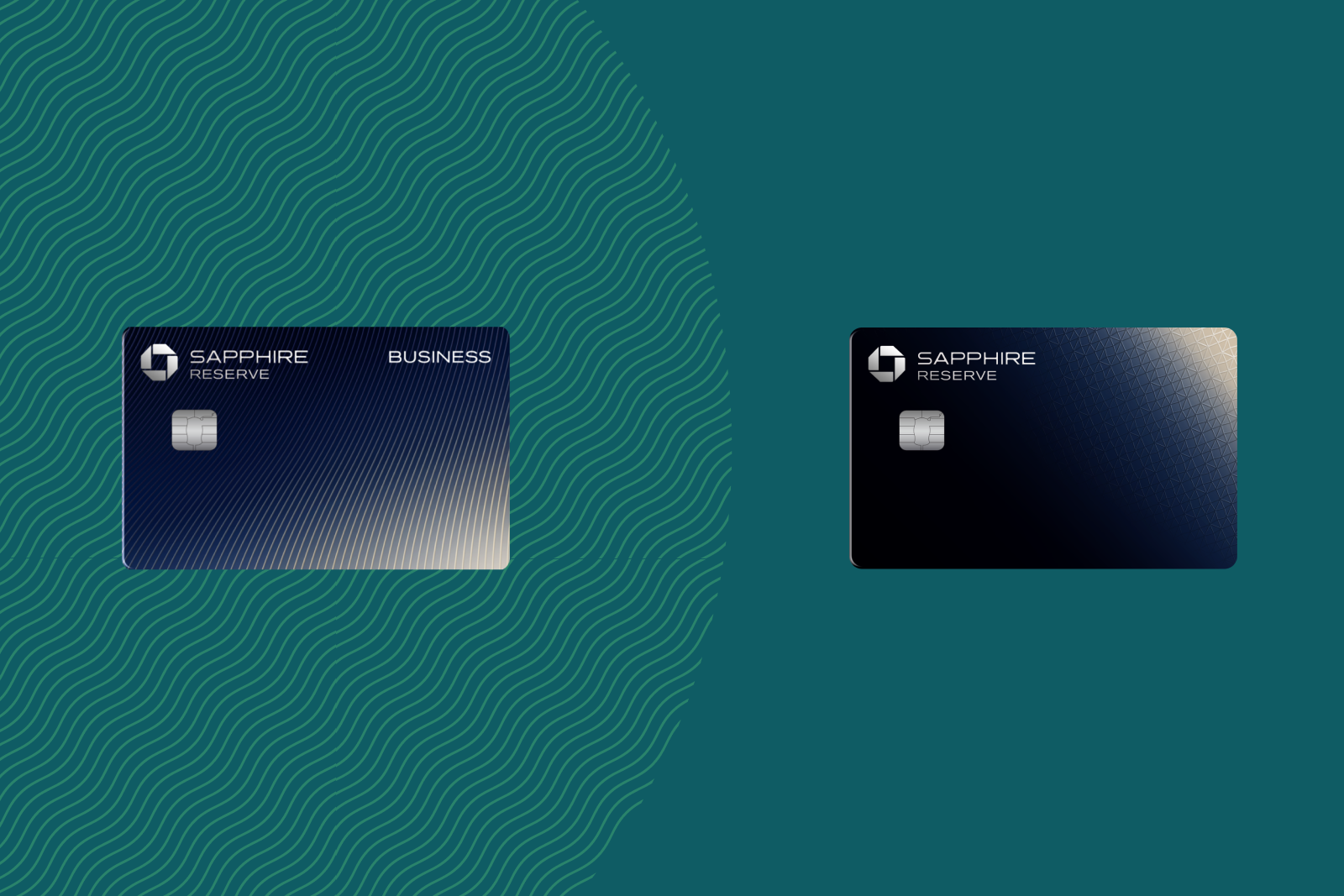
Both Chase Sapphire Reserve cards occupy the premium tier of the company’s rewards lineup, each carrying a $795 annual fee and delivering substantial travel benefits. Yet they diverge significantly in design: one targets individual consumers, while the other serves business owners. Understanding the differences—and the overlaps—will help you choose the right card for your situation.
Welcome Bonuses That Set Them Apart
The two cards start on different footing when it comes to sign-up rewards. The personal Sapphire Reserve offers a clearer path to immediate value, while the business version delivers a larger overall bonus for those who can manage the spending.
Personal Card Welcome Offer
New cardholders of the Sapphire Reserve earn 100,000 bonus points after spending $6,000 on purchases within the first three months of account opening. Using TPG’s August 2026 valuation of Chase Ultimate Rewards points at 2.05 cents each, this welcome bonus translates to approximately $2,050 in value. The $6,000 minimum spend requirement is relatively modest and achievable for many consumers within a three-month window.
Business Card Welcome Offer
The Sapphire Reserve for Business presents a substantially larger welcome bonus: 200,000 points for spending $30,000 on purchases within the first six months from account opening. At the same 2.05-cent valuation, this offer is worth roughly $4,100—double the personal card’s bonus. The trade-off lies in the significantly higher spending threshold, requiring five times as much spend across a longer time period.
Weighing Attainability Against Raw Value
For most applicants, the personal card’s welcome bonus is considerably easier to unlock. The spending requirement is more than manageable for regular business or personal expenses concentrated over three months. However, if you operate a business or can reliably forecast substantial spending over six months, the business card’s 200,000-point offer provides substantially more value despite the elevated threshold. Both cards are subject to Chase’s 5/24 rule and other standard application restrictions, so approval eligibility remains a separate consideration.
Travel Credits and Lifestyle Benefits
Beyond sign-up rewards, both cards deliver premium perks that justify their annual fees. The benefits overlap considerably, though each card tilts its non-point rewards toward its intended audience.
Shared Travel and Lounge Benefits
Both versions include an annual $300 travel credit, airport lounge access, and comprehensive travel protections that cover trip delays, cancellations, and other travel mishaps. These core benefits form the backbone of each card’s value proposition and are largely identical between the two.
Personal Card’s Lifestyle Credits
The Sapphire Reserve adds credits and perks focused on everyday spending categories: dining, entertainment, and streaming services. These benefits appeal to consumers seeking rewards across a broader set of lifestyle categories beyond travel itself.
Business Card’s Productivity-Focused Credits
The Sapphire Reserve for Business redirects its statement credits toward business operations. Instead of dining and entertainment credits, cardholders receive benefits tailored to business owners, including credits for hiring platforms like ZipRecruiter and productivity tools such as Google Workspace. For business owners already using these services, these credits provide direct monthly value. Meanwhile, you can unlock nearly identical bonus benefits on the personal Sapphire Reserve while spending $45,000 less over the course of the welcome offer period.
Bonus Earning Rates: Where You Accumulate Points
Both cards award Chase Ultimate Rewards points across multiple categories, but the differences in earning rates reveal each card’s intended use cases.
Unlimited Advertising Earning on the Business Card
A key distinction emerges when examining how the business card rewards advertising spend. The Sapphire Reserve for Business earns 3 points per dollar spent on eligible social media and search engine advertising—with no spending cap. This contrasts sharply with other Chase business cards like the Ink Business Preferred, which caps earning at $150,000 of eligible spend annually. For businesses running substantial digital ad campaigns, this unlimited earning potential can generate significant point accumulation.
Travel and Core Category Earning
Both cards earn the same number of points on Chase Travel purchases and flights or hotels booked directly through the travel portal. The personal Sapphire Reserve adds bonus earning on dining and Peloton purchases, categories absent from the business version’s bonus structure.
Overall Earning Advantage
For consumers focused on dining rewards, the personal card’s bonus category provides ongoing value. For business owners managing substantial advertising budgets, the business card’s uncapped 3-point-per-dollar rate on advertising becomes a powerful earning engine that outpaces the personal card’s dining category in raw point accumulation.
Redemption Options: Converting Points to Value
Direct Redemption Through the Ultimate Rewards Portal
Both cards allow you to redeem points for cash back, gift cards, dining experiences, and other offerings through Chase’s Ultimate Rewards portal. Points can also be redeemed to cover eligible purchases through Chase’s Pay Yourself Back feature, which permits flexible redemptions at varying rates depending on the purchase category.
Points Boost and Chase Travel Redemptions
Chase’s Points Boost feature enables cardholders to book travel directly through Chase Travel at values up to 2 cents per point, depending on the specific redemption and card. Certain hotels booked through Chase Travel with the Sapphire Reserve reach valuations of up to 2.5 cents per point. All other Chase Travel purchases not eligible for Points Boost redeem at 1 cent per point. Both cards access identical Points Boost benefits and rates.
Transfer Partner Network
The greatest redemption value often comes through transferring Ultimate Rewards points to Chase’s 14 airline and hotel transfer partners. Both the personal and business Sapphire Reserve cards access the identical partner roster and transfer rates. Partners include Air Canada Aeroplan, Air France-KLM Flying Blue, United MileagePlus, and World of Hyatt. TPG’s credit cards editor Olivia Mittak transferred 87,500 Chase Ultimate Rewards points to World of Hyatt to book 10 nights in Germany, paying nothing out of pocket for hotel accommodations. Transfer redemptions frequently exceed TPG’s 2.05-cent-per-point valuation, making them the optimal path for maximum value.
Making Your Choice
Personal cardholders who prioritize dining, entertainment, and streaming benefits alongside premium travel perks should choose the Sapphire Reserve. The card rewards common spending patterns and delivers a lower welcome offer barrier.
Business owners operating digital advertising campaigns or already using ZipRecruiter and Google Workspace should favor the Sapphire Reserve for Business. The unlimited earning on advertising spend and business-focused credits align with operational expenses, and the larger welcome bonus compensates for the higher spend requirement.
Those who qualify for both and operate a business can apply for both cards, spacing applications to ensure sufficient time to earn both welcome bonuses separately. The two cards cover complementary use cases—one for personal lifestyle spending, the other for business operations—making simultaneous ownership feasible for those who can meet the spending requirements.
For most consumers, the personal Sapphire Reserve remains the better fit. Its benefits extend across broader spending categories, and its lower welcome offer minimum makes qualification and activation more straightforward. The business card’s value concentrates among owners of companies with meaningful advertising spend or existing commitments to the partnered productivity tools.
Frequently Asked Questions
What's the welcome bonus difference between the two cards?
The personal Sapphire Reserve offers 100,000 points after $6,000 spend in three months (worth $2,050), while the Sapphire Reserve for Business awards 200,000 points after $30,000 spend in six months (worth $4,100).
Do both cards offer the same transfer partners?
Yes, both the personal and business Sapphire Reserve cards access the same 14 airline and hotel transfer partners, including World of Hyatt, United MileagePlus, and Air France-KLM Flying Blue.
Which card is better for business owners?
The Sapphire Reserve for Business is designed for owners with significant advertising spend, as it earns unlimited 3 points per dollar on social media and search engine advertising with no spending cap, plus business-focused statement credits.
