
Key takeaways
- JetBlue's BlueFirst domestic first-class cabin launches December 8 on Boston-Fort Lauderdale service, with 39 routes added by April 2027 and majority-fleet coverage targeted by year-end 2027.
- About 35% of BlueFirst bookings are already being purchased with TrueBlue miles, indicating strong uptake from the airline's existing loyalty members.
- TrueBlue loyalty revenue grew 20% year-over-year, buoyed by BlueHouse lounge expansion and an eightfold jump in premium cobranded credit card signups.
- JetBlue maintains $2.2 billion in liquidity and $7 billion in unencumbered assets to fund its premium and network-restructuring investments despite reporting a $257 million Q3 loss.
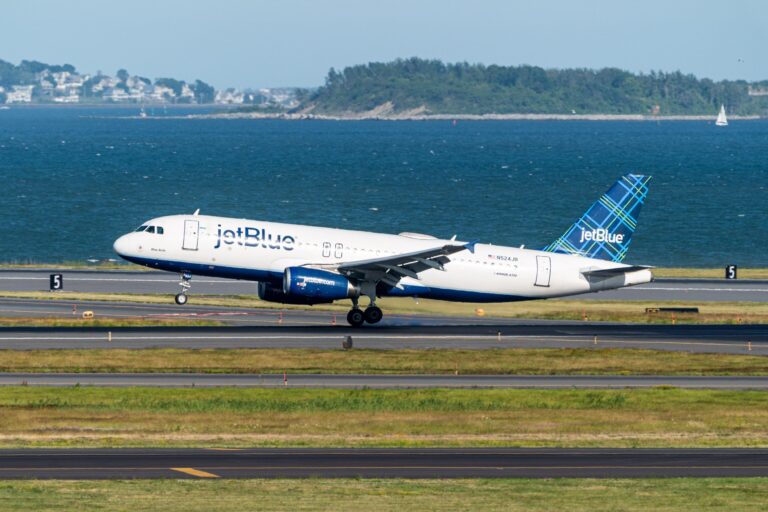
During its third-quarter earnings call this week, JetBlue CEO Joanna Geraghty was asked whether mounting fuel costs and financial strain might force the airline to shelve plans for new premium products. Her response was unequivocal: the airline will not pause its premium push, no matter the headwinds.
That resolve matters. JetBlue reported a $257 million net loss for the quarter ended September 30, while its fuel bill climbed nearly 67% compared to the same period last year. Yet Geraghty pushed back on speculation that restructuring or pullback could be coming. “I think there is a significant disconnect between the narrative in the bond market and what our financial results are demonstrating,” she said on the call.
BlueFirst Takes Flight With Strong Early Bookings
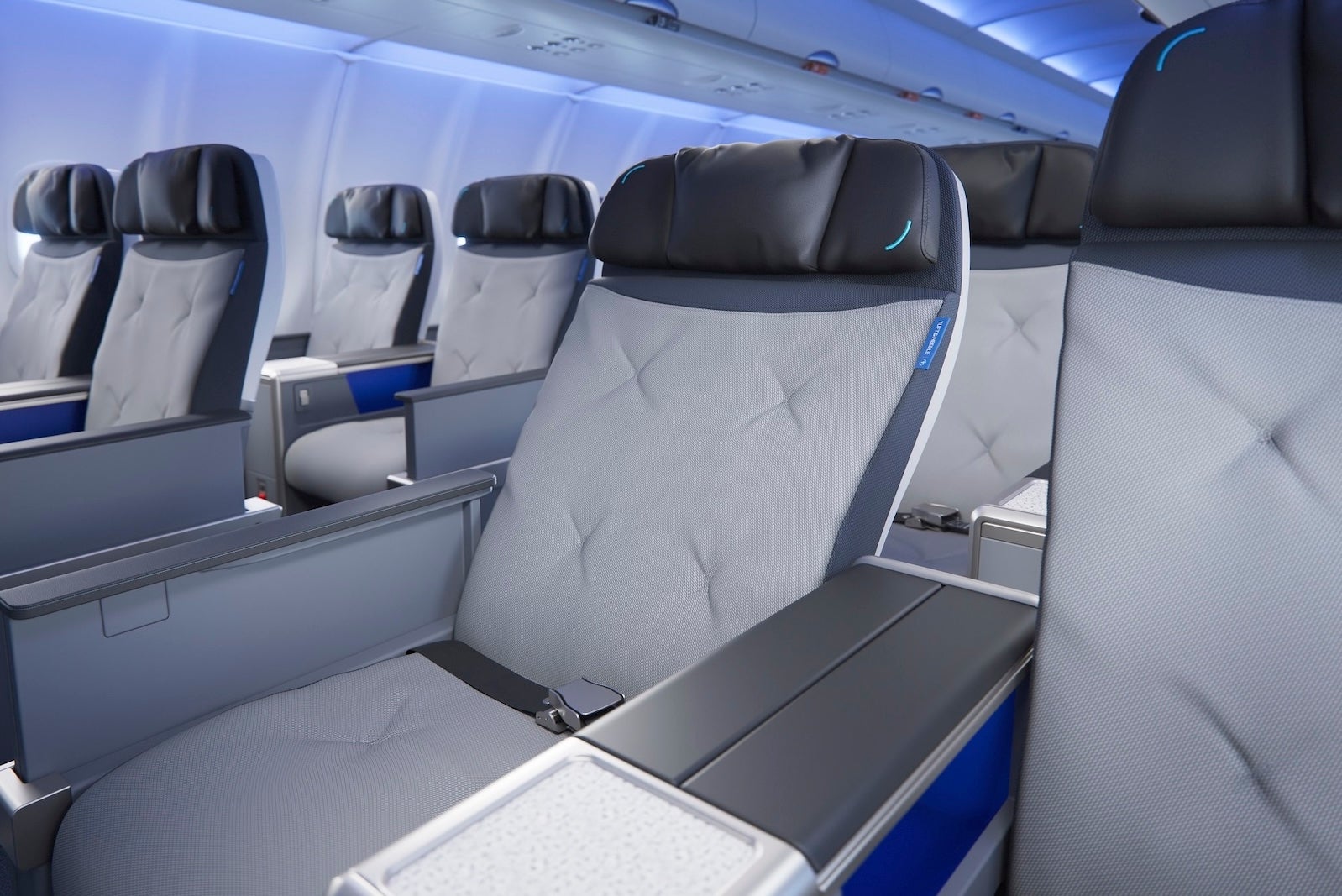
BlueFirst, JetBlue’s first domestic first-class cabin, represents a step beyond the airline’s longstanding Mint business-class offering. Mint has served select transcontinental and transatlantic routes for more than a decade, but BlueFirst marks the carrier’s entrance into true domestic first-class competition.
The first BlueFirst seats became available for purchase earlier this month, with the inaugural service launching December 8 on the Boston Logan (BOS) to Fort Lauderdale-Hollywood (FLL) route. JetBlue plans to introduce the cabin on 38 additional routes by April 2027 and will operate BlueFirst on a majority of its aircraft by year-end 2027. Full fleet installation is scheduled for completion in 2028.
Loyalty Members Drive Early Demand
The early take-up numbers suggest JetBlue’s existing customer base is embracing the premium option. Roughly 35% of BlueFirst bookings made so far have been paid with TrueBlue miles rather than cash, according to JetBlue president Marty St. George. Mosaic elite members, the carrier’s top loyalty tier, account for approximately a quarter of BlueFirst seats booked to date.
St. George highlighted this pattern as particularly encouraging. “Our favorite fact is seeing how many of the seats are being sold to our existing customers,” he said during the call. “While still early, this engagement reinforces our confidence in BlueFirst’s ability to capture more premium travel demand from our existing loyal customer base.”
Premium Revenue as a Path to Profitability
The premium cabin push aligns with JetBlue’s broader JetForward turnaround strategy, which targets sustainable profitability by 2028. The plan repositions the airline’s network around East Coast leisure routes and elevates FLL as a primary hub. By capturing premium revenue—a segment that has powered profitability at competitors like Delta Air Lines and United Airlines despite elevated fuel costs—JetBlue aims to offset its financial pressures.
TrueBlue Loyalty Program Drives Revenue Growth
TrueBlue loyalty revenue jumped 20% year-over-year during the quarter, signaling that the airline’s loyalty investments are resonating. St. George noted that premium amenities tied to the program, particularly the introduction of lounges and first-class access, are working in concert to deepen engagement.
The new BlueHouse lounges have played a meaningful role in this dynamic. The lounges debuted at John F. Kennedy International Airport (JFK) in late 2025 and expanded to Boston Logan over the summer of 2026. Their impact rippled into the cobranded credit card business: signups for the premium cobranded card, which grants lounge access to cardholders before a JetBlue flight, increased eightfold compared to the prior year. Overall credit card spending across the portfolio surged by double digits.
Cobranded Cards Fuel South Florida Growth
The premium cobranded card’s appeal has been especially pronounced in South Florida, where JetBlue’s restructuring efforts have been concentrated. Cobranded card signups in the region jumped 55%, while the airline’s overall presence at FLL expanded dramatically. Capacity at the airport grew 65% year-over-year, and JetBlue’s market share is expected to reach around 37% by year-end, up nearly 15 percentage points from the prior year.
Strategic Partnership Unlocks International Revenue
JetBlue’s Blue Sky partnership with United Airlines has also accelerated spending on cobranded products. The alliance permits TrueBlue members to use miles on United flights and earn elite credits from United travel, and offers reciprocal benefits in return. While United frequent flyers have expressed frustration that elite status accrual is asymmetrical (TrueBlue members earn United elite credits, but not vice versa), the partnership has broadened redemption options.
St. George highlighted a particular fix the alliance provided: United’s expanded availability of international destinations for TrueBlue mile redemptions, addressing what he called a historical shortcoming of the program. The wider international reach has encouraged higher spending on the credit card portfolio.
Financial Cushion Supports Capital Plans
Despite the $257 million quarterly loss, JetBlue’s balance sheet provides runway to execute its premium strategy without near-term financial crisis. The airline maintains $2.2 billion in available liquidity plus $7 billion in unencumbered assets, including $2.8 billion in aircraft and engines. That financial cushion is critical, given the capital intensity of installing first-class seats across hundreds of aircraft, building lounge infrastructure, and sustaining operations through volatile fuel markets.
Jet fuel prices, tied to Middle East geopolitical risk, remain a persistent headwind. Yet management framed the premium investment as the airline’s most viable path out of its current financial strain. Executives acknowledged heavy debt and the impact of summer weather disruptions along the East Coast but conveyed confidence in the JetForward plan’s eventual payoff.
Market Response Affirms Strategy
JetBlue’s stock rallied approximately 20% on Tuesday following the earnings call, reversing Monday’s slide to an all-time low. The market appeared to validate management’s message. Conor Cunningham, an airline analyst at Melius Research, described the tone of JetBlue’s executives as “constructive” in a research note published after the call. Cunningham noted that the airline’s turnaround plan is rational but acknowledged that success depends on time and favorable macro conditions.
The airline’s commitment to BlueFirst, the loyalty program upgrades, and premium partnerships appears genuinely intended as a multi-year bet rather than a near-term tactical adjustment. Executives’ willingness to maintain capital plans despite near-term losses signals confidence that premium revenue will eventually deliver the margin improvement needed to achieve 2028 profitability targets.
Source: The Points Guy Articles
Frequently Asked Questions
When does JetBlue's BlueFirst first-class service begin?
The first BlueFirst flight is scheduled for December 8, 2026, operating between Boston Logan and Fort Lauderdale-Hollywood. JetBlue plans to add BlueFirst to 38 additional routes by April 2027 and operate it on a majority of aircraft by the end of 2027.
How much of BlueFirst's early bookings have come from TrueBlue members?
According to JetBlue president Marty St. George, approximately 35% of BlueFirst bookings made so far have been purchased using TrueBlue miles. Mosaic elite members account for roughly a quarter of seats booked to date.
What did JetBlue report for its third-quarter financial results?
JetBlue posted a $257 million net loss for the quarter ended September 30, 2026. The airline's fuel bill increased nearly 67% compared to the same quarter in 2025. Despite these challenges, JetBlue's TrueBlue loyalty program revenue grew 20% year-over-year.
