

Key takeaways
- Global Entry launched as a pilot program at three airports on June 6, 2008, and became permanent with DHS on March 7, 2012; TSA PreCheck debuted at Las Vegas's Harry Reid International Airport in December 2011.
- Post-9/11 bankruptcies forced restructuring at US Airways, United, Delta, and Northwest, triggering consolidation that left American, Delta, United, and Southwest controlling approximately 80% of the U.S. domestic market by the 2010s.
- Airlines' depleted cash reserves after 9/11 led them to sell millions of frequent flyer miles to banks for cobranded credit cards, a partnership trend accelerated by the 2008-09 financial crisis that now generates millions annually.
- Nearly 3,000 people died in the September 11 attacks, including 246 on the four hijacked planes, with 40 brave passengers and crew members on United Flight 93 forcing their aircraft down in Pennsylvania.
The morning of September 11, 2001, brought unprecedented disruption to air traffic in the United States. Within hours, every commercial flight in American airspace was grounded — the first and only complete shutdown in the nation’s history. Air traffic controllers and airline personnel worked frantically to land 4,400 planes scattered across the country while confusion about what was occurring spread through airports nationwide.
The immediate human cost was staggering. Nearly 3,000 people died in the attacks, including 246 aboard the four hijacked aircraft. The 213 passengers and 33 crew members on those flights that morning did not know their journey would be their last. On United Flight 93, 40 passengers and crew members stormed the cockpit, forcing the plane down in rural Pennsylvania and preventing further tragedy.
But beyond the devastating loss of life, 9/11 triggered a fundamental restructuring of how Americans travel by air. Twenty-five years later, the industry that emerged looks almost unrecognizable from the one that existed before those four planes were commandeered.
How Airports Changed Overnight
In the weeks following the attacks, security at U.S. airports transformed rapidly. Restrictions that seemed unthinkable before became standard protocol. Gate areas, once open spaces where families could wave goodbye to departing passengers and welcome arriving travelers, became access-restricted zones for ticketed passengers only.
The private companies that had handled airport security before 9/11 gave way to a new federal agency. The Transportation Security Administration, created specifically to manage secure spaces at airports and other travel infrastructure, took over screening duties nationwide. This shift from private to federal security represented a wholesale reorganization of how the country’s travel system operated.
New screening protocols rolled out continuously as officials identified potential vulnerabilities. Each enhancement aimed to make flying safer, though many passengers found the process increasingly burdensome.
Building the Trusted Traveler Framework
The tightening of security created a problem for frequent flyers: longer lines, more extensive questioning, and delays that could stretch an airport arrival into an hours-long ordeal. The solution emerged from an unexpected direction.
Global Entry’s Strategic Launch
In June 2008, the Department of Homeland Security launched Global Entry as a pilot program at three airports. The program allowed applicants who underwent background vetting to be classified as “low-risk” travelers, enabling them to bypass standard inspection procedures upon returning to the United States from international travel. The pilot proved successful enough that Global Entry became a permanent DHS program on March 7, 2012.
TSA PreCheck Reaches Mainstream
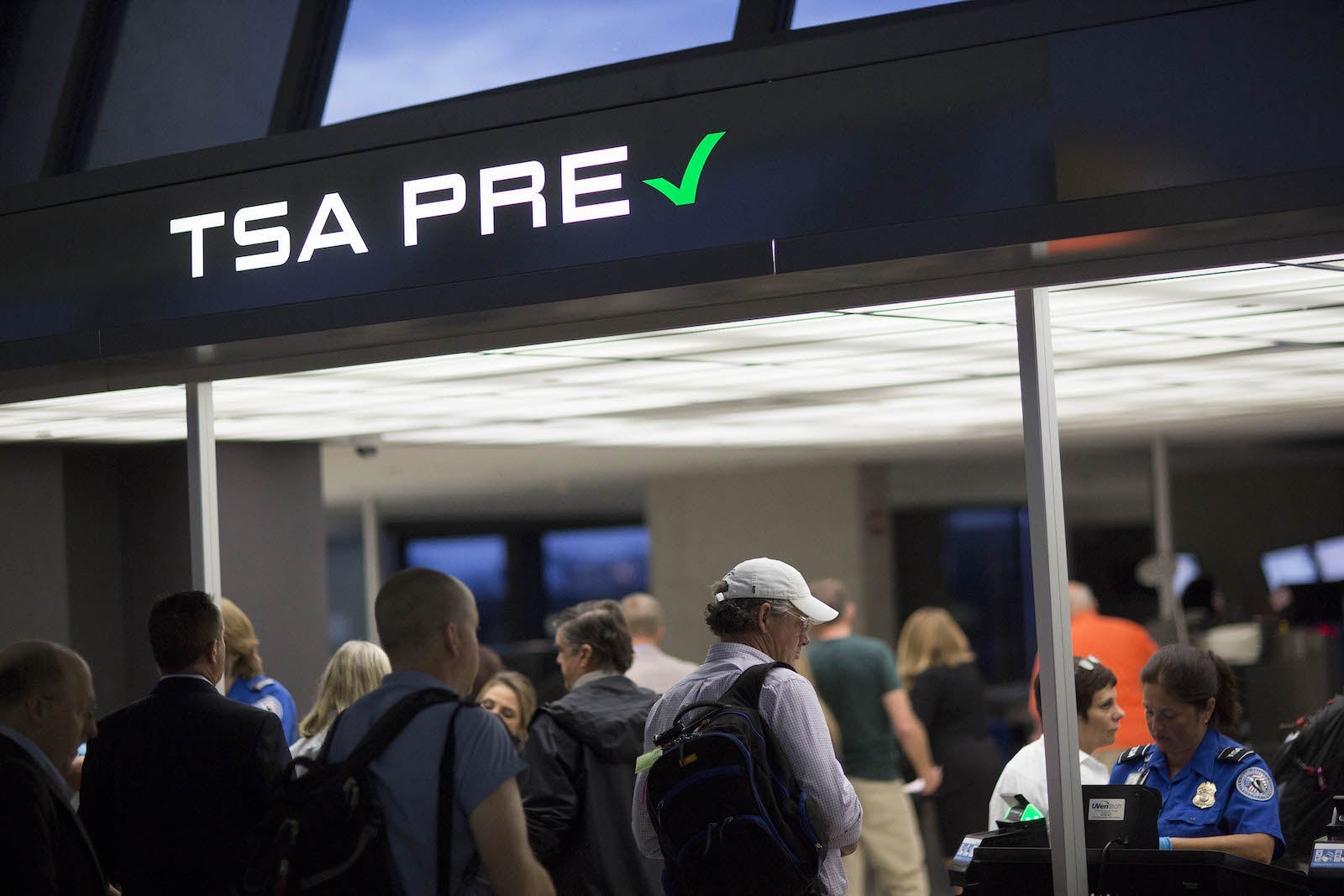
TSA PreCheck followed a similar trajectory. First offered in December 2011 at Las Vegas’s Harry Reid International Airport, the program initially extended free benefits to select frequent flyers from participating airlines. But unlike Global Entry’s limited scope, TSA PreCheck expanded to offer paid membership to any traveler willing to pay the fee. The program allowed participants to proceed through security screening with shoes and belts on, laptops remaining in bags, and liquids staying in carry-ons — a stark contrast to standard screening procedures.
Continuous Evolution in Screening Technology
Real ID, passed in 2005 based on recommendations from the 9/11 Commission, standardized identification requirements across states, preventing federal agencies from accepting driver’s licenses that didn’t meet new baseline standards. The evolution hasn’t stopped. Modern innovations including eGates, touchless ID verification, and the Clear program now enable passengers to bypass physical lines entirely, representing the latest iteration of the security framework’s continuous development.
When the Industry Faced Financial Collapse
The immediate financial consequences of 9/11 proved nearly as devastating as the attacks themselves. Demand for air travel evaporated. In the weeks that followed, planes flew with alarming numbers of empty seats. Passengers who had booked flights canceled reservations. New bookings stopped coming.
Congress provided up to $15 billion in federal bailout funds to prevent industry collapse, but the financial shock was profound. Some carriers never recovered. US Airways, which had dominated operations at Ronald Reagan Washington National Airport before the airport’s closure immediately following the attacks, filed for bankruptcy protection in 2002 and again in 2004. The airline ultimately merged with America West in 2005. Midway Airlines, a mid-size carrier already struggling financially, folded altogether. Larger, established carriers including United, Delta, and Northwest also entered bankruptcy or restructuring.
The consolidation that followed reshaped the entire industry. Airlines merged with rivals to consolidate market power and eliminate redundant operations that were draining profits from an already-weakened sector. By the end of the 2010s, this consolidation cycle had concentrated the market dramatically: American, Delta, United, and Southwest controlled approximately 80% of the domestic U.S. market. The competitive landscape that had defined the industry before 2001 had fundamentally shifted.
Banks and Credit Cards Became Lifelines
Faced with depleted cash reserves, airlines needed capital. They found an unexpected source: banks.
Banks recognized that cobranded airline credit cards offered a lucrative market. They began purchasing miles by the millions from airlines, which then offered these miles to customers holding their credit cards. The arrangement solved an immediate problem for airlines while creating a new revenue stream neither industry had fully exploited before.
The 2008-09 financial crisis accelerated this trend. As traditional lending tightened and business travel declined, airlines increasingly relied on credit card partnerships to generate revenue. Today, airlines earn millions of dollars from cobranded credit card partnerships with financial institutions — a scale of revenue that would have been unimaginable in 2001.
This shift fundamentally altered the economics of frequent flyer programs. What had once been purely transactional loyalty programs, rewarding passengers for flying, became complex ecosystems where consumers could accumulate miles through credit card spending, transferring partners, and hospitality partnerships. The modern award travel landscape — where someone can book a business-class ticket to Asia without taking a single flight — exists because of this transformation.
The Legacy We Carry Forward
The security enhancements, industry consolidation, and credit card partnerships that emerged from 9/11’s aftermath created the aviation ecosystem travelers navigate today. Frequent flyers benefit from expedited security programs that would not exist absent the post-9/11 security architecture. Award availability on major carriers reflects a market structure built from 9/11-era bankruptcies and mergers. The miles accumulated through credit card spending stem from airlines’ financial desperation in 2001.
These systems carry the fingerprints of that terrible day, even though most modern travelers give no thought to the circumstances that created them. The 246 passengers and crew members who died on the four hijacked planes represented ordinary people living ordinary lives who were making ordinary choices — boarding a flight on a Tuesday morning. Flight attendants signaled distress to their operations teams. Passengers used their final moments to contact loved ones. The 40 brave individuals on Flight 93 made a final, extraordinary choice.
Twenty-five years later, every time frequent travelers clear security quickly through TSA PreCheck, access an international flight’s expedited entry through Global Entry, or book an award ticket purchased with miles earned through a credit card, they benefit from systems shaped by tragedy. The privilege of travel itself — something many take for granted today — is worth remembering for those who no longer can.
Frequently Asked Questions
When did Global Entry and TSA PreCheck launch?
Global Entry piloted at three airports on June 6, 2008, and became a permanent DHS program on March 7, 2012. TSA PreCheck officially launched at Las Vegas's Harry Reid International Airport in December 2011.
Which airlines consolidated after 9/11?
Multiple carriers filed for bankruptcy or restructured after 9/11, including US Airways, United, Delta, and Northwest. By the 2010s, mergers left American, Delta, United, and Southwest controlling approximately 80% of the U.S. domestic market.
How did cobranded credit cards help airlines recover?
After 9/11 depleted airline cash reserves, banks began purchasing millions of frequent flyer miles that airlines offered to credit card customers. This partnership model, accelerated by the 2008-09 financial crisis, now generates millions in annual revenue for carriers.
